Morning Briefing — Thursday, November 26, 2026
1. World developments
- Trump administration proposes tariffs on 14 major trading partners. Proposed maximum rates range from 20% to 40%, although USTR intends to cap them at lower levels where trade agreements exist. China would face 20% while the current truce remains effective, potentially rising to 40% if it expires. Proposed capped rates include 15% for the EU, Japan and South Korea, and 18% for several Southeast Asian economies and Bangladesh. A public hearing is scheduled for January 25; the duties are therefore proposals, not tariffs already being collected. China, Japan, Singapore and Malaysia have rejected Washington’s “excess capacity” justification. reuters.com
Why it matters: The targeted economies represent roughly half of global output, making retaliation, higher consumer prices and supply-chain changes significant risks for 2027. - Russia and Ukraine exchange attacks as energy tensions rise. Russian strikes killed two people in Ukraine’s Odesa region and injured people in Kyiv, according to Ukrainian officials. President Vladimir Putin accused Ukraine of ignoring U.S. requests to stop attacking Russian refineries and warned that Russian retaliation was inevitable. Ukraine maintains that it will stop attacking Russian energy facilities only if Moscow reciprocates. justsecurity.org
Why it matters: Reciprocal attacks on energy and port infrastructure could increase winter hardship, commodity volatility and risks to Black Sea commerce. - Gaza ceasefire comes under further strain. An Israeli strike reportedly killed Hamas internal-security chief Mohammad Abuelouf, his wife and two children; another Gaza City strike killed an additional person. Israel said it targeted military operatives. justsecurity.org
Why it matters: Targeted killings and continuing strikes reduce the likelihood that the ceasefire will develop into a durable political settlement. - Oil rises sharply after reported attacks on Saudi energy facilities. Brent settled Wednesday at $94.61 a barrel, up $3.21 or 3.5%, after Yemen’s Houthis claimed an attack on Saudi Arabia’s Ras Tanura refinery. Saudi authorities have not publicly confirmed material refinery damage. Metrobank Wealth Insights
Why it matters: Ras Tanura is central to Saudi oil processing and exports; even unsuccessful attacks can add a geopolitical premium to energy and insurance prices.
2. South Asia
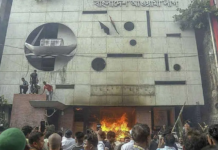
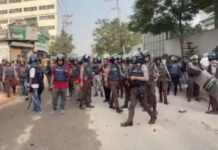
- Bangladesh raises garment wages, but unrest continues. The wage board approved a 36% increase in the monthly minimum to approximately Tk17,000 ($138–$139). Worker representatives had sought Tk18,000 after reducing an original Tk32,000 demand. The decision prompted fresh clashes outside Dhaka after weeks of factory closures and highway blockades. MarketScreener
Why it matters: Garments employ more than four million people and generate over 80% of Bangladesh’s export earnings; continued unrest could disrupt international orders while failing to resolve workers’ cost-of-living pressures. - Bangladesh strengthens security ahead of Hasina’s proposed return. Authorities deployed 108 Border Guard Bangladesh platoons, including 56 in Gopalganj, amid political mobilization over former prime minister Sheikh Hasina’s announced plan to return from India on December 16. Her return arrangements remain disputed, with Dhaka insisting that she may return only through extradition and custody. The Week
Why it matters: The deployments signal that authorities expect further confrontations and possible unauthorized cross-border movement. - Pakistan’s first astronaut reaches China’s space station. Shenzhou-24 docked with Tiangong on Wednesday carrying Pakistani payload specialist Muhammad Zeeshan Ali, the first Pakistani in orbit and the first foreign astronaut aboard China’s station. He is expected to remain for five to ten days and conduct scientific experiments. ReutersFeed
Why it matters: Beyond its scientific value, the mission illustrates the depth of China–Pakistan strategic cooperation and Beijing’s use of its space program for international partnerships.
No comparably consequential, independently verified overnight development was identified in Sri Lanka, Nepal, Bhutan, the Maldives or Afghanistan.
3. Maritime news
- Iran claims two more tankers struck mines in Hormuz. Iran’s Revolutionary Guards said two tankers using an “unauthorized route” struck naval mines, exploded and caught fire Wednesday. Iran has warned vessels to coordinate their passage with Iranian forces and offered to restore normal shipping within 48 hours if Washington ends its blockade and meets other conditions. Vessel identities, crew status and damage details were not independently confirmed in the available reporting. reuters.com
Why it matters: Requiring Iranian authorization for passage challenges established navigation practices and places merchant masters between conflicting military authorities. - Houthis claim attacks on Ras Tanura and Riyadh; Saudi forces report intercepting another drone near Jeddah Islamic Port. The Saudi-led coalition said the Jeddah-bound drone was destroyed without civilian casualties. Confirmation of damage at Ras Tanura remains limited. reuters.com
Why it matters: Simultaneous threats to Gulf oil infrastructure and Red Sea port approaches broaden the risk zone for tankers, containerships and Saudi export facilities. - Hormuz reporting requires particular caution. Recent Iranian descriptions of “mine strikes” have not always been corroborated by UKMTO, JMIC or other national maritime authorities; earlier verified incidents were described as strikes by unidentified projectiles. The distinction materially affects route planning, mine-countermeasure requirements and war-risk underwriting. ukmto.org
Why it matters: Operators and insurers should rely on verified navigational warnings and vessel reports rather than treating belligerent claims as established incident findings. - Regional maritime danger is supporting oil prices despite uncertain physical damage. Gulf stock markets were subdued Thursday, while Saudi Aramco shares edged higher. The market response suggests concern about further disruption rather than evidence of an immediate large loss of production. reuters.com
Why it matters: Continued attacks can raise tanker premiums, security costs and voyage times even when refinery throughput remains intact.
4. United States
- Federal judge again blocks Trump’s birthright-citizenship order. U.S. District Judge Christopher Cooper issued a nationwide class-action injunction against the administration’s revised order, which sought to exclude several categories of U.S.-born children. A Maryland judge had already blocked it. The administration must overturn both injunctions before enforcement can begin. reuters.com
Why it matters: The ruling reinforces the courts’ broad interpretation of the 14th Amendment and sets up another major immigration appeal. - New tariff plan faces domestic political resistance. The administration is relying on Section 301 of the Trade Act after the Supreme Court invalidated its earlier emergency-based global duties. A Reuters/Ipsos poll found 62% support for Democratic efforts to repeal the tariffs, but bipartisan concern about Chinese industrial policy may complicate repeal. reuters.com
Why it matters: The legal basis may be stronger than under the previous program, but the incoming Democratic Congress is likely to challenge both the tariffs and their cost to consumers. - Thanksgiving storm threatens travel and power supplies. NOAA forecasts heavy rain, strong winds and coastal flooding from the Ohio Valley through the Eastern Seaboard, including the Mid-Atlantic and southern New England. Snow and a wintry mix affect parts of Missouri and Illinois, while the Pacific Northwest faces rain and mountain snow. AAA projects 81.5 million Americans will travel at least 50 miles during the holiday period. National Oceanic and Atmospheric Administration
Why it matters: High winds and poor visibility could disrupt Newark, New York, Philadelphia and Boston aviation while creating road and power-outage risks in New Jersey and neighboring states.