The Bangladesh government has disclosed a new energy roadmap that aims to meet growing electricity demands and increase the supply of local gas, coal and solar energy. Published reports indicate that the government’s medium-term plans (spanning 2028-2030) include generating an additional 12,940 MW of electricity by 2030. This plan includes adding 10,000 MW of electricity using solar power and 2,940 MW from coal-fired power projects. The government’s long-term vision (2031-2040) sets a target to generate 30 per cent of its electricity from renewable sources by 2040 and gradually retire costly, imported oil-based power generation.
The government’s energy sector roadmap significantly relies on natural gas supply facility expansion programs. It is projected that daily natural gas demand has reached around 4,000 MMCFD. However, the total supply remains within 2,700 MMCFD, provided LNG imports, re-gasification from imported LNG and pipeline transmission operations are fully functional. Whenever domestic production, LNG imports, or LNG processing face interruptions, the gas supply system struggles severely. In recent months, the country has faced severe gas supply problems. At one point, the pipeline gas supply dropped to a range of 2,250-2,300 MMCFD. Natural gas supply in the country’s pipelines is significantly linked to the availability of imported LNG cargoes, weather conditions, and the operation and maintenance of processing plants (specifically the two FSRUs at Moheshkhali, Cox’s Bazar). The existing FSRUs can process a maximum of 1,100 MMCFD of gas. Consequently, the grid relies heavily on local gas fields (of which 21 are currently producing gas). However, gas production from domestic fields has been steadily declining at an annual rate of approximately 150-200 MMCFD. Petrobangla sources indicate that domestic gas production was recently 1,624 MMCFD, while re-gasified LNG supplied by the FSRUs stood at 943 MMCFD. As a result, the national gas grid received a total of 2,580 MMCFD of gas on 13 October 2026.
Hydrocarbon Unit, under the Energy and Mineral Resources Division of the Government of Bangladesh, reported (June 2026) that 74.79 per cent of the country’s recoverable natural gas reserve have been extracted, leaving only 7.54 trillion cubic feet (25.21 per cent of the reserve) for future use. Due to declining domestic production of natural gas, the country has been increasingly relying on imported LNG. However, government agencies are continuing their efforts to discover new gas fields and enhance gas production from existing gas fields as increased dependence on imported gas (LNG) has been putting enormous pressure on the country’s foreign exchange reserves.
The government has been trying to secure an uninterrupted import and supply of fuel oil (through the Bangladesh Petroleum Corporation) and LNG (through Petrobangla) for the domestic market. Despite an increased volume of imports, the domestic supply of LNG has been insufficient. As a result, different segments of natural gas consumers remain unhappy. Leaders from BGMEA and BKMEA claimed that shortages of gas and electricity supply during August and September 2026 caused a 30-40 per cent drop in garments production and a 35-50 per cent drop in some knitwear factories. Uncertain production impacted their export schedules. Some factories had to switch to alternative, costlier fuels (diesel, furnace oil) to keep their operations running. The use of costlier fuel, in turn, pushes up production costs. Reduced factory production may limit fuel cost savings, but factories can seldom cut their other expenditures given the country’s reality. As a result, business competitiveness, employment and new investments all suffer. Sometimes, factory owners have to adjust to increased fuel and associated production costs by reducing the weight and size of consumer products while keeping retail prices unchanged. In the domestic market, this practice deprives the consumers. In the international market, however, consumers may reject such changes and opt for alternative suppliers. The limited domestic resources, infrastructure constraints (there are only two FSRUs with limited re-gasification capacity), and the gradual decline of domestic gas production from the country’s gas fields cause increased sufferings for the people. Continued huge government subsidy pressures for primary energy imports have become a major concern for the government budget discipline. However, imports of costly fuel (LNG and liquid petroleum) remains insufficient for industrial, commercial and domestic users. On the one hand, the government pays high prices for imported coal, oil and LNG; on the other hand, entrepreneurs pay high prices for their shrinking industrial productions. Petrobangla sources suggest that the government’s subsidy allocation (Taka 10,300 crore) for LNG in FY 2026-2027 was almost exhausted within the July-September 2026 quarter. It should be mentioned that Petrobangla had to spend approximately Taka 360 billion to import 30 cargoes of LNG. During FY 2025-2026, Petrobangla spent approximately Taka 597.3 billion to import 110 cargoes of LNG. The Middle East crisis has made the energy supply chain uncertain and led to unprecedented cost escalations for petroleum products.
Media reports confirm that the Bangladesh government recently has approved a proposal to receive a $3.1 billion, short-term, non-concessional loan from the Islamic Trade Finance Corporation (ITFC) for importing fuel oil ($2.5 billion) and LNG ($600 million). The government secured these loans to keep the energy supply chain functional.
A reliable supply of primary and electrical energy is essential to improve the country’s industrial productivity, maintain business trust and reputation, achieve export targets, attract foreign direct investment and foster long-term economic progress.
Experts have been advising the government to take initiatives to stabilize the energy supply for ensuring economic growth and employment. In the short term, government action plans are targeting to secure LNG imports, enhancing LNG re-gasification capacity (including necessary pipeline capacity development), accelerating domestic gas exploration (both offshore and onshore) involving the national corporation and IOCs, and establishing the necessary facilities to connect the so far isolated Bhola gas fields to the national grid. In addition, the government needs to put efforts into the demand-side management of natural gas by identifying energy-wasting bulk users, discouraging their natural gas use, and encouraging energy-efficient users. Industries and factories need to be encouraged to carry out energy audits, and to replace energy-wasting machinery and processing plants to optimally use natural gas and electricity. Systematic and regular drives to disconnect gas and electricity theft are important short-term measures for the demand-side management of energy to encourage efficient consumers.
Government efforts to encourage renewable energy use should continue in order to address immediate, short-term energy supplies and provide electricity to a wide range of consumers. As of September 2026, Bangladesh has an installed grid-connected power generation capacity of 28,347 MW. Within this total capacity, renewable energy (solar, wind and hydro) contributes 1,492 MW, which includes grid-connected rooftop solar power. Government policymakers have been prioritizing renewable energy and offering various incentives-such as duty exemptions, debt facilities, the allocation of government land, and net metering facilities-to encourage the use of solar, wind and other clean energy sources. BPDB sources suggest that there are 19 power plants and solar parks with a cumulative capacity of 1,042 MW currently under construction, targeting electricity generation from renewable sources.
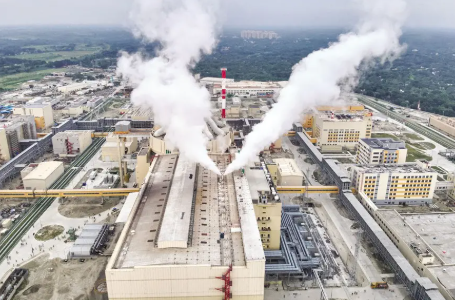
Government initiatives to bring the 2,400 MW Rooppur Nuclear Power Plant into operation are expected to supply about 10 per cent of the country’s electricity. The first unit (Unit 1, featuring a 1,200 MW installed capacity) is projected to start supplying power to the national grid-hopefully reaching 300 MW initially-by the end of this year. The Bangladesh Atomic Energy Regulatory Authority (BAERA) issued a permission on 08 October 2026 to commence the physical start-up of the nuclear fission reaction in Unit 1. With this critical regulatory approval, the Rooppur NPP will initiate step-by-step operations to generate power and integrate safely with the national grid.
Beyond addressing short-term energy supply challenges, Bangladesh must maintain momentum toward securing reliable and affordable energy over the medium and long term. Scaling up domestic gas exploration and developing large-scale, commercially viable coal mines will help balance the nation’s primary energy mix. Ultimately, achieving sustainable, commercial-scale coal production and alleviating the import burden of primary commercial fuels will require the government’s continued support and involvement.
The government’s increased interest has now brought the focus back to domestic coal development. Policy planners understand that meaningful coal production, which may really help address the primary energy supply from domestic sources, must come from an open-pit coal mine implemented in the Phulbari-Barapukuria area of northern Bangladesh. Some additional coal production can come from the existing Barapukuria (for 5 to 7 more years with a significantly large government investment) underground mine.
However, attracting international investment, appropriate technology, and competent operators for sustainable and balanced mining will remain a distant dream if the country continues to circle around debates and rhetoric about underground versus open-pit mining in Bangladesh. The issue has been kept alive to date by certain interested groups, who ignore the fundamental question of whether an uneconomic and losing mining enterprise can address people’s concerns for environmental and social issues, as well as the sustainable production of coal. Furthermore, it ignores the issue of how Bangladesh can meet the challenges of huge import bills for primary energy (Bangladesh already imports nearly 20 million tonnes of coal annually, spending nearly 1.3 billion US dollars to feed its existing coal-fired power plants).
As reported, the government has put forward the Phulbari coal deposit for open-pit mining as a priority, since all necessary technical, environmental, and social assessments, as well as the mine development scheme, have been completed to attract investors to the field for the production of coal within the shortest possible time. Barapukuria may follow this path, but it needs 8 to 10 years and considerable government investment to complete the necessary studies and mine planning. If the Phulbari-Barapukuria coal mines can be developed as world-class open-pit mines, the high-quality, almost sulfur-free coal with high calorific value can easily offset imports and significantly balance the primary energy mix in the country.
In addition, Bangladesh needs to further regional power grid development cooperation to take advantage of regional electrical energy trading. Bangladesh needs to explore the possibility of using safe and advanced nuclear energy technology for power generation. The government will need to expand nuclear power generation capacity, incorporating both conventional and Small Modular Reactor (SMR) technologies.
While SMR technology offers promising prospects and relative advantages for scaling up production capacities alongside increasing electricity demands, it must be noted that the block-by-block addition of factory-made SMR units will work only if Bangladesh can secure the necessary land (with future expansion plans) and ensure nuclear safety ahead of SMR unit installation. Nuclear power, by nature, serves as a baseload power source. Therefore, Bangladesh needs modern and stable transmission and distribution systems to effectively utilize efficient nuclear power. Experts believe that a 10-15 per cent nuclear share can effectively be integrated into the country’s power generation system.
A sustainable energy infrastructure for Bangladesh should feature a balanced, multi-source power generation roadmap and effective transmission and distribution systems run by a competent, well-educated workforce.
Mushfiqur Rahman is a mining engineer and writes on energy and environment issues.
mushfiq41@yahoo.com
Source: The Financial Express