
Highlights
- Samanta Shermeen resigns, accusing NCP of abandoning its founding values
- She rejects Jamaat alliance, questioning its commitment to democratic reforms
- She says the alliance undermined NCP’s independent political identity
- She accuses NCP leadership of sidelining women after the uprising
- She criticises committee restructuring without a party council
- She calls for new politics centred on democracy, equality and sovereignty
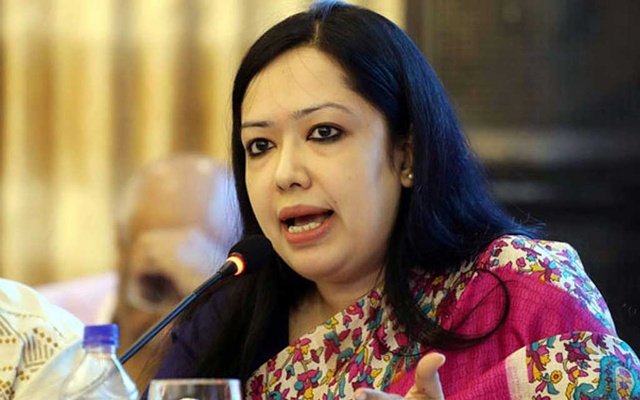
Samanta Shermeen has resigned from the National Citizen Party (NCP), saying the party has abandoned the values on which it was founded and failed to build a new political identity outside the traditional political system.
She announced her resignation in a Facebook post around 6:30pm today (5 November), saying it followed nearly a year of internal efforts to challenge the party’s political direction, particularly its decision to form a political alliance with Jamaat-e-Islami.
Samanta, who previously served as a senior joint convener, was made a joint convener on 23 October.
In her statement, she said she had spent the past 11 months raising concerns about the party’s past activities and future direction through written complaints, proposals and discussions at different levels of the organisation.
She said she had initially chosen to pursue an ideological struggle within the party, believing that challenging its decisions through recognised forums was the democratic way to steer it away from what she considered a wrong course.
“Today, I am bringing that nearly year-long struggle to an end,” she wrote, adding that even if the NCP eventually withdrew from its alliance with Jamaat, she did not believe it could develop an independent political identity, ideology and programme outside the traditional political framework.
Says Jamaat is not a suitable ally for democratic reform
Samanta said the NCP’s politics was originally rooted in reform, which she said should encompass constitutional changes, legal reforms and restructuring the country’s political parties.
She argued that Jamaat did not consider any of these reforms part of its own political project and did not genuinely represent the politics of reform.
She also questioned the party’s ideological foundations, alleging that its proposed state model was incompatible with democracy. She criticised Jamaat for not acknowledging its role in 1971 as a crime or apologising to the nation.
Samanta said the NCP’s decision to view Jamaat as a partner in reform had alienated liberal and democratic sections of society, weakening the party’s own political identity.
She said the NCP was gradually losing its distinct political identity within Jamaat’s political framework and increasingly playing a reactive or supportive role on various issues.
Criticises NCP’s election strategy
On the 13th national election held on 12 February this year, Samanta said the NCP had an opportunity to turn the vote into a political contest for systemic change rather than simply a transfer of power.
She argued that the party could have joined forces with those seeking to challenge the existing political system or contested independently to advance a distinct political agenda.
Instead, she said, the NCP had joined an alliance with a larger political party, undermining its independent politics and the possibility of a new post-uprising political order.
She also claimed to have proposed five alternative strategies that could have helped the party exert greater political influence without joining the 11-party alliance, but the leadership did not pursue them.
Samanta further criticised what she described as the use of the death of Inqilab Moncho spokesperson Shaheed Osman Hadi as a justification for joining a larger party’s alliance, calling the reasoning unjustified and politically motivated.
Accuses party of sidelining women
Samanta said women had played a crucial role in the 2024 July Uprising, serving as frontline participants, organisers and protectors of the movement.
She alleged that conservative political forces had sought to push women out of the political space after the uprising, and that the NCP had failed to challenge this trend.
She said the party had an opportunity to establish a new political culture based on gender equality by ensuring women’s meaningful representation in leadership, decision-making and organisational power.
Instead, she alleged, the party had marginalised women, failed to give adequate importance to their protests and made decisions based on a male majority.
Samanta argued that women’s participation should not be limited to symbolic representation, saying they needed greater representation, authority and an effective role in decision-making.
She also questioned whether women’s prominent presence at the forefront of the uprising had reflected recognition of their leadership or whether they had been used as a protective shield in moments of danger.
Questions NCP’s restructuring of convening committee without a party council
Samanta also criticised the NCP leadership for restructuring its convening committee without holding a party council.
She said timely councils were essential to ensuring internal democracy, leadership accountability and representation of grassroots members.
According to her, restructuring the convening committee without holding a council had undermined the party’s democratic environment and repeated practices associated with traditional political parties.
She said the move had also raised questions about the NCP’s credibility in demanding democratic and impartial elections at the national level when it could not ensure democratic leadership selection within its own organisation.
Calls for a politics of unity
In the final part of her statement, Samanta called for a new political force built around national interests, democracy, sovereignty, women’s equal participation and economic justice.
She said Bangladesh needed a politics of unity rather than division, based on a shared commitment to building a democratic state rather than a particular ideology or religious identity.
She also called for an independent foreign policy guided by Bangladesh’s interests, arguing that the country should apply the same standards to its relations with India, the United States, China and other countries.
Samanta urged young people to organise around a new political initiative rather than reproduce the practices of existing parties.
“I want to advance the project of building a democratic Bangladesh together with you,” she wrote, inviting those interested in discussing the initiative to contact her.
Source: https://www.tbsnews.net/bangladesh/politics/samanta-shermeen-resigns-ncp-says-party-has-abandoned-its-founding-values