India is working to stop water from flowing into its neighbour Pakistan after suspending a major river-sharing treaty between the two Asian rivals last year, a senior minister has said.
India last year suspended the 1960 Indus Water treaty with Pakistan following an attack in Kashmir that killed 26 people.
A federal minister in the ruling government confirmed that India is steadfast in ensuring “not a single drop of water” will flow into Pakistan as the two countries continue to be in a diplomatic standoff over terrorism and cross-border clashes for more than a year.
“It still stands; rather, the treaty has been kept in abeyance. And since prime minister (Narendra) Modi took this decision, every effort is being made to ensure not a single drop flows there. Under the prime minister’s directives, home minister Amit Shah is also personally monitoring the matter, and we are actively working on it,” Indian minister of water CR Patil said on Tuesday.
India and Pakistan are signatories of the treaty governing the use of water from six rivers whose headwaters originate in India but flow into Pakistan due to the Indus basin shared by the two sides.
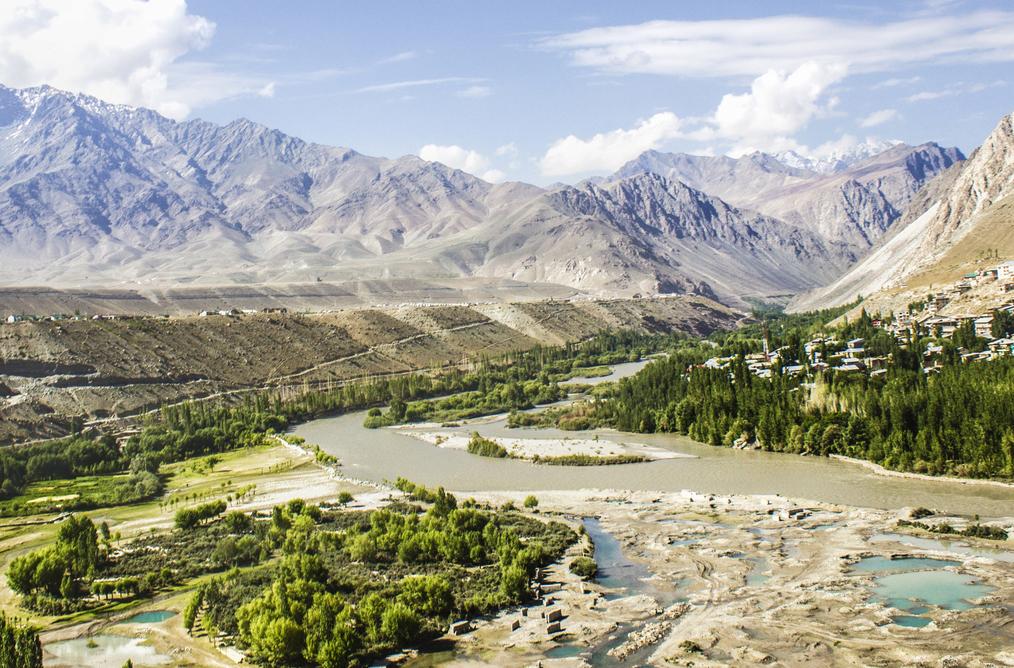
Brokered by the World Bank, the Indus Water treaty has divided six rivers of the Indus basin between the two countries. The three western rivers – Indus, Jhelum, Chenab – went to Pakistan and the three eastern rivers – Ravi, Beas, Sutlej – to India.
The water flowing from the Indian-origin basin is a lifeline for millions of Pakistanis relying on it for hydropower generation, drinking supply and irrigation for the agriculture-dominant country.
According to the treaty, India is required to allow 43 million acre-feet of water to flow into Pakistan annually. That makes up roughly 80 per cent of Pakistan’s total surface water, a crucial lifeline for its agriculture, cities, and hydropower generation.
The treaty allowed India limited use of the western rivers for non-consumptive purposes like hydropower generation, but prohibited it from altering their flows in a way that could harm Pakistan’s access.
Pakistan has accused India of weaponising water and said it will consider any attempt to change the flow of cross-border waterways as an “act of war”.
India last year announced a raft of measures to downgrade its ties with Pakistan. Indian foreign secretary Vikram Misri told the media that the cross-border involvement in the Kashmir attack was underscored at a special security cabinet meeting, prompting it to act against Pakistan.
India’s response came after the attack in the Baisaran Valley in the Pahalgam area of the scenic, Himalayan federal territory of Jammu and Kashmir. The region has been at the heart of India-Pakistan animosity for decades and the site of multiple wars, insurgency and diplomatic standoffs.
It was the worst attack on civilians in India since the 2008 Mumbai shootings, and shattered the relative calm in Kashmir, where tourism has boomed as an anti-India insurgency has waned in recent years.
A little-known militant group, the “Kashmir Resistance”, claimed responsibility for the attack in a social media message. Indian security agencies say Kashmir Resistance, also known as The Resistance Front, is a front for Pakistan-based militant organisations such as Lashkar-e-Taiba and Hizbul Mujahideen.
Pakistan denies accusations that it supports militant violence in Kashmir and says it only provides moral, political and diplomatic support to the insurgency there.
After the four-day border conflict between the two nations in the days following the attack, Delhi had declared that it would stop participation in the treaty “until Pakistan credibly and irrevocably abjures its support for cross-border terrorism”.
Islamabad said the treaty remains in force as there is no mechanism permitting India to unilaterally withdraw from it.
The Indus Water Treaty has been one of the primary points of contention and among the first to be withdrawn between the two sides in the past decades when the two countries have faced war-like situations.
Earlier this month, Pakistan accused India of wanting to “weaponise” water after New Delhi announced two projects on the section of Chenab river it controls.
Source: https://www.independent.co.uk/asia/india/india-pakistan-indus-water-treaty-modi-b2993159.html?shem=dsdf,sharefoc,agadiscoversdl,,sh/x/discover/m1/4