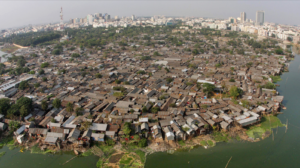
Housing is a fundamental human right and the foundation on which people can exercise and enjoy many other rights. Access to adequate housing, a dignified standard of living and livelihood opportunities is equally important for all citizens of Bangladesh, including those living in low-income settlements. The New Urban Agenda and the Sustainable Development Goals (SDGs) for 2030 make this a global commitment through the principle of ‘leaving no one behind’. Despite these commitments, low-income residents across Bangladesh, particularly in Dhaka, continue to face inadequate housing, poor living conditions and limited access to basic services.
The harsh reality of low-income settlements in Dhaka
Although the policy framework has grown progressively broader, conditions in low-income settlements remain far from these aspirations. According to the Population and Housing Census 2022, Dhaka has the highest number of slum dwellers in the country. Of the 1.8 million (18 lakh) people living in slums across Bangladesh, 884,000 (8.84 lakh) reside in Dhaka. Dhaka also has the highest number of rootless or floating individuals, with 9,470 homeless people counted within the city limits. In low-income settlements, population density is around 1,012 people per acre, five times that of Dhaka city as a whole.
Approximately 78% of Dhaka’s large slums are located in low-lying areas (Noshin & Faiaz, 2022). They are overcrowded. All family members, from the youngest to the oldest, live in a single room; five to eight members share a 150 sq ft room (Waliuzzaman, 2020). The dwelling units are made of tin sheets, bamboo and straw, which are not durable. Nevertheless, residents pay more rent per square foot than higher-income people in the city. In the Korail slum, rent accounts for around 68% of residents’ income (Sinthia, 2020). In the Bhasantek slum, residents spend as much as 40% of their total household income on rent (Hussain et al., 2015). Eviction is another critical problem facing these low-income settlements. Without properly documented tenure rights, development project authorities often find it difficult to rehabilitate affected residents.

Poor and inaccessible water, sanitation and hygiene (WASH) facilities are another serious problem for residents. It takes 1.5 to 2 hours to collect water. Temporary toilets without any enclosed sanitation system and hanging toilets connected to drainage channels are common. Some toilets have no internal water supply. This puts people’s privacy and safety, particularly those of teenage girls, at serious risk. Some 91% of households share toilets, with an average of 16 families sharing one toilet (Granada et al., 2018). People wait about seven minutes in a queue to use it.
Low-income residents bear a disproportionate burden of disasters and extreme weather events. During periods of heavy rainfall, many informal settlements become inundated. During scorching summers, inadequate housing conditions, overcrowding and limited access to cooling facilities make residents particularly vulnerable to heat stress (Azim, 2024). Fires are also frequent in these settlements and often cause devastating losses of life, homes and livelihoods. These natural and human-induced hazards intensify existing vulnerabilities and expose residents to multiple economic, social and environmental hardships.
Low-income housing and national commitments
According to the United Nations definition, the human right to adequate housing means that housing must include seven core elements: security of tenure, availability of services, affordability, habitability, accessibility, location and cultural adequacy. Low-income settlements in Dhaka fall far short of these minimum requirements.
National housing policies
The first national housing policy for Bangladesh was approved in 1993. It recognised housing as a basic need, prioritised poor and low-income groups, encouraged participation by the private sector, NGOs and communities, and sought to control slums and unplanned development. The 2016 policy retains those principles and expands on them to address the much more complex housing environment created by urbanisation, population pressure, land scarcity, environmental concerns and rising construction and land costs.
The 1993 policy recognised the need for affordable and appropriately located land. The 2016 policy introduces more specific mechanisms, including land banks and the use of unused or khas land, to increase the supply of land for housing and reduce housing costs. It places greater emphasis on the incremental upgrading and rehabilitation of informal settlements than on simply eliminating them. It also calls for more explicit use of soft loans, housing funds, public–private partnerships (PPPs), and savings and investment mechanisms.
Five-year plans
Bangladesh’s Five-Year Plans (FYPs) show how the country’s approach to housing the poor and middle class has shifted over time. Initially, the government tried to build complete houses for people. Later, it changed its approach and began providing plots of land with basic services or constructing multi-storey blocks of flats.
The First Five-Year Plan (1973–1978) stressed the importance of cooperative housing, a shelter programme for the urban poor and lower-middle-income groups. It also proposed planned temporary shelters for the poor. However, these plans were implemented only to a limited extent. In January 1975, the government launched a sudden, large-scale squatter clearance operation and forcibly displaced the urban poor who had migrated to the city. They were either compelled to return to their villages of origin or relocated to makeshift camps in Dattapara, Tongi, Chanpara in Demra and Bhasantek. The operation attracted widespread criticism and demonstrated that forced eviction is neither a sustainable nor an effective solution to urban poverty and informal settlements. Such measures leave the underlying housing crisis unaddressed, deepen social and economic insecurity and generate further socio-political unrest.
The Second Five-Year Plan (1980–1985) also prioritised low-income housing, but the implementation of housing projects was limited. The Fourth (1991–1995) and Fifth (1997–2002) Five-Year Plans focused heavily on “sites and services” schemes. Instead of complete houses, the government provided plots, roads and utility lines. Unfortunately, wealthier groups and government officials often ended up acquiring these plots. The National Housing Authority (NHA) was established during this period with a mandate to meet the housing needs of low- and middle-income groups.
The Sixth (2011–2015) and Seventh (2016–2020) Five-Year Plans recognised that cities were growing rapidly. The plans shifted towards multi-storey flats and high-rise apartments to make optimum use of land in densely populated cities such as Dhaka. The Sixth FYP proposed low-cost, multi-storey buildings for slum dwellers and sites-and-services schemes for low- and middle-income groups.
The National Housing Policy was approved during the Seventh FYP (2016–2020). It aimed to coordinate fragmented housing initiatives. This plan emphasised improving access to land and housing and proposed establishing a special zone for the urban poor. It also introduced the concept of in-situ upgrading or improvement of slums. Furthermore, it proposed low-income housing loans and rental housing.
The Eighth Five-Year Plan (2020–2025) again expressed a commitment to addressing the housing needs of the poor and mentioned the Social Housing Project, slum improvement, the development of rental housing for low-income groups and collective tenure security. The Eighth FYP also called for a special quota for poor people and people with disabilities in publicly developed housing projects.
Despite these commitments over the past five decades, very little has been done to address the housing needs of disadvantaged sections of society. The private sector has largely been indifferent to the housing needs of the urban poor, as most private housing initiatives are driven by market demand and cater to middle- and upper-income groups. Regrettably, although urban development authorities in Bangladesh have undertaken several large-scale housing projects in Dhaka and other cities, little tangible progress has been made in providing adequate and affordable housing for the urban poor.
According to the Sustainable Development Goals: Bangladesh Progress Report 2025, “Bangladesh has experienced unplanned urbanisation, with over 31.5% of the population now living in cities, and more than half of them residing in urban slums. Although there has been very little progress, the percentage of urban residents living in slums has dropped from 54% in 2014 to 51.5% in 2022, falling well short of the 20% target by 2030.”

Low-income housing in Dhaka’s Detailed Area Plan (2022–2035)
For the first time, in the Detailed Area Plan (DAP) 2022–2035, RAJUK has proposed 58 locations for affordable housing, particularly for low- and lower-middle-income people. Figure 1 shows these locations. Of these sites, 53 are within RAJUK’s jurisdiction, covering around 1,011.2 acres of land (Table 1), while five lie within the Gazipur City Corporation area. RAJUK and the National Housing Authority, in coordination with other agencies, could take the initiative to implement this DAP proposal.
Table 1: Distribution of affordable housing locations proposed in the DAP for low- and lower-middle-income groups, by ownership and area
| Current ownership of the designated sites | No. of Sites | Area (Acre) |
| RAJUK |
12 |
121.56 |
| Government land |
5 |
136.64 |
| NHA & mostly private |
8 |
53.77 |
| DNCC |
5 |
29.49 |
| PWD & T&T |
1 |
58.84 |
| Dhaka WASA |
1 |
73.33 |
| Privately owned land |
6 |
269.35 |
| Ownership data not available |
15 |
268.22 |
| Total |
53 |
1,011.2 |
Source: Detailed Area Plan for Dhaka (2022–2035) and RAJUK (2025). বাসযোগ্য ঢাকা মহানগরীর জন্য কর্মপরিকল্পনা
Addressing the unfinished agenda of affordable housing for low-income people
Internationally, the signatories to the SDGs, including Bangladesh, are committed to ensuring access to adequate housing for all. At the national level, low-income housing is addressed in the country’s successive Five-Year Plans and national housing policies.
Within these policy frameworks, the NHA is mandated to provide housing for low- and middle-income groups, and the DAP 2022–2035 has, for the first time, spatially acknowledged this need by earmarking dedicated locations for affordable housing in the Dhaka metropolitan area. Among the barriers to realising these commitments on the ground, land tenure and ownership stand out. Land ownership is central to housing provision because land is the fixed asset that determines housing availability, cost and security.
Against this backdrop, while working on the Housing and Land Use chapter of the document “বাসযোগ্য ঢাকা মহানগরীর জন্য কর্মপরিকল্পনা”, our team decided to focus on housing for low-income people in Dhaka. To understand the views of various stakeholders and develop a proposal for low-income housing, we organised a workshop in collaboration with RAJUK on 18 February 2025. Given the problems related to land ownership, a vacant plot in the Uttara Third Phase area was selected as the study site from among the 53 locations proposed in the DAP (2022–2035). The 9.04-acre site, commonly known as Uludaha playground, is located in Ward No. 52 of Dhaka North City Corporation. Workshop participants of the workshop considered the site highly promising, as the land is government-owned and readily available, and there is demand for low-income housing. The workshop also reached a consensus on the following points:
-
A collective or public ownership model is safer and more equitable than individual ownership. Allocating government (khas) land for long-term use was preferred.
-
A mixed-ownership model was proposed in which 25% of dwelling units would be rental-based and 75% would be allocated under the “Rent-to-Ownership Model”. Under this approach, residents would initially occupy housing units as tenants and, after completing a predetermined rental period and meeting agreed payment conditions, would have ownership transferred to them. The importance of joint husband-and-wife ownership, non-transferable titles and income-based allocation was also discussed.
-
Emphasis was placed on a multidimensional financing framework involving the government, the private sector, international development organisations and the community. Bangladesh Bank, PKSF, the World Bank, ADB, UNDP, CSR funds and community savings systems were identified as potential sources of financing.
-
The proposed dwelling unit sizes range from 250 sq ft to 600 sq ft, with an emphasis on a cluster model that includes common amenities and ensures public participation.
-
A needs assessment, community participation, the formulation of a model plan, local capacity building, workshops and learning from successful examples (such as Thailand’s CODI or Jhenaidah’s POCAA model) were proposed.
Below is a list of short-, medium- and long-term proposals to meet the housing needs of low-income people, based on discussions at the consultation workshop and a review of global practices.

The proposal
Short term (within three years)
-
Of the 53 sites within RAJUK’s jurisdiction identified in the DAP, prioritise those that are government-owned, located close to existing settlements and relatively large for low-income housing projects in Dhaka.
-
Formulate specific legislation and effective policies to ensure the transparent and equitable implementation of affordable housing programmes and the fair allocation of housing units among the target population.
-
Establish a specialised “Affordable Housing Cell” under the National Housing Authority (NHA).
-
The cell should comprise representatives from the National Housing Authority, RAJUK, the Ministry of Housing and Public Works, and Dhaka North and South City Corporations to ensure effective coordination among the relevant agencies.
-
The cell should conduct research on the housing needs, affordability and living conditions of low-income communities and involve universities and research institutions in the process.
-
Given the high demand for rental housing, establish a dedicated unit within the cell to oversee rent determination, housing allocation and overall management.
-
Establish an initial fund under Bangladesh Bank to support project implementation.
-
Develop an effective public–private partnership (PPP) model for implementing affordable housing projects. Under this model, the government would provide land and subsidies, while private developers would undertake construction. Developers would recover their investments by selling a designated proportion of the completed housing units at market prices.
-
Take initiatives to secure low-interest financial assistance from foreign development partners to support project implementation.
Medium term (three to six years)
-
Formally designate affordable housing as a priority government programme.
-
Incorporate affordable housing into the country’s Five-Year Plans and adopt corresponding budgetary and policy measures.
-
Identify abandoned, unused khas and other vacant government land under the Ministry of Land and bring it under affordable housing programmes.
-
Provide affordable and decent housing for workers employed in industrial areas, particularly in economic zones across the country.
-
Provide government incentives and policy support to encourage and engage industry owners in providing affordable housing for their workers.
-
Establish a mechanism and policy framework under the Bangladesh House Building Finance Corporation (BHBFC) to provide low-income families with access to housing loans on affordable and flexible terms.
-
Introduce long-term, low-interest loans with repayment periods of 25–30 years.
-
Facilitate the provision of housing loans ranging from BDT 200,000 to BDT 500,000 at low interest rates through microfinance institutions (MFIs) to support low-income households.
Long term (six to ten years)
-
Ensure the effective implementation of affordable housing projects beyond Dhaka by gradually extending them to divisional and district towns across the country.
-
Establish and manage a Joint Maintenance Fund to ensure the sustainable maintenance of completed housing complexes, with participation from RAJUK, city corporations and residents’ welfare associations.
-
Promote local businesses and generate employment opportunities by developing mixed-use commercial spaces within project areas.
-
Integrate affordable housing projects with the city’s major transport networks and other essential urban services and facilities.
-
Conduct regular research to assess changing patterns in the incomes, living standards and housing needs of low-income communities.
-
Update the planning, design and financing models of future housing projects based on research findings.
All development efforts are called into question when a significant proportion of the population struggles to find a decent place to live in comfort, dignity and security. The government must translate its commitment to affordable housing into concrete action through sustained investment, innovative financing, stronger institutional coordination and inclusive housing policies that prioritise low-income communities. However, limited public resources, rising land prices, institutional weaknesses and the growing gap between housing costs and household incomes remain formidable obstacles. Overcoming them requires political commitment, new partnerships and a shared vision of inclusive urban development.
Dr Ishrat Islam and Dr Afsana Haque are professors in the Department of Urban and Regional Planning at BUET. Dr Shammi Akter Satu is a professor in the Department of Urban and Regional Planning at Jahangirnagar University. Jalal Ahmed is the principal architect at J. A. Architects. Md Muntasir Mamun is a technical expert (urban planning) at the Bureau of Research, Testing and Consultation, BUET. Md Rakibul Hasan Himal is an assistant town planner at RAJUK. Shafiqul Hassan Shawon is a research associate at the Urban Development Directorate. Kaniz Jahan, Aditya Chowdhury and Md Ashfak Nahin Chowdhury Mugdho are research assistants at BUET, AUST and BRAC University, respectively.
Note: In 2024, RAJUK took the initiative to prepare an Action Plan for Dhaka titled “বাসযোগ্য ঢাকা মহানগরীর জন্য কর্মপরিকল্পনা” (available at https://rajuk.gov.bd). The authors of this article worked on the Housing and Land Use chapter of this document. This article is a summarised and modified version of the material presented in that chapter.
References
Azim, A. (2024) A study on the impact of heatwave on low-income households in Dhaka and their coping mechanism. Unpublished Undergraduate Thesis, Department of Urban and Regional Planning, BUET, Dhaka.
Fairuz Noshin and Ahmed Mushfiq Faiaj (2022). Spatial analysis of the slums of DNCC and DSCC. Unpublished Undergraduate Thesis in the Department of Urban and Regional Planning, BUET, Dhaka.
General Economics Division (GED), Bangladesh Planning Commission. (2025). Sustainable development goals: Bangladesh progress report 2025. Government of the People’s Republic of Bangladesh.
Granada, Yurani Arias (Y. A.), Sabrina Sharmin Haque, George Joseph, and Monica Yanez Pagans (2018). Water and sanitation in Dhaka slums: Access, quality, and informality in service provision. World Bank Policy Research Working Paper.
Rasel Hussain, Amit Kumar Saha, Golam Rabbani, Irin Pervin, Wasifa Tasnim Shamma, and Sazzad Hossain Khan (2015). State and the low-cost housing for the poor: Fall of Bashentek Rehabilitation Project (BRP) in Dhaka City, Bangladesh. Journal of Education and Practice, Volume 6, Number 13.
Sanjida Ahmed Sinthia (2020). Development measures for slums of Dhaka city: Case study area Korail slum. Iraqi Journal of Architecture and Planning, Volume 20, pp. 20–55.
Waliuzzaman, S.M. (2020). A commons perspective on urban informal settlements: A study of Kallyanpur slum in Dhaka, Bangladesh. Doctoral thesis at the University of Canterbury.
Source: https://www.thedailystar.net/slow-reads/unheard-voices/news/how-dhaka-can-provide-affordable-housing-4317226