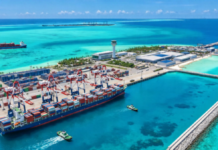
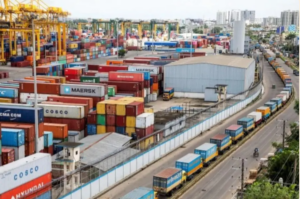
The move to connect all terminals of Chattogram Port through an integrated railway network offers a hopeful prospect for Bangladesh’s logistics sector. In line with the objectives of the Logistics Policy 2025, the initiative seeks to shift freight transportation from roads to railways, promising more efficient and less costly cargo movement while easing pressure on the country’s congested roads.
The policy sets an ambitious target of raising rail’s share of freight transportation from the current 2-3 per cent to 20 per cent. The proposed Green Railway Transport Project Preparation Facility Project, therefore, represents a potentially important step towards realising that ambition. Bangladesh Railway (BR) plans to conduct a feasibility study to improve rail connectivity with all existing and new terminals of the country’s principal seaport, which handles nearly 90 per cent of its export-import trade. The need for an integrated network is becoming increasingly pressing as cargo volumes are expected to rise with the expansion of port operations and the growing activities of economic zones. Yet, the port’s five operational terminals do not enjoy equally direct or adequate railway connections. While the General Cargo Berth, Chittagong Container Terminal and conventional jetty areas represent older facilities, the Patenga Container Terminal and New Mooring Container Terminal have added to the port’s cargo-handling capacity. However, limited freight-rail capacity and inadequate use of existing rail access at some terminals continue to constrain the potential benefits of rail transportation. Moreover, much of the existing infrastructure relies on metre-gauge tracks, which will need to be integrated with the railway’s future plans for broad-gauge freight movement.
The proposed study will examine improvements to the Dhaka-Chattogram freight corridor, rail links from Faujdarhat to Chattogram Goods Port Yard (CGPY), and connectivity between CGPY and the planned Bay Terminal link. It will also assess requirements for freight locomotives, container-handling equipment, loading tracks, storage facilities, shunting space and other supporting infrastructure. Rail connectivity with the Mirsharai Economic Zone and improvements to track-maintenance facilities in Chattogram will also come under consideration. Financed by the World Bank, the Tk 930 million project is expected to complete its studies by the end of 2027. The findings should provide a clearer basis for investment decisions and the development of an integrated freight network.
The environmental argument for this transition is equally compelling. Rail transport reportedly emits 6-10 per cent less carbon than road transport, apart from offering greater energy efficiency in moving bulk cargo over long distances. However, these benefits will remain largely theoretical unless adequate capacity, reliable services and seamless connections between ports, economic zones and inland destinations are ensured. Ultimately, the success of the initiative will depend not merely on laying tracks but on building a coordinated logistics system. A modern port cannot operate at its full potential if cargo movement beyond its gates remains costly, fragmented and inefficient. For Bangladesh, strengthening rail connectivity at Chattogram Port is thus more than an infrastructure project; it is an opportunity to make trade more competitive while aligning economic growth with environmental responsibility.
Source: https://thefinancialexpress.com.bd/editorial/green-rail-connectivity-holds-promise-for-chattogram-port