Indiscipline and the country’s public transport system have been synonymous for long. Initiatives taken by govt agencies from time to time to discipline it appeared to be an eyewash. So, when the road transport minister issued a stern warning to Dhaka city bus owners the other day, asking them to restore discipline in the capital’s bus services within three months, a valid question came to everyone’s mind. Will the deadline be another fiasco?
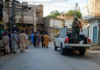
Before trying to find the answer, it is necessary to note that a common term used by the authorities and media, ‘restoration of discipline’ on the road itself, is misleading. You can restore one thing that existed earlier. When were roads or public transport disciplined in the country? The true answer is: probably never. During the ’70s and ’80s, the number of public buses and other motor vehicles was small. So was the population. That’s why Dhaka’s limited roads and streets were mostly free and traffic congestion was concentrated at a few key points. The situation started to change in the ’90s as the city also began to expand to accommodate more people. In the following decades, Dhaka’s rapid but mostly unplanned growth increased chaos on its roads. Instead of focusing on long-term, comprehensive and efficient public transport, scattered and uncoordinated moves to improve mobility led to indiscipline on the roads.
Against this backdrop, let’s look at what drove the minister to set the three-month deadline. Last week, at a meeting with Dhaka city bus owners, the minister expressed disappointment that, despite repeated pledges by bus operators to improve services, little progress was visible on the roads. So, as a tough stance, he set the deadline to ensure discipline, improve passenger services and put well-maintained buses on the roads within three months, as reported in the newspapers.
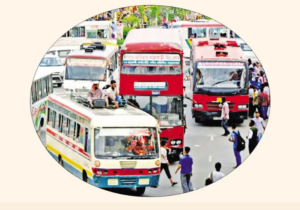
At present, around 7,000 buses operate in Dhaka under approximately 300 companies, owned by at least 4,000 individuals, according to an estimate by the Bangladesh Road Transport Authority (BRTA). Of these, at least 30 per cent of registered buses have exceeded their operational life, though the actual ratio may be higher, as seen on the roads. Millions of commuters in Dhaka still struggle daily with ramshackle, unfit buses that pollute the air and create noise. Moreover, most public buses in Dhaka are mini-buses, which cannot accommodate many passengers at a time. Keeping unfit vehicles on the road makes it impossible to maintain discipline.
Several factors drive road indiscipline, as city roads are busy with private cars, CNG-run auto rickshaws, motorcycles and battery-run rickshaws. The rise in the last two types of vehicles, especially the uncontrolled surge in battery-run rickshaws, has made Dhaka’s roads and streets so chaotic not seen before. The traffic system has almost collapsed in the city, except on some so-called VIP roads. The proliferation of makeshift vendors, who have occupied footpaths and roadsides, makes vehicle movement more difficult. This is mainly due to the strong presence of politically backed rent-seekers who have tightened their grip on roads and also the public transport sector. A study by the Transparency International Bangladesh (TIB) in 2024 estimated that around Tk 11 billion is collected annually in the form of extortion from privately operated buses. The proceeds are shared among politically affiliated individuals, the police, BRTA officials and others. It also noted that around 92 per cent of large bus companies are linked to politicians of which 80 per cent associated with the then ruling Bangladesh Awami League. Now, the BNP-linked men are in control.
Without properly addressing these issues, it is futile to expect bus operators alone to establish discipline in three months. If the government really wants to remove the chaos on the public buses as part of overall road discipline, it has to move ahead with a number of steps in a coordinated manner. Besides removing unfit public buses from the roads gradually by replacing those with clean green buses, it is also necessary to keep the footpaths and roadsides free from illegal encroachment. Curbing the battery-run rickshaws is another big challenge as a strong vested interest group has already come up there. Implementing the bus route rationalisation plan in an effective manner is a must to establish discipline on roads.
The doable things are well known and it requires strong political commitment. The harsh reality is that all these are impossible within three or six months though gradual progress may be workable.
Source: https://thefinancialexpress.com.bd/opinions/disciplining-public-bus-operation-in-dhaka