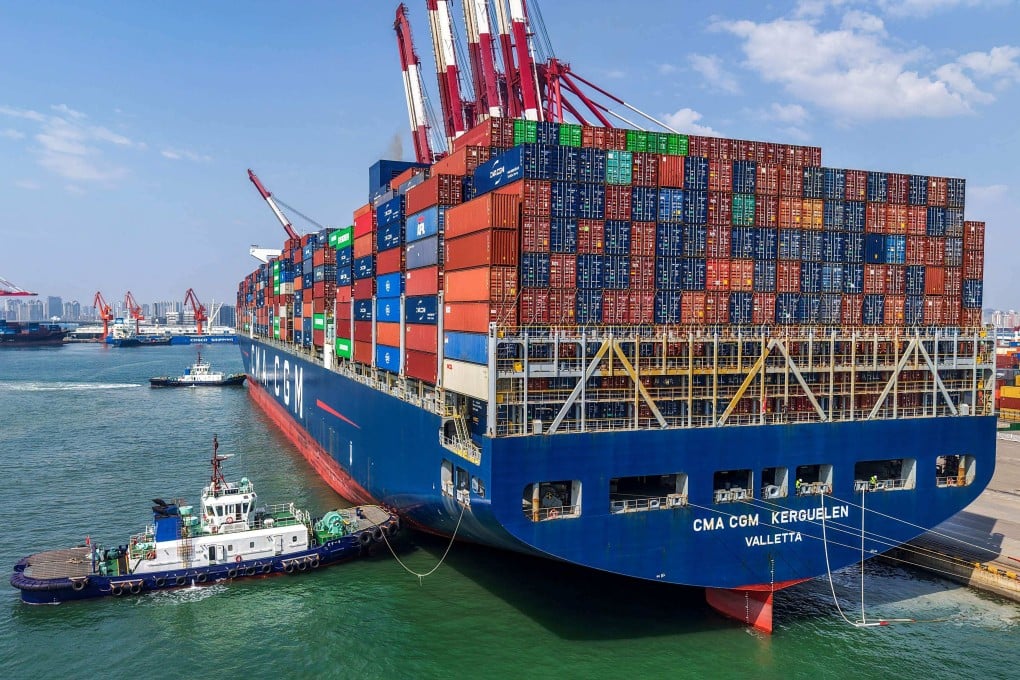
China’s ports continued to dominate global efficiency rankings in 2025, with seven Chinese trade hubs placing in the top 10, according to a study by the World Bank and S&P Global released on Wednesday.
The latest edition of the annual report comes at a time when ports are playing a more vital role in the global economy than ever, as facilities strive to handle intense disruptions to global supply chains amid the aftermath of the Red Sea crisis and the ongoing fallout from the US-Israel war on Iran.
Launched in 2020, the Container Port Performance Index (CPPI) compares the efficiency of more than 400 ports around the world by measuring how long vessels spend in each trade hub on average, as a longer processing time indicates a higher chance of delays and supply bottlenecks.
China’s ports once again led the way in terms of efficiency last year, with Fuzhou in the southeastern Fujian province claiming top spot, followed by Dalian in northeastern China in second place and Oman’s Salalah port in third. Hong Kong placed ninth.
The Middle East, however, experienced a deterioration in performance following schedule disruptions associated with the Red Sea crisis, illustrating the vulnerability of even well-equipped ports to geopolitical shocks, it added.
The scorecard for Western trade hubs was more mixed. While North American and European ports continued to bounce back from pandemic-era disruptions, they remained structurally vulnerable to sudden congestion, labour constraints and hinterland bottlenecks, the report showed.
In particular, ports are becoming more vulnerable to “burst congestion”, which refers to short, intense bottlenecks caused when the number of vessel calls suddenly surges rather than increasing steadily, the report warned.
When such clustering occurs, backlogs can escalate rapidly even at highly advanced gateways, a vulnerability further amplified by landside constraints, according to the report.
“Understanding this two-way relationship is essential,” said Bertrand de la Borde, global director for transport and logistics at the World Bank. “Ports are not just passively exposed to external shocks; they also dynamically shape how those shocks are transmitted. They can either amplify disruptions or help contain them.”