Morning Briefing — Friday, November 20, 2026
1. World developments
- Saudi Arabia intercepted another Houthi missile and five drones. Riyadh was among the reported targets Friday, following Houthi claims that they had attacked Saudi airports, military bases and the capital’s financial district. Saudi Arabia began a major air campaign against Houthi-controlled Yemen earlier this week. The Houthis had not claimed Friday’s launches when AP reported. apnews.com
Why it matters: Continued exchanges threaten to expand the Middle East conflict and raise risks to energy facilities and commercial shipping around the Red Sea and Arabian Peninsula. - Iraq deployed federal forces near a powerful Iran-backed militia stronghold. Iraqi security forces established a command center outside Jurf al-Sakhar after an apparent compromise with Kataib Hezbollah, which the government accuses of oil smuggling. The militia is expected to withdraw within a month, although allied Popular Mobilization Forces will participate in the deployment. apnews.com
Why it matters: Baghdad is testing whether it can reassert authority over armed groups tied to Iran without triggering an internal confrontation. - The Trump–Xi–Putin summit produced a narrower outcome than anticipated. After approximately 70 minutes of talks, the leaders announced no breakthrough on Ukraine, Iran or nuclear-arms limitations. Their stated common ground included reforming the United Nations, expanding fossil-fuel refining and limiting the reach of the International Criminal Court. apnews.com
Why it matters: The meeting created a high-level channel among the three nuclear powers, but it did not materially reduce immediate geopolitical or arms-control risks. - Russia launched another overnight attack on Kyiv. Explosions were heard early Friday, and missile debris reportedly struck a three-story building in the northern Obolonskyi district, causing a fire. Initial reporting did not establish the full casualty or damage picture. new.streetinsider.com
Why it matters: Continued attacks on Ukrainian cities and energy infrastructure increase humanitarian and electricity-supply risks as winter approaches.
2. South Asia
- The International Court of Justice ruled that Myanmar committed genocide against the Rohingya. In a 9–6 decision, the court found that Myanmar’s security forces committed mass killings, widespread sexual violence and other acts intended to destroy a substantial part of the Rohingya population in northern Rakhine State. The court ordered guarantees of non-repetition, safe and dignified return, family reunification, restitution and compensation. Myanmar called the ruling unfair. reuters.com
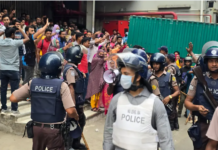
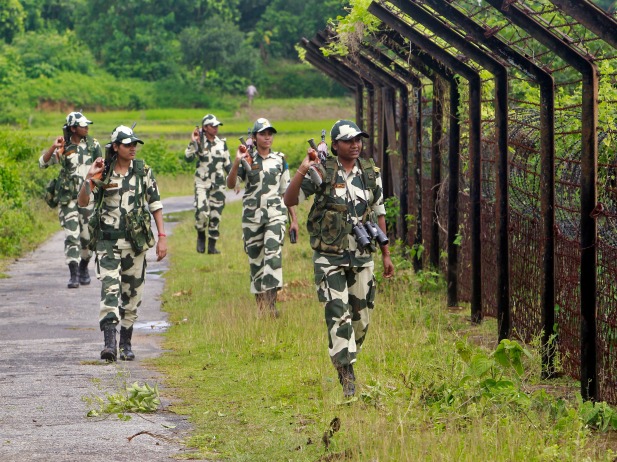
Why it matters: This is the ICJ’s first judgment holding a state responsible for genocide. It provides historic legal vindication for the Rohingya, including approximately 1.2 million refugees in Bangladesh, although the court has limited enforcement powers. - Bangladesh remained tense following an opposition-called shutdown and political violence. The unrest surrounding Sheikh Hasina’s proposed December return included reported killings, arson and the deployment of Border Guard units in several districts. fdd.org
Why it matters: Prolonged confrontation could disrupt transport and garment production while placing additional pressure on Bangladesh’s post-2024 political settlement. - Pakistan said its forces killed 22 militants near the Afghan frontier. The military reported operations in South Waziristan, Bannu and Tank over a 48-hour period. Pakistan alleged that the militants received Indian support; India had not responded, and both India and Afghanistan have previously denied similar accusations. apnews.com
Why it matters: The operations reflect Pakistan’s intensifying militant threat and the accompanying deterioration in relations with Afghanistan.
3. Maritime news
- India relaxed vessel-age restrictions to expand its national fleet. Ships more than 20 years old may now enter the Indian registry with approval from a five-member maritime-administration committee. The rules establish separate conditions for older tankers and other vessel categories, while emphasizing statutory compliance and vessel quality. moneycontrol.com
Why it matters: India wants greater control over strategic imports and crisis-time tonnage, but accepting older ships will require rigorous inspection, maintenance and pollution-prevention enforcement. - Container carriers are gradually returning to the Suez–Red Sea route, but security remains uneven. ONE reportedly completed its first Suez transit in nearly three years on November 15. Maersk and Hapag-Lloyd plan to move three Asia–Europe services from the Cape route to Suez beginning in December and January. IMF tracking showed an average of 4.4 container ships daily through Bab el-Mandeb during the week ending November 15. Forwarder News
Why it matters: A durable Suez return would shorten voyages, reduce fuel consumption and release vessel capacity, potentially lowering freight rates—but fresh Houthi escalation could reverse the process. - Hormuz traffic remains severely depressed. Recent tracking showed approximately 2.3 ships per day through the strait during the week ending November 15, far below prewar levels, while maritime warnings remain in force following multiple tanker incidents. Forwarder News
Why it matters: Reduced movement through the world’s principal oil chokepoint tightens tanker availability, increases insurance costs and leaves global energy prices vulnerable to further attacks. - Black Sea risks remain elevated following the sinking of the LPG tanker Gas Husky. That casualty and a series of earlier merchant-vessel attacks underline the continuing danger near Romanian, Bulgarian and Ukrainian waters. Attribution remains disputed and should not be treated as established.
Why it matters: Repeated attacks could increase war-risk premiums and impede grain, LPG and bulk-cargo traffic even outside Ukraine’s territorial waters.
4. United States
- The Senate passed a major bipartisan energy-permitting bill, 62–33. The legislation seeks faster approvals for power plants, transmission lines, mines and data centers and now proceeds to the House. Supporters argue that it will address infrastructure bottlenecks and electricity costs; critics are concerned about weakened environmental review and expanded fossil-fuel development. Reuters
Why it matters: If enacted, the measure could significantly alter how quickly the United States builds energy and industrial infrastructure—and how effectively affected communities can challenge projects. - Senate Republicans blocked a resolution intended to constrain the Iran war. The vote preserved the administration’s ability to continue military operations without the restrictions sought by the resolution’s sponsors. new.streetinsider.com
Why it matters: The decision leaves substantial war-making discretion with the executive branch as hostilities broaden and congressional scrutiny intensifies. - The White House is changing cybersecurity leadership following major technology outages. National Cyber Director Sean Cairncross is leaving as the administration faces criticism over disruptions affecting government, aviation and commercial systems. His departure also comes before Democrats assume control of Congress in January. International
Why it matters: A leadership transition could complicate federal cyber coordination at a time when interconnected infrastructure failures are receiving greater scrutiny.