by Ghulam Suhrawardi
World Maritime Day 2026 and the case for a coherent national training strategy
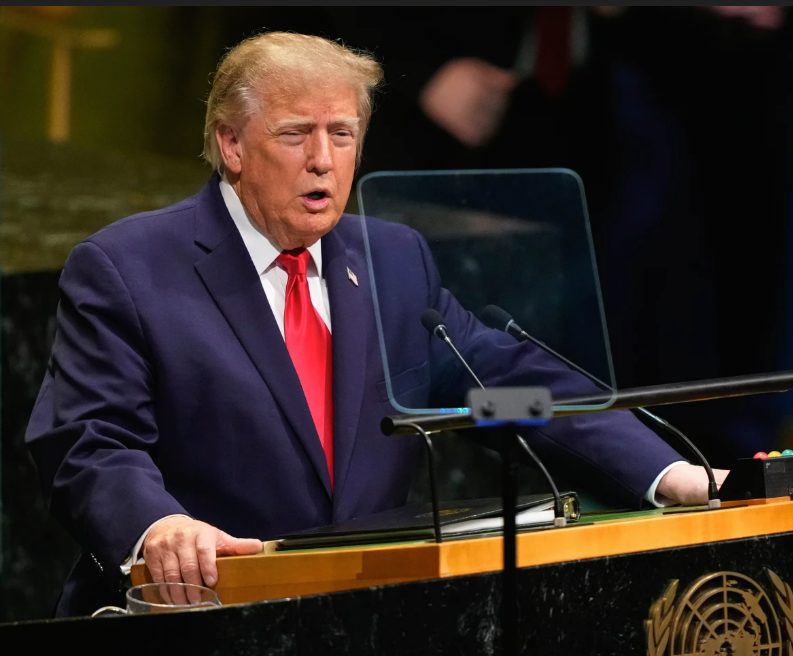
On World Maritime Day, International Maritime Organization Secretary-General Arsenio Dominguez delivered a deceptively simple message: international rules improve shipping only when countries enforce them. “Seafarers come first. Always,” he said, placing the people who operate ships at the center of the IMO’s 2026–27 theme, “From Policy to Practice: Powering Maritime Excellence.” Two days earlier, President Donald Trump had offered a very different maritime message at the United Nations General Assembly. He branded the IMO’s emissions framework a global carbon tax. That will lead to shipping rates increasing by 10-20 percent. Another speaker highlighted the importance of effective execution, while the other pointed to how far-reaching an international framework can be. Bangladesh needs to address both. As a trading nation that relies on ships and ports for goods and energy imports, and that provides citizens jobs abroad, we are affected by this issue today. Other nations will draft safety, manning, pollution, and emission regulations that will directly affect our ports and vessels with Bangladeshi seafarers. As well as importers and consumers at home. Are we equipped to deal with these challenges? It’s time we start at the Bangladesh Marine Academy (BMA) on its anniversary to explore how we can achieve this.
The Gap Between Signing and Doing
According to the IMO, 168 member states have been audited under its member state audit scheme, accounting for 94% of all members. The results show that many countries cannot implement conventions into national legislation. Many countries also lack the technical capacity to monitor ships. A country can agree to a regulation in London, but if it lacks trained inspectors, accurate records, or the motivation to enforce it, the regulation will exist only on paper. Regulations include training; it’s not an extra.
Consider what a competent maritime administration must actually do. It must approve training programs, verify sea service, examine officers, issue and authenticate certificates, investigate casualties, inspect ships, supervise port facilities and keep pace with changes in technology. It must show foreign administrations that its qualifications mean what they claim. A weak link between the classroom, shipboard apprenticeship and certification can damage the prospects of every Bangladeshi seafarer, including those who trained rigorously. The reputation of a national credential is a shared asset.
This is why, on World Maritime Day, there should be some form of institutional review of this issue, not just parades. We need to see how many students join these programs each year, how many secure their berths, how many go on to become officers, how long it takes them to become officers, and what shipping companies have to say about them. It also covers how the Department of Shipping tracks all of these providers. If we do not know this information, we can keep opening more programs that produce graduates who may not finish their training or find jobs.
A Disputed Global Transition, a Real National Obligation
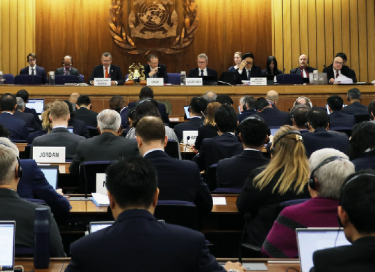
Trump’s criticism of the IMO’s proposed Net-Zero Framework should be treated seriously as a political and economic intervention, but his estimate of a 10 to 20 percent rise in shipping costs is a claim, not an established forecast for Bangladesh. The framework combines a global fuel-intensity standard with a pricing mechanism for greenhouse gas emissions from large oceangoing ships. IMO members approved draft amendments in April 2025, but adjourned their October 2025 meeting before formal adoption. As of this World Maritime Day, the framework is not binding. IMO has indicated that the extraordinary session may resume on December 4, 2026, subject to further committee discussions.
Bangladesh shouldn’t accept writing cheques with no limits on expensive fuel or think they can avoid making plans and that nothing will change. High fuel prices will be reflected in shipping costs, which Bangladesh, as an import-based country and an export industry that competes on price, will feel. Poorly maintained vessels, along with insufficient regulation and training, add costs. Bangladesh should advocate for poor trading countries to be considered when developing a global solution, ensure we know how the revenue will be used, and allow for fair development. Bangladesh needs officers, engineers, and Surveyors/administrators who can run and regulate ships, no matter what standard comes into effect.
New fuels introduce questions of handling, fire protection, emergency response and maintenance. Digital navigation, cyber threats, and more complex machinery demand practical competence that cannot be secured by changing a course name or opening another campus. The proper answer to uncertainty in London is capability at home.
What the Minister Said at Juldia
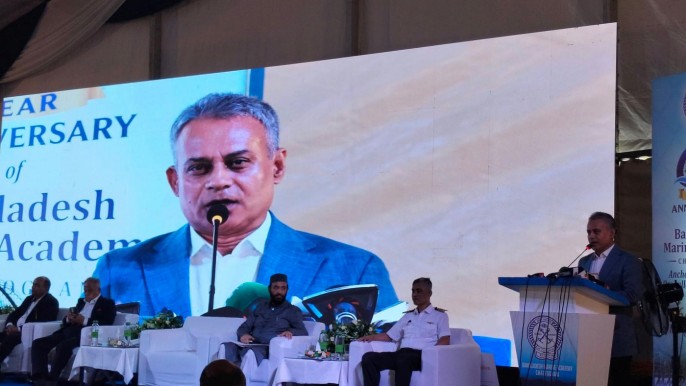
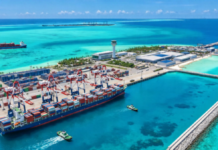
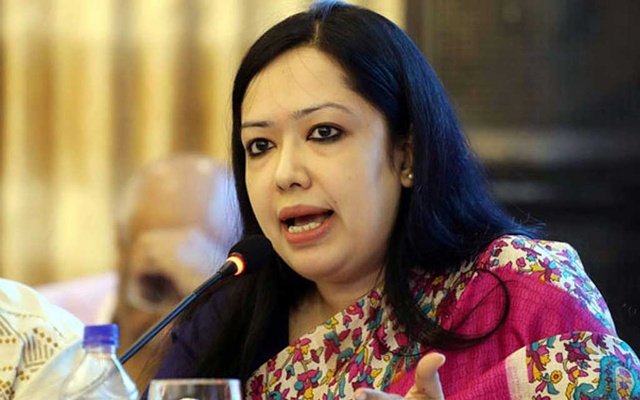
At BMA’s Chattogram campus on September 24, Shipping Minister Sheikh Rabiul Alam said Bangladesh already possesses institutions and infrastructure but needs better coordination to develop its maritime potential. The event, jointly organized by BMA, the Bangladesh Merchant Marine Officers’ Association and the Bangladesh Marine Academy Alumni Association, brought government and professional voices together. The minister also pointed to work on Chattogram’s PCT, NCT, Laldia and Bay Terminal and investment in Mongla. Those projects will require more than concrete, equipment, and finance: they require competent people and credible administration.
It is correct that they lack coordination. But this should be used to make some kind of decision. Who knows how many officers we will need in the coming years? Who ensures the number of students accepted into the academy can fit on ships for sea training? Who tracks student placements and competency levels? Who determines whether another institute is needed or whether it will overlap with what already exists? If each ministry, institute, DG Shipping, ship owner, and alumnus knows a piece of the problem, we will never coordinate. An organization should publish and monitor a coordinated plan and targets.
Bangladesh could utilize its long-standing academy to do this. The Bangladesh Marine Academy was established in 1962 and has produced well-disciplined graduates who understand what it takes to become a professional mariner. Many of these graduates have gone on to successful careers in the marine and shipping industries, as well as port and survey work, and even running businesses. They could help develop teaching materials, secure sea training opportunities, guide students, and advise on what equipment may be needed. If we take this matter seriously, we should start with these types of institutions.
Expansion Without a Labor-Market Test
The government earlier established four new state marine academies in Pabna, Barishal, Rangpur, and Sylhet. PM Sheikh Hasina stated that these academies started working in 2022 and wanted one in each division. Maybe the goal was good for our country, geographically speaking. But marine education won’t increase just by building more buildings. We need knowledgeable teachers, proper simulators and workshop facilities, and monitoring and supervision. And of course, vessels for the cadets to sail on. By opening four more academies, we have created four more responsibilities to meet these needs.
We should ask the Hasina government a few questions. How much did these new academies cost us? How many students have qualified from each of them? How many of those students have been able to sail on board and receive their certificates? Have they taken teachers and facilities away from Juldia? Will spending this money on academies benefit our country through job creation and earning foreign currency, compared to spending it on BMA and placing cadets on board? We should know the answers to these questions for each academy. We will know how much of a waste it has been once we get those answers. Opening more academies doesn’t show how much of a waste it is.
Another issue at hand is providing our country with skilled officers. Many stages go into producing a merchant marine officer. When you focus on only one stage, you create a backlog. Cadets have spent years studying; they deserve better. Their parents do too, and they want to know their child’s chances of sailing on board and getting their license.
We don’t have to close down all the other private academies to make BMA our top school. The government should take measures to ensure our best teachers, facilities, and monitors are at Juldia to produce our merchant marine officers. They can also help other schools by raising the standard of education in our public marine academies. They can also assess what each school excels at. Some may offer strong courses that can support our industry in different ways. Once we have more sea-training slots available and know our labor-force needs, we can increase our intake.
Fisheries Training Needs Its Own Mission
Bangladesh created a fisheries institute. Because we need personnel to operate our vessels. We need boat captains and engineers. People who know fishing gear, people who can process fish, and people who can manage these aspects and more. Fish, safety, and our oceans. But they also teach Nautical Science and Marine Engineering. It says the Merchant Marine is an option for many graduates. Their website also states that many graduates work aboard Local and foreign commercial vessels. So it’s fair to ask whether this institute, created for Fisheries, is helping fill our Merchant Marine. It’s not some far-fetched coincidence.
Our Ministry of Fisheries and Livestock needs to look into this coincidence. With the Ministry of Shipping. Department of Shipping, the private sector, and graduates who have used this facility. How many students take this course? What does each stream cost, and what jobs do these people end up doing? Is our Fleet benefiting from these public funds? If not, we need to look at why we’re spending our money on this. And perhaps limit the number of students taking this course. Bangladesh needs a bigger, safer fishing fleet. Better processing and cold chain. Sustainable practices and to get more out of our seafood export. These are all viable occupations.
There is also a difference between STCW-F, which covers training for Fishing vessel personnel, and STCW, which covers merchant seafarers. You will find your time served as a seafarer on a Continuous Discharge Certificate (CDC). This opens that avenue. But does not automatically make you fit for Merchant Service. The Department of Shipping should review the coursework taught at the Fisheries Academy. It should also review their time at sea and which CDC avenue they are using. Are they using the same practices as other schools that teach these subjects? Should the Fisheries Academy continue to teach this and open a route to Ocean Going service?
Going forward, we should keep our students and public funding at the Fisheries Academy to support our fishing fleet and related occupations. If the government decides that the Fisheries Academy should no longer offer the opportunity to gain Ocean Going service. They need to state their reason. Consult with those who have used this avenue in the past. And allow current students to complete what they have started. No changes should be made that would take away someone’s opportunity.
BMA shouldn’t be given the sole position either. They have built their name over the years and specialize in the field. They should prove themselves through evaluations and produce students who improve our Merchant Marine. One high standard can apply to all institutions that train our mariners and have a reason for their appropriation.
A National Maritime Education Compact
Both ministries should jointly review BMA and the other four academies, plus the Marine Fishery Academy, for a set period. The budget, number of students, faculty members, number of simulators, training ships, exam results, officer certificates, job placement, and employers’ opinions should be disclosed. The Department of Shipping should also make public how it reviews and approves courses. This will separate merchant fleets, fishing vessels, and non-maritime-related jobs. We will no longer hear about a huge number of graduates who actually mean nothing.
Bangladesh should work with national and international ship owners to secure more training places. Alumni can play a role here, but the government has to ensure it happens openly. Students must have a list of available opportunities and feel safe from middlemen taking advantage of this situation. When students train at sea, they should be monitored, and records should be kept. There is no point in spending money on building classrooms if there is no opportunity to train at sea.
The Bangladesh Maritime Academy should serve as the hub for this. New technology fuels and emergency procedures. More simulators for bridge and engine rooms. Incident study, port state control, maritime law and regulations, etc. Marine fisheries experts can do the same for the fishing fleet. They could collaborate on issues common to both fleets.
Maritime Day has shown us that we can only be great when we practice. Dominguez is correct that seafarers should be our priority. Trump has shown these small trading countries how to evaluate what global ideas may do to their economy. Our own minister mentioned collaboration is what Bangladesh needs when addressing mariners in Juldia. Let’s follow through on that and hold BMA responsible for improving our merchant fleet. Allow our marine fishery institute to focus on improving the fishery fleet. And fairly review all opportunities for our cadets to become officers.
The author graduated from BMA in 1969 as part of the sixth batch of nautical studies. He served as President of the Bangladesh Marine Academy Alumni Association (BMAAA).
Source: https://themaritimeblog.org/2026/09/world-maritime-day-bangladesh-must-put-its-marine-academy-back-at-the-center-of-maritime-education/