The Politics of an Improbable Return
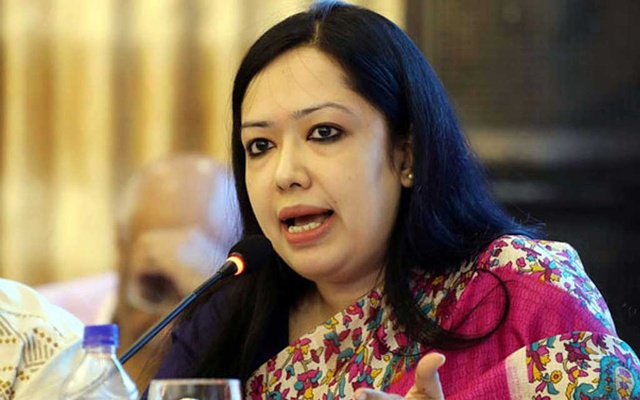
Simply put, Sheikh Hasina’s announcement that she will be coming back to Bangladesh in December 2026 should not be taken as a serious political roadmap. Instead, view it as political theater: a calculated effort to shore up sagging morale within the Awami League ranks, retain control of her party, and remain relevant in Bangladesh’ politics. To call her promise of return a hoax may be an overstatement in the literal sense, but certainly not in the political sense: It’s highly dramatic and will certainly earn headlines, but lacks any substantive explanation of how she will be able to return, face her death sentence, and get politically active again.
Hasina has told international media that she would return voluntarily with senior party colleagues and surrender to the authorities. Yet Bangladesh has repeatedly asked India to extradite her, while New Delhi continues to say that the requests are under legal examination. India has neither confirmed that it will extradite her nor indicated that it would facilitate a triumphant political homecoming.
By speaking from exile, then, her statement accomplishes several goals without actually requiring her presence. It lets AL supporters hold on to hope, shifts focus from August 2024 (when she fled Bangladesh), and staves off discussions about the party’s leadership a little longer. If she returns without some kind of political earthquake first, Hasina would face jail or worse. In short, her ability to strategize is at its maximum from abroad.
India Cannot Reinstall a Discredited Order
Some Awami League supporters appear to believe that India will eventually return Hasina to Bangladesh and restore her government. This is a geopolitical fantasy. India may continue to provide her with refuge and protection, but reinstalling her would require a level of intervention that could ignite widespread anti-Indian sentiment and permanently damage India’s standing among Bangladesh’s 170 million people.
India must recognize that Bangladesh is not a dependent political territory whose leadership New Delhi can select. The relationship deteriorated partly because India became too closely identified with one party and one ruling family. What may once have seemed like strategic continuity ultimately became a liability. By investing disproportionately in Hasina’s government rather than cultivating relations with Bangladesh’s institutions, political parties and people, India left itself exposed when that government collapsed.
India allowing Hasina to stay put is one thing; India allowing its soil to be used for agitating against Bangladesh is another. Hasina’s speech from New Delhi in August 2026 has sparked fury in Dhaka. India claimed to have “no involvement” in the privately arranged meeting, but it can’t erase all the diplomatic fallout.
Bangladesh said former officials, politicians, and senior military officers were allegedly taking shelter in India. The claims that any of them are conducting anti-Dhaka activities from their place of refuge should be investigated openly. India should respond to valid warrants and extradition requests through legal processes if these exist. Protecting them further without legitimate inquiry will only strengthen beliefs that New Delhi is harboring militants who acted against the constitutional process in Bangladesh.
A Relationship on the Wrong Footing
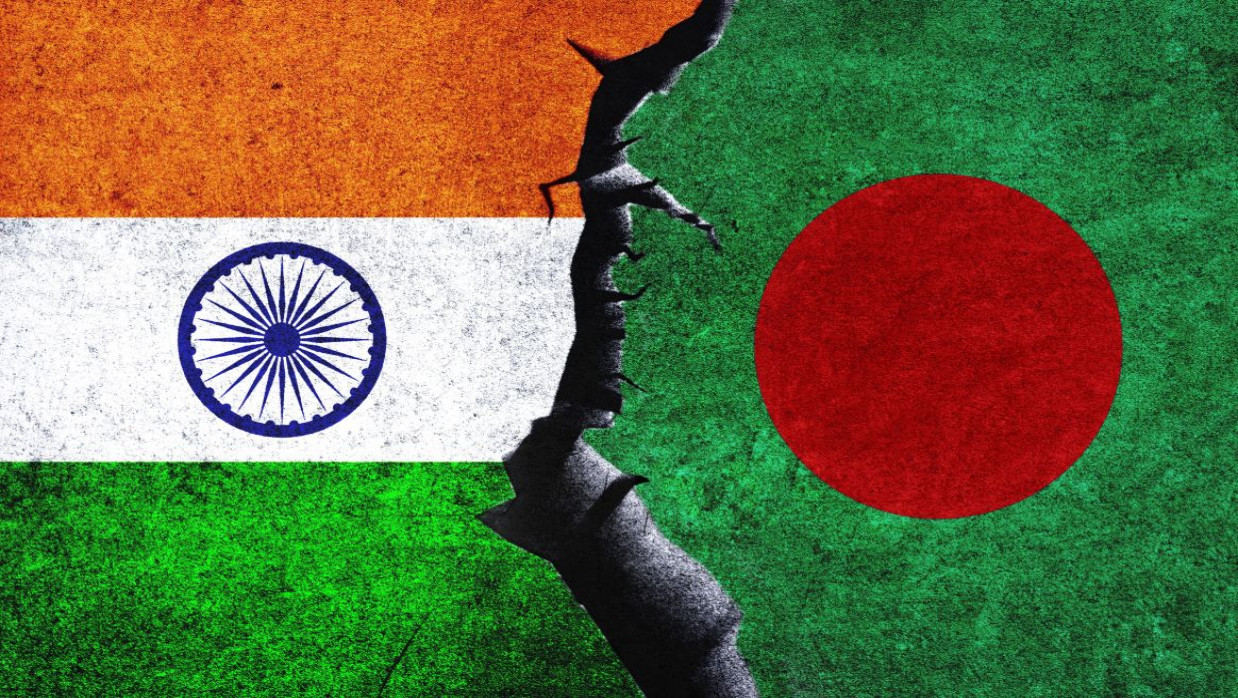
India and Bangladesh are presently standing on the wrong diplomatic footing. Their geography makes permanent hostility irrational, but geography alone cannot create friendship. Electricity, trade, transit and border cooperation are important, yet a sustainable relationship requires mutual respect, reciprocity and sensitivity to public opinion.
Tarique Rahman, Prime Minister of Bangladesh, has been invited to participate in the BRICS outreach meeting in New Delhi as Bangladesh chairs BIMSTEC. Bangladesh, meanwhile, has said conditions should be more conducive to such a visit. Bangladesh drew a parallel between diplomatic ties and the Hasina extradition controversy.
India must genuinely embrace Bangladesh, not merely a favored party, a compliant government or a network of politically convenient individuals. Genuine friendship means engaging whichever government the Bangladeshi people constitutionally choose. It also means addressing border killings, water sharing, trade imbalances, inflammatory media narratives and interference in domestic politics.
On the other hand, Bangladesh should resist reflexive anti-Indianism. India is, after all, its neighbor it can’t wish away; a major market; and a provider of development aid. But friendship does not require strategic abnegation. Dhaka should have no problem cooperating with New Delhi, but does not have to make its foreign policy hostage to Indian interests.
The Awami League as a Family Enterprise
The Awami League could regain political relevance only through deep internal reform, accountability and generational change. Yet Hasina has consistently treated the party as her family’s hereditary property. Instead of cultivating an independent successor chosen through an open party process, she elevated her son, daughter, and other relatives as potential custodians of the family legacy.
Democracy cannot be run as a family business. If the Awami League wants to stay alive, it needs to divorce party history from one family’s personal authority, accept wrongdoings committed during its regime, and allow genuine leaders with no ties to hereditary leadership. Ordering Hasina from India buys time only.
Questions must also be asked about how exiled party leaders scattered across London, New York, Bangkok, Singapore, Canada and Australia are financing prolonged stays abroad. Such questions do not prove criminality, but credible allegations of money laundering and illicit wealth should be investigated through lawful financial-intelligence cooperation.
Looking East and Strengthening National Defense
Bangladesh must now develop strategic alternatives to excessive dependence on India. “Looking east” should involve deeper economic and diplomatic engagement with ASEAN, Japan, South Korea, China, Indonesia, Malaysia, Singapore and Australia. The Bay of Bengal gives Bangladesh a natural gateway to Southeast Asia. Ports, shipping, energy, digital infrastructure, and regional supply chains can transform the country into a bridge between South and Southeast Asia.
Diversification does not mean replacing dependence on India with dependence on China. Its purpose must be balance. Bangladesh should maintain productive relations with India, China, the United States, Europe, Japan and the Muslim world while retaining freedom of decision.
That freedom also requires stronger defense capabilities. Bangladesh needs a modern, professional and politically neutral military supported by credible maritime surveillance, air defense, cybersecurity, intelligence, coastguard and naval capabilities. Defense modernization must not target a particular country; it should ensure that no external power can take Bangladesh’s sovereignty for granted.
Reforming the State from Within
Independence abroad should be complemented with change at home. The government bureaucracy in Bangladesh often has more power than our politicians do and rarely faces consequences. Bangladesh’s government bureaucracy needs to be downsized, appointments and promotions must be based on merit, and bureaucrats should be held accountable for unnecessary delays, corruption, and political discrimination.
Prime Minister Tarique Rahman’s government has an opportunity to begin a democratic renewal, but it must confront youth unemployment, bureaucratic resistance, political extremism and institutional weakness. His appearance at the United Nations General Assembly could help present a more confident Bangladesh to the world and renew interest in regional cooperation, including revitalizing SAARC.
Bangladesh’s future will not revolve around Sheikh Hasina’s promised return or India’s preferences. Bangladesh needs to develop its own balanced foreign policy approach, national institutions, and credible defenses. India will have to choose between supporting one exiled leader and long-term friendship with Bangladesh. It can’t have both, not for long anyway.

Ghulam M. Suhrawardi
Ghulam M. Suhrawardi is the Publisher of South Asia Journal.
Source: https://southasiajournal.net/post/bangladesh/61617/reset-bangladeshindia-relations-building-strategic-alternatives-beyond-hasina-illusion