
The Asian elephant is disappearing from Bangladesh’s landscape as the country progressively removes the conditions it needs to survive.
World Elephant Day should be more than a celebration of the world’s largest land animal. In Bangladesh, it should be a moment of reckoning.
The Forest Department has been entrusted with protecting the country’s reserved forests. Yet outside the Sundarbans, many forest landscapes have become severely degraded, fragmented or converted into plantations that provide little of the structural diversity required by large mammals.
The problem is largely one of habitat, connectivity, food, water, shelter and space.
For an elephant, a forest that looks green from a distance may no longer be a suitable elephant habitat.
Forests designed for timber cannot sustain elephants
Elephants require extensive landscapes rather than isolated patches of forest. They need a mosaic of dense vegetation, shrubby areas, grasslands, natural regeneration, water sources and seasonal feeding grounds.
An adult Asian elephant can consume well over 100kg of vegetation a day, with daily food requirements potentially exceeding 200kg depending on body size, habitat and season.
Their diet may comprise more than 100 species of wild plants, along with fewer than a dozen cultivated crops and fruit-tree species. Water is equally essential. These are enormous animals with equally enormous ecological requirements.
This is where Bangladesh’s forestry and wildlife objectives have increasingly diverged. Forestry programmes may measure success by the number of trees planted or the volume of timber produced, while elephant conservation depends on whether a landscape actually provides food, water, shelter, movement routes and safe breeding habitat.
This means restoring native tree and shrub diversity, encouraging natural regeneration, and maintaining bamboo and grass resources where appropriate, along with waterholes, wetlands, salt licks and other habitat features used by elephants.
In elephant landscapes, restoration should be measured by ecological outcomes rather than simply by the number of trees planted.
Development without wildlife planning
Highways, railways, power infrastructure, settlements, industrial developments and other major projects are progressively cutting through or surrounding wildlife habitats.
Islands and coastal landscapes are being considered for industrial and commercial development, while people living around forests often depend on forest resources and, in some areas, occupy or convert forest land.
Every individual project may appear justified in isolation. Collectively, however, they can produce a devastating ecological outcome: the fragmentation of the landscape into small, disconnected islands of habitat.
For elephants, fragmentation is particularly dangerous because they are wide-ranging animals that traditionally move between feeding areas, water sources, breeding areas and seasonal habitats.
A road, railway, settlement or electrical installation may therefore be more than an obstacle. It may become a wall across an ancient elephant route.
When the forest disappears, the elephant comes to people
The increasing human-elephant conflict in Bangladesh is not difficult to understand.
When elephants lose safe forests, they move in search of food and water. Crop fields often provide abundant, easily accessible food. Villages and settlements may lie directly across traditional movement routes.
The result is predictable.
Elephants raid crops, damage houses and other property, and sometimes cause human deaths. In retaliation, elephants may be injured or killed by frustrated villagers, illegal occupants or others living and working close to their remaining habitat. Poaching and other deliberate killings add another threat.
We should also ask a fundamental question:
Why are elephants increasingly being forced to live at the edge of human settlements in the first place?
Human-elephant conflict is therefore not simply an elephant problem. It is fundamentally a land-use, habitat and governance problem.
Elephant corridors are not optional
Historically, Bangladesh’s elephants were not confined to the small forest patches in which we see them today.
Elephants moved across landscapes and, in some areas, across present-day international boundaries between Bangladesh, India and Myanmar. These traditional movements have increasingly been disrupted by habitat fragmentation, settlements, infrastructure and border restrictions.
The situation in the north-east is particularly concerning.
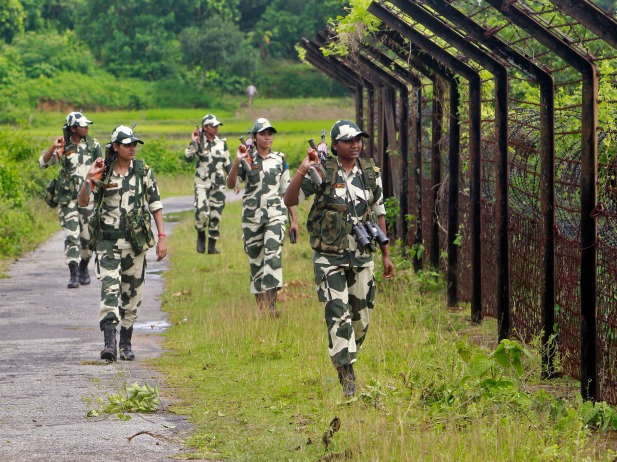
Elephants associated with the Mymensingh region and adjoining areas have historically used landscapes extending towards the Indian border. Border fencing and other barriers have increasingly restricted movement, leaving some elephants effectively trapped within narrow strips of fragmented habitat around Netrokona, Sherpur and Jamalpur districts.
This demonstrates why elephant conservation cannot be planned solely within administrative boundaries.
An elephant corridor on a map is not a conservation corridor unless elephants can actually move through it safely.
Community-based elephant management committees should be established in conflict-prone landscapes, involving local residents, Bangladesh Forest Department personnel, local government, conservation organisations and independent wildlife specialists.
Sixteen corridors should become a national priority
Earlier studies by the International Union for Conservation of Nature (IUCN) Bangladesh identified at least 12 mapped elephant corridors in the southeastern regions of Cox’s Bazar and Chattogram, eight of which are located in Cox’s Bazar alone.
In addition, my personal observations suggest that there may be four additional corridors in Sherpur, Jamalpur and Netrokona districts. These elephant corridors connect important habitats within Bangladesh and extend across the country’s borders into India and Myanmar.
These corridors should now be independently reassessed using modern field surveys, GPS telemetry, camera trapping, local knowledge and GIS-based landscape analysis.
Each corridor should be classified according to its present condition:
Functional – elephants can still move through it;
Partially blocked – movement remains possible but is increasingly restricted;
Severely degraded – restoration is urgently required; or
Lost – requiring long-term landscape restoration.
The government should then legally protect critical corridors from incompatible development and establish restoration programmes for degraded ones.
Where are Bangladesh’s elephants today?
One of the weaknesses in elephant conservation is the lack of a recent comprehensive national population assessment.
The last widely cited national elephant assessment dates from 2016. Estimates have varied considerably, with figures commonly cited in the range of roughly 300 to 457 individuals, consisting of about 268 resident wild elephants, a group of transboundary or non-resident visitors, and around 96 captive elephants (IUCN Bangladesh, Asian Elephants in Bangladesh, 2016).
Whatever the precise figure, the uncertainty itself is alarming.
A country cannot effectively manage a critically threatened large mammal while remaining uncertain about how many animals it has, where they occur, how populations are connected, where they breed, where they die and which habitats they still use.
The first requirement of elephant conservation must therefore be knowledge.
Bangladesh should conduct a scientifically rigorous national elephant census and repeat it at regular intervals, ideally every three to five years, using modern population-estimation methods.
A national elephant recovery programme
The government should establish a dedicated Bangladesh National Elephant Recovery Programme covering both wild and captive elephants.
The programme should have clear targets for the next 10, 20 and 30 years and integrate habitat restoration, corridor protection, conflict management, population monitoring, veterinary care, law enforcement, community participation and regional cooperation.
It should have measurable indicators, designated responsible agencies, an identified budget and annual public reporting.
Elephant-safe infrastructure
Bangladesh should introduce mandatory wildlife-sensitive environmental planning for highways, railways, power transmission lines, industrial projects and other major infrastructure.
Before approval, projects in or near elephant landscapes should undergo specific elephant-impact assessments.
Where infrastructure crosses known elephant routes, mitigation should include appropriately designed wildlife crossings, underpasses or overpasses where technically feasible; fencing that guides rather than traps animals; speed restrictions; warning systems; and continuous monitoring.
Most importantly, elephant corridors should be identified before infrastructure is designed – not after elephants begin dying.
Human communities must become partners
Elephant conservation cannot succeed by treating people living around forests as obstacles.
Many forest-edge communities have lived alongside elephants for generations. Their knowledge is invaluable.
Community-based elephant management committees should be established in conflict-prone landscapes, involving local residents, Bangladesh Forest Department personnel, local government, conservation organisations and independent wildlife specialists.
Communities should participate in elephant movement monitoring, early-warning systems, crop protection measures, corridor protection, elephant injury reporting, prevention of retaliatory killing and habitat restoration.
Where communities bear genuine economic losses because of elephants, compensation must be rapid, transparent and fair.
From conflict response to conflict prevention
Bangladesh needs professional elephant conflict-response teams equipped and trained to respond rapidly to elephant movements near settlements.
Elephant Response Teams (ERTs) play a vital role in mitigating human-elephant conflict, particularly in areas where Forest Department personnel are not readily available.
However, as ERT members currently operate on a voluntary basis, their effectiveness and long-term sustainability may be limited unless appropriate financial incentives or other forms of support are provided.
Modern elephant conflict management
Early-warning systems using local networks, mobile communication, camera traps, GPS data and other appropriate technologies can help communities prepare before elephants enter densely populated areas.
The goal should be to keep elephants and people safely apart wherever possible.
India and Myanmar: Elephant conservation cannot stop at the border
Bangladesh cannot conserve its elephants in isolation.
Some elephant populations have historically moved across the borders with India and Myanmar. Their survival therefore depends partly on regional cooperation.
Bangladesh should revive and strengthen formal transboundary cooperation on elephant conservation, including joint surveys, exchange of population information, corridor mapping, coordinated protection measures and dialogue concerning border barriers.
Captive elephants also deserve scientific management
Bangladesh has a substantial captive elephant population, reportedly approaching 100 animals.
Their welfare deserves equally serious attention.
Captive elephants should be managed according to internationally accepted standards of elephant welfare, veterinary medicine and behavioural management.
Routine chaining, inadequate exercise, poor nutrition, inappropriate social conditions and excessive work should not be accepted as normal management practices.
Every captive elephant should have an individual record covering its origin and legal status.
Where possible, elephants should be maintained in socially appropriate groups and provided with sufficient space, natural substrates, shade, bathing opportunities, enrichment and opportunities to express normal behaviours.
A national elephant management, veterinary and rescue system
Bangladesh should establish specialised elephant management, veterinary and rescue capacity, including trained wildlife veterinarians, mobile response units, appropriate equipment, and facilities for treatment and rehabilitation.
Science must guide elephant management
A modern national programme should use GPS satellite collars, camera traps, genetic analysis, GIS and satellite imagery, drone surveys where appropriate, demographic monitoring, crop and conflict mapping, acoustic and other emerging monitoring technologies, as well as a national elephant database.
The Forest Department cannot do everything alone
The elephant crisis also exposes a broader institutional problem.
Wildlife conservation has become too complex to remain a secondary function within a system historically structured around forestry administration and forest production.
Bangladesh should strengthen dedicated wildlife expertise through a professional Wildlife Conservation and Management Service, working closely with the Forest Department rather than against it.
Such a system could provide specialised expertise in species recovery, wildlife veterinary medicine, protected-area management, wildlife crime, human-wildlife conflict, biodiversity monitoring and ecological restoration.
Elephants need a system in which wildlife conservation is a primary professional responsibility, not a peripheral activity.
What the public can do
The future of Bangladesh’s elephants cannot be left entirely to government agencies. Citizens can become part of the solution.
People living around elephant habitats can report elephant movements early, avoid provoking animals, protect safe escape routes and cooperate with local warning systems.
Schools and universities can establish elephant-awareness programmes. Journalists can report conflicts responsibly rather than sensationalising individual incidents. Researchers can contribute independent science. Conservation organisations can support community-based monitoring and habitat restoration.
Businesses operating near elephant landscapes should adopt wildlife-sensitive development standards.
And the wider public can demand that government development programmes account for wildlife before projects are approved.
A ten-point elephant action agenda for Bangladesh
- Conduct a national elephant census using modern scientific methods.
- Map and legally secure all critical elephant habitats and corridors.
- Restore degraded elephant forests using native vegetation and ecological restoration principles.
- Establish a National Elephant Recovery Programme with 10-, 20- and 30-year targets.
- Make all major infrastructure projects elephant-sensitive through mandatory corridor and impact assessments.
- Establish professional human-elephant conflict response and early-warning systems.
- Introduce fair, rapid and transparent compensation for verified elephant-related losses.
- Establish transboundary elephant conservation mechanisms with India and Myanmar.
- Create national standards for the welfare, veterinary care and management of captive elephants.
- Build a permanent national elephant database and publish an annual State of Bangladesh’s Elephants report.
The elephant is telling us something
If forests continue to shrink, corridors continue to disappear, infrastructure continues to fragment habitats and communities continue to bear the costs of wildlife conservation without adequate support, the country’s remaining elephants will become increasingly isolated.
Bangladesh still has an opportunity to restore degraded forests, reconnect fragmented habitats, protect elephant corridors, improve community livelihoods, modernise wildlife governance and manage captive elephants according to international standards.
Source: https://www.tbsnews.net/features/panorama/bangladesh-must-give-its-elephants-future-1510596