How Journalists Become Allies of the State
Press freedom is rarely lost in one fell swoop. Usually it’s chipped away at—by shifts in ownership, economic coercion, bullying by regulators, legal harassment, restricted access and … the mainstreaming of self-censorship. India’s startling transformation under Prime Minister Narendra Modi shows how that works. Once considered the world’s largest democracy with a robustly diverse press system, India has increasingly seen the mainstream press become a rubber stamp for the government’s agenda.
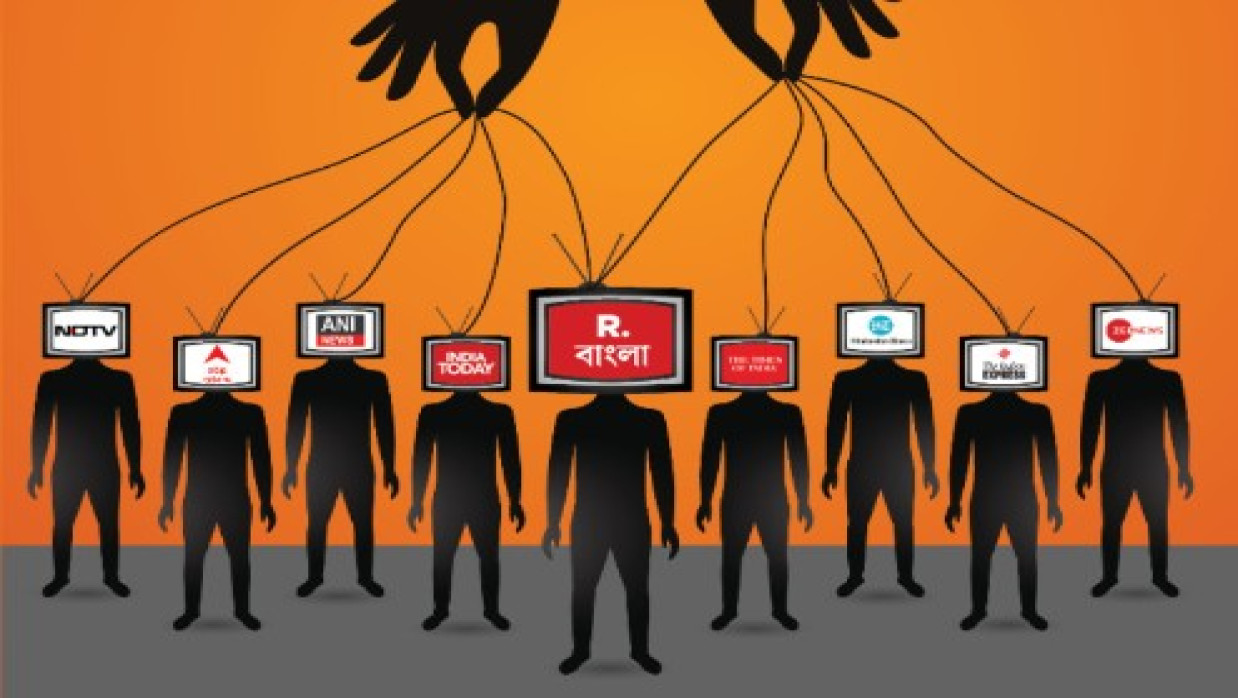
Veteran Indian journalist Sreenivasan Jain, who worked for nearly 30 years at NDTV until recently retiring, calls it an unprecedented mode of media capture. India has hundreds of TV channels, tens of thousands of registered publications, and an exploding online space. But plenty does not equal diversity of opinion. Editorial plurality withers when ownership, advertising dollars, regulatory powers, and access to power are concentrated in networks of elites. When that happens, ostensibly independent outlets may end up narrating roughly the same story.
India’s government rejects foreign criticism of its press freedom record and claims that India has a free press. However, Reporters Without Borders ranked India 157th out of 180 countries in its 2026 World Press Freedom Index due to monopolized ownership, politically aligned media, attacks against journalists and reporters, and a worsening legal environment for journalists. Reporters Without Borders also labeled India’s media environment as “very serious”. Reporters Without Borders
Capture Without Formal Censorship
Modern media capture doesn’t necessarily mean there’s a censorship bureau reviewing every story. It can function through manipulating incentives that drive journalism. Owners discourage reporters from following leads that are damaging to business interests or political friends. Editors avoid controversial subjects to protect their licenses, government advertising or contracts, and access to politicians. Journalists quickly learn which questions will advance their careers, and which ones could get them sued – or worse, before the police patrol comes or angry bloggers show up to arrest and charge you – fired.
The takeover of NDTV by the Adani Group seemed to crystallize these fears. Viewed as one of India’s relatively impartial national broadcasters, NDTV lost several high-profile journalists after the takeover, including Jain. Concerns were raised that the silencing of another major independent television voice would further diminish plurality in Indian broadcasting. Reporters Without Borders
A common saying describing them is “godi media”, often translated as “lapdog media.” Its use indicates that people believe much of the news broadcast by top television channels is excessively submissive before those in power, preferring theatricality over public-interest journalism. Issues like religion-driven polarization, hyper-nationalism, celebrity-based politics, and targeted attacks on dissent against government detract from consistent news coverage of unemployment, inequality, public healthcare, institutional responsibility, or corruption.
That is not to say that every establishment Indian journalist takes their marching orders from government officials or that criticism has been eliminated. India does indeed still have intrepid reporters, editors, provincial publications and dissenters. The larger issue is one of systemic bias: critical journalism has been marginalized while India’s most politically accommodating media boast the deepest pockets and widest broadcast bandwidth.
The Law as an Instrument of Pressure
Criticism of independent journalists can escalate to police raids. Complaints of criminal defamation and tax investigations, website blocks, and sweeping national-security laws can entail steep personal and monetary costs. Police raids last year on journalists with NewsClick as part of an investigation under anti-terror laws included home and office searches, interrogation, arrests and seizures of electronic equipment. NewsClick said it hadn’t committed any offense. Indian and international press freedom groups said the moves against NewsClick risked intimidating independent publications. — AP
Prosecution can be punishment, even if it doesn’t lead to conviction. A reporter who spends years fighting for bail, police summonses, unexpected visits, multiple cases, and stolen equipment has less time and fewer resources to report. Small digital outlets can suffer unfairly because they don’t have the lawyers and bankroll of big businesses.
Digital regulation offers another tool. Laws requiring platforms to take down false, abusive or anti-state information can be couched as anti-disinformation measures. But when the state is the arbiter of claims about itself, regulation becomes censorship by other means. India’s highest court has sometimes stepped in to provide institutional guardrails. Earlier this year, it placed a hold on the government’s creation of a fact-checking body until free-speech concerns are hashed out in court. REUTERS
Bollywood, Culture, and the Politics of Silence
Journalists aren’t the only ones susceptible to media control. Bollywood stars command followings greater than some political parties have, yet few have dared speak out against the government publicly. Jain believes fear and professional insecurity, as opposed to ideological buy-in, account for their acquiescence.
Artists and filmmakers require permits, distributors, streaming services, sponsors and positive PR. One tweet can spawn a hashtag boycott campaign, government inquiry, cyber bullying or lost revenue. Self-censorship trickles down from journalism into entertainment industries. We all lose when esteemed artists feel silence is safest.
The analogy with Hollywood is imperfect. US entertainers have, on the whole, enjoyed far more freedom to dissent from political leaders. However, they also work for big companies and can be subjected to organized political/commercial attack. The broader point is that freedom of culture rests not simply on constitutional provisions but on whether powerful members of society feel able to say what they like without excessive retribution.
The Warning for the United States
The U.S. has not succumbed to media capture like India. The First Amendment, our federalist system, independent judiciary, nonprofit journalism outlets, public broadcasters, universities, and large investigative organizations provide resistance. News outlets also cater to a more diverse national audience.
But parallels exist. Billionaire owners, corporate concentration, local newspaper bankruptcies, politically segmented audiences, lawsuits against journalists, and government harassment of critical reporters are damaging America’s press. The Committee to Protect Journalists has noted that consolidation makes US media “more vulnerable to political and commercial influence, particularly when owners have vast business empires that require positive relations with the government.” Committee to Protect Journalists
The risk is not just that of more partisan programming on television. It is that owners might tone down coverage, pay dubious claims, stifle editorial judgment or scale back investigative journalism to serve other corporate interests. When preemptive obedience becomes the norm, government need not officially muzzle the media; the publishers and network heads will censor themselves.
Courage, Solidarity, and Factual Discipline
For journalists in the United States, Jain’s advice boils down to four recommendations: “lawyer up,” have courage, stand in solidarity, and adhere strictly to the facts. Hire a lawyer if you know you’ll be subject to litigation as a means of silencing you. Band together with your fellow journalists. Lone reporters and small outlets are low-hanging fruit. Newsrooms can band together to push back, share evidence, share lawyers, get eyes on them. Triple-check your reporting facts. If the state wants to discredit you, they will find that one mistake you made and amplify it. “Accuracy,” suggests Jain. “Own your corrections. Diligent sourcing. Separating what’s news and what’s opinion. These aren’t choices for the naive. They’re your battle stations.”
Independent digital publishers like Scroll, The Wire, Alt News, Newslaundry and others prove that it’s not yet too late to push back. But they’ll need readers, subscribers, donors, lawyers, technologists and seasoned journalists willing to stand up for them to do it.
I don’t want to believe India’s example is something America needs to worry about from afar. India shows us what can happen when a democracy keeps elections and hundreds of media brands but loses much of journalism’s critical function. If there’s one takeaway for my home country, it’s this: Let’s protect our press freedom while we still can.

Ghulam M. Suhrawardi
Ghulam M. Suhrawardi is the Publisher of South Asia Journal.