Susannah Savage December 17, 2020

For the last three years, Laila and her family lived in a small plastic tent, crammed alongside a mass of other makeshift shelters in “a very dirty environment”, she says. Now, Laila marvels at her clean new home, with its big rooms, built from concrete and brick. “We have enough space in front of the shelter that our children can play there,” she says excitedly.
Laila is one of the 1,642 Rohingya refugees who on December 4th were relocated to Bhasan Char, an island off the coast of Bangladesh developed specially to accommodate the stateless Rohingya.
Loaded into coaches with their few possessions, many left the mainland camps in the southern region of Cox’s Bazar for the first time since 2017, when they trekked across the border from Myanmar into Bangladesh, among the 700,000 Rohingya fleeing the Burmese army’s genocidal attacks. Now, having switched from road to sea at the port city of Chittagong, just three and half hours later the refugees arrived on Bhasan Char — a place of “new hope”, says Laila.
Built by the Bangladeshi navy, the Bhasan Char settlement cost $300 million. According to the government of Bangladesh it offers the Rohingya a better place to live than the mainland camps, which holds a million refugees in total forming the world’s largest refugee settlement. At least 40,000 people live in each square kilometre, in cramped and squalid conditions.
This explains why more than 1,500 Rohingya were so eager to move to Bhasan Char, says a representative from the office of the Refugee Relief and Repatriation Commissioner. Laila says she opted to go after hearing about the “beautiful” island, where her children would be able to learn. Anuwar, another refugee who came to Bhasan Char, says he signed up to relocate after the camp authorities showed him videos of the island’s facilities and its green, open landscape.
But not all of the island’s newly arrived residents claim to have gone voluntarily. One refugee, who wished to remain anonymous, found out that his name was on the list just a couple of days before he left. He says that he was never asked to go to the island, nor willingly added his name to the list. “I am not an educated person and I can not read or write,” he sighs. He believes that he unwittingly gave his name for the island list having been led to believe it was for rations.
A few days before the coaches arrived, the Camp in Charge (CiC) authority and the Majhi, a local Rohingya leader, told him to “be ready for Bhasan Char”. He refused to go but on the last day men from the CiC came to his shelter and took his data and ration cards, he says. Fearing that he and his family would starve, he gave in. “I am not happy that I came here,” says the young man forlornly. “I was taken here by the authorities”.
Others claim that they were coaxed with false promises into moving to Bhasan Char. Abdulkhan, from camp 1, knows several families who left for the island. “They went because they were promised money: 5,000 taka each”, he explains, while others were told that they could “do farm work there”. Abdulkhan adds that some who left were “gangsters,” who had been caught up in violence between rival criminal groups, which rocked the camps in October. They went to escape trouble.
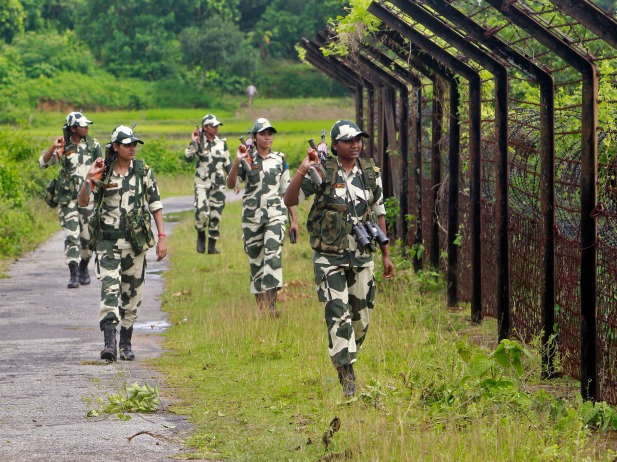
The government cites security concerns when defending the increasing restrictions Rohingya face in the Cox’s Bazar camps. Around the settlement the authorities have recently erected a barbed wire fence. Inside, the refugees are barred from owning sim cards while the army and police roam in large numbers.
The difficulties on the mainland may have prompted some to go to Bhasan Char, but on the island the Rohingya live under even greater surveillance. There, the refugees are also prevented from moving freely; a feature of the new settlement that has drawn heavy criticism from NGOs and from the United Nations since the early stages of development.
Being trapped on the island invokes fear in the Rohingya, too. While the government plans to relocate more refugees to the Bhasan Char settlement, which is built to house 100,000, many in the camps express reluctance.
The island is “a place Rohingya can go but can’t come back from,” says 27-year-old Mohammad, adding: “the people who went there may also not get support from the international NGOs like we do here”.
“I do not think I will ever relocate myself and my family to that island, says Abdulkhan. “We would feel isolated, not being able to visit our relatives—that is why I feel afraid to go to Bashan Char”.
A large number of Rohingya are also afraid of flooding on the island, which, newly formed, lies on a flood plain. “It is a flood island”, says Mohammed. Abdulkhan insists that United Nations (UN) experts need to visit the island in order to determine whether it is “safe or not”.
While Laila found new hope in Bhasan Char, many see moving to the island as the end of their dream to go back to Myanmar. When Mohammad Toha’s neighbour left for Bhasan Char, the two men wept and hugged. “We came here together, we all live here together, and we hoped to go back to Myanmar together,” his friend told him “but now we have to leave this place and all of you”.
A few days later Toha’s friend called him and reported that on the island they have been given a gas stove, ample rations and a home that was “too big”. Although his friend seemed very happy, says Toha, he will not join him. Instead, he will wait in Cox’s Bazar, hoping one day he will be able to return home.●
Susannah Savage is a journalist covering Bangladesh — she writes for The Economist, The Telegraph, the Financial Times and other publications.