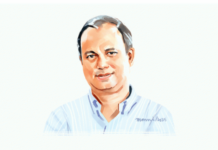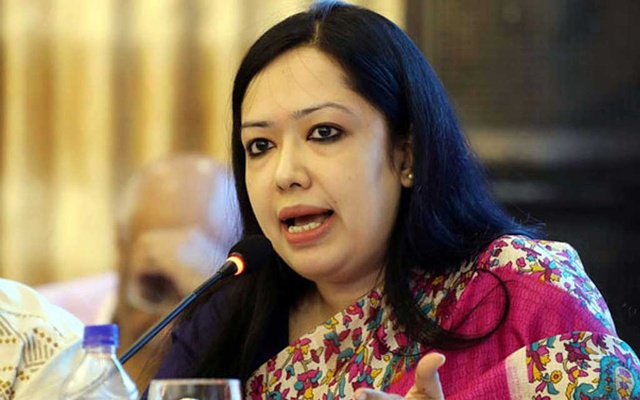

Elinor Raikes is the Vice President and Head of Program Delivery, overseeing the International Rescue Committee’s programs in Africa, the Middle East, Asia and Latin America since 2019. In the last fiscal year, this included programs across 40 countries and a budget of $670 million. Prior to her current role, Elinor was IRC’s Regional Vice President for Europe and North Africa.
She has also worked for the UK government’s Department for International Development, as a humanitarian adviser on the Ebola response in Sierra Leone, as well as in the Democratic Republic of Congo. Before that, Elinor was with the IRC for six years in leadership roles based in the Democratic Republic of Congo, Chad, Afghanistan and Zimbabwe. She also worked for Save the Children for several years at the headquarters, in Lebanon and in Chad.
Elinor went to the University of Edinburgh (undergraduate in French & Philosophy) and the University of London (postgraduate Master’s in Violence, Conflict and Development)
In an interview with The Business Standard’s Anonno Afroz, Elinor Raikes shared her observations from her recent visit to Bangladesh, including Cox’s Bazar, and discussed the ongoing humanitarian challenges facing Rohingya refugees and host communities.

Following your recent visit to Cox’s Bazar, after meeting Rohingya families, host communities, and humanitarian responders, what is the reality of the crisis today, and what struck you most during this visit?
What struck me most is the sense of protracted uncertainty that has now defined an entire generation’s life. Many of the families I met arrived in 2017 as an emergency response; today, their children are growing up in the camps with no clear future ahead of them.
The reality is that this is no longer a short-term humanitarian crisis; it is a long-term displacement situation under increasing strain. Services that once stabilised communities, such as education, protection, and basic assistance, are now under pressure due to funding cuts. I spoke with parents who are worried not only about food, but also about their children losing access to learning entirely.
At the same time, I was deeply struck by people’s resilience. Despite everything, Forcibly Displaced Myanmar Nationals (FDMN) families continue to express a desire for dignity, to learn, to work, to contribute. The gap between that aspiration and the current limitations is where the real crisis now lies.
As global attention shifts to newer emergencies, the Rohingya crisis is increasingly slipping from the international spotlight. Why do you believe this remains one of the world’s most urgent, yet overlooked, humanitarian crises?
The scale alone should keep this crisis at the centre of global attention, over a million FDMN in Bangladesh, most of them unable to return home safely, and with no legal pathway to rebuild their lives elsewhere.
But protracted crises often become invisible. As new emergencies emerge globally, attention and funding shift, even though needs in places like Cox’s Bazar are not diminishing, they are becoming more complex.
What makes this crisis particularly urgent is that we are at a turning point. If we fail to adapt the response now, we risk losing critical gains made over the past years in education, protection, and stability. That would have consequences not only for refugees, but for regional stability as well.
Humanitarian funding is shrinking at a time when needs are becoming more complex and prolonged. What does this mean for Rohingya refugees and the Bangladeshi host communities who continue to shoulder this crisis?
We are already seeing the consequences. Funding reductions are not abstract; they translate directly into fewer services. Children dropping out of learning programs, reduced access to protection services for women and girls, and constraints on basic assistance.
Funding reductions are not abstract; they translate directly into fewer services. Children dropping out of learning programs, reduced access to protection services for women and girls, and constraints on basic assistance. For host communities, who have shown extraordinary generosity over the years, this also means increased pressure on livelihoods, natural resources, and public services.
For host communities, who have shown extraordinary generosity over the years, this also means increased pressure on livelihoods, natural resources, and public services.
The concern is that without sustained and predictable funding, we move from managing the crisis to simply coping with deterioration. And once services are scaled back, rebuilding them becomes far more difficult and costly.
After nearly a decade in displacement, many Rohingya families still have no clear pathway to safety, education, livelihoods, or self-reliance. What are the risks of allowing this uncertainty to continue?
The biggest risk is the emergence of a “lost generation.” When children grow up without access to accredited education, without skills, and without hope for the future, the long-term consequences are profound.
We are also seeing increased protection risks, including child labour, early marriage, and vulnerability to exploitation, all of which are exacerbated by the lack of viable alternatives.
Beyond that, prolonged uncertainty can erode social cohesion and stability within the camps. People need a sense of direction. Without pathways, whether to safe return, education, or livelihoods, that uncertainty becomes a risk factor in itself.
Following your visit, what is your message to international donors, policymakers, and the global community about what must happen now to prevent this crisis from deepening further?
The message is clear: this is a crucial moment. Maintaining the status quo is no longer sufficient.
The Rohingya issue requires stronger international responsibility-sharing. Bangladesh cannot carry this burden alone.
We need sustained funding to meet immediate humanitarian needs, which remains essential. But alongside that, we must shift the model of response. This means investing in accredited education, expanding access to skills and livelihoods, and delivering services more efficiently through better integration.
This is not about doing more with less; it’s about doing things differently, in a way that matches the reality of a long-term crisis. Without that shift, the gap between needs and support will continue to widen.
Protection remains a critical concern, particularly for women, children, and vulnerable groups in the camps. What are the most pressing protection challenges you observed, and how can they be better addressed?
Protection concerns are significant and, in some cases, increasing as resources become more constrained. Women and girls continue to face heightened risks of gender-based violence, while children and adolescents are increasingly vulnerable to exploitation, child labour, and other harmful coping mechanisms.
What is particularly concerning is how reductions in protection services are affecting the overall safety net within the camps. When community-based systems, safe spaces, and case management services are scaled back, it doesn’t just impact individuals; it weakens the protective environment for entire communities, including both FDMN and the surrounding host population.
Addressing this requires renewed investment in frontline protection services: strengthening community-based protection networks, ensuring access to safe and inclusive spaces for women and children, and expanding quality case management. It also means continuing close collaboration with local authorities to support a safer and more stable environment.
Protection cannot be treated as a secondary service; it is foundational to the dignity, safety, and resilience of communities, and must remain at the centre of the response.
Host communities in Cox’s Bazar have shown remarkable resilience but are also under increasing strain. How can humanitarian and development efforts better support these communities alongside refugees?
During my visit to Cox’s Bazar, I spoke directly with host communities and saw firsthand their extraordinary resilience, yet that resilience is now under real pressure.
The way forward has to be more inclusive. Rather than parallel systems, we need to strengthen local services, health, education, and infrastructure in ways that benefit both refugees and host populations. Livelihood opportunities, especially for young people, are also critical.
If host communities begin to feel overlooked, it risks undermining the social cohesion that has held this response together. Supporting them isn’t just the right thing to do, it’s essential for long-term stability.
Looking ahead, what would a realistic and humane long-term solution for the Rohingya crisis look like, and what role should the international community play in achieving it?
In the long run, the most durable solution is still the safe, voluntary, and dignified return of FDMN to Myanmar. But the reality is, those conditions don’t exist yet.
So we have to be pragmatic. A humane approach means enabling people to live with dignity where they are now, through access to education, skills, and opportunities to contribute.
It also requires stronger international responsibility-sharing. Bangladesh cannot, and should not, carry this burden alone.
There isn’t a single solution. What’s needed is a combination: sustained humanitarian support, meaningful investment in people’s potential, and renewed diplomatic efforts to address root causes. Without all three, this crisis risks becoming indefinite.
Source: https://www.tbsnews.net/features/panorama/rohingya-crisis-needs-greater-global-responsibility-sharing-elinor-raikes-1433701