The Daily Star
6 May 2026, 14:38 PM
Michael Kugelman
One of the biggest geopolitical questions for the new Tarique Rahman administration is how it will approach relations with Bangladesh’s two most important neighbours, India and Pakistan. The interim government period saw some major forward movement on improving what has always been a fragile relationship with Islamabad. By contrast, relations with New Delhi, which were rock-solid during the Sheikh Hasina era, took a major tumble.
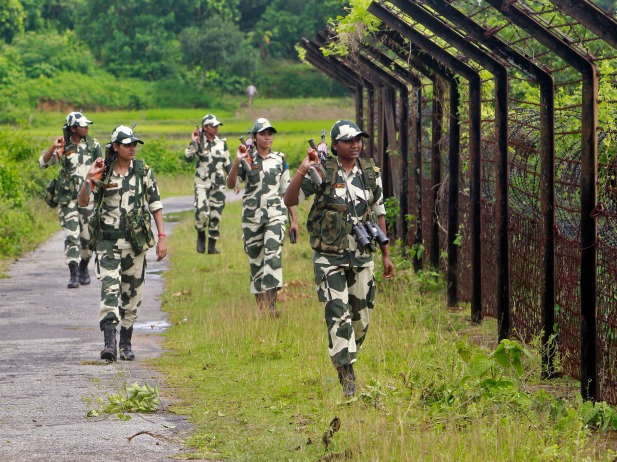
Prime Minister Rahman has a strong incentive to patch up ties with New Delhi: Bangladesh’s sputtering economy would be well served by resetting relations with what has become the world’s fourth-largest economy. Additionally, Bangladesh’s restive border with India will be easier to manage if ties with New Delhi are smoother. Similarly, there are important existing collaborations to pursue, like the new Bangladesh-India-Nepal electricity-sharing agreement, and critical future negotiations to carry out, such as talks over shared rivers. These are likely to achieve more positive outcomes if bilateral ties are in a better place.
At the same time, Dhaka has much to gain from maintaining momentum in Bangladesh-Pakistan ties — even amid continued sensitivities rooted in Pakistan’s abhorrent actions during Bangladesh’s independence war. For example, recent progress with visa liberalisation and travel connectivity can bring commercial benefits to Bangladesh. Additionally, the two see eye to eye on important foreign policy issues, from supporting the revitalisation of SAARC and embracing middle powers like Turkey to strengthening ties with the Global South. There’s also some domestic political gains to be achieved from maintaining friendly ties with Islamabad: a large share of Bangladesh’s public harbours anti-India sentiment, and would likely welcome efforts meant to ensure Dhaka’s continued engagement with India’s bitter rival.
Fortunately, Dhaka can have it both ways. It can pursue a strategy of selective cooperation with both Islamabad and New Delhi: one that allows for robust engagement with each capital, while also avoiding taking steps with either relationship that could be imprudent or cause problems for the other.
With India, trade and economic cooperation is of the essence, as is close coordination on border security. But Dhaka can also draw the line. It can take care not to let India dictate or influence important Bangladesh foreign policy postures, such as pursuing warm ties with Beijing — and having a cordial relationship with Islamabad.
Cooperation on this front, combined with broader collaborations on knowledge sharing, constitute a relatively low hanging fruit that can potentially produce multiple positive outcomes for Dhaka. It can help advance partnership with Pakistan without causing consternation in New Delhi, especially as Dhaka will likely want to learn from India’s own DPI successes. It can serve as a confidence-building measure that could pave the way for future important but difficult discussions on government-to-government levels.
With Pakistan, it’s easy to identify what isn’t practical. If there’s a genuine desire to patch up ties with India, deepening defence cooperation with Islamabad would be prohibitively risky. And while establishing trade ties with Islamabad — a key achievement of the interim government — may make sense in principle, there are considerable constraints. One is geography, where there are no direct land routes, making direct overland trade infeasible. Another is a lack of comparative advantage: At least for now, each country prioritises similar exports, making them natural commercial competitors rather than partners.
A sweet spot for Pakistan-Bangladesh cooperation lies in what can best be described as knowledge exchanges — on government, but also non-government, levels. Pakistani Foreign Minister Ishaq Dar’s landmark visit to Dhaka last August set some of these exchanges in motion: The two sides launched a knowledge corridor meant to promote education and academic exchanges through the provision of scholarships and training for civil servants. Additionally, an MOU was signed between two prominent think tanks: the Bangladesh Institute of International and Strategic Studies, and Pakistan’s Institute of Strategic Studies Islamabad.
There’s plenty of scope for expanding such collaborations. This important opportunity was highlighted, albeit indirectly, at two separate events hosted last month in Washington DC by the Atlantic Council. One featured Pakistan’s Finance Minister, Muhammad Aurangzeb, and the other featured his Bangladeshi counterpart, Amir Khasru Mahmud Chowdhury.
Bangladesh and Pakistan face many shared development challenges — especially public health scourges like dengue, malnutrition, and tuberculosis, but also broader ones from poor agricultural productivity to climate change effects and persistent poverty. In his comments at the Atlantic Council, Aurangzeb spoke about how Pakistan has used tech innovations, especially digital public infrastructure (DPI), to tackle some of these challenges. Meanwhile, Khasru acknowledged in his remarks the massive economic challenges faced by his government, which Bangladesh’s onerous health and development challenges certainly don’t make any easier to tackle.
Fortunately, Dhaka can have it both ways. It can pursue a strategy of selective cooperation with both Islamabad and New Delhi: one that allows for robust engagement with each capital, while also avoiding taking steps with either relationship that could be imprudent or cause problems for the other.
Bangladesh’s new government is closely studying DPI success stories in other countries. Pakistan is a logical case to focus on — in part because this would continue the spirit of the knowledge exchanges prioritised in the bilateral relationship over the last year.
As my Atlantic Council colleague Imran Shauket recently wrote for Pakistan’s Daily Times, a logical next step would be for a delegation of Bangladeshi digital policy experts to visit Pakistan to learn more about Pakistan’s DPI journey and see what lessons can help inform the development of Bangladesh’s own DPI architecture. Such a delegation could perhaps be preceded and succeeded by an informal virtual dialogue between non-government experts from both countries.
Cooperation on this front, combined with broader collaborations on knowledge sharing, constitute a relatively low hanging fruit that can potentially produce multiple positive outcomes for Dhaka. It can help advance partnership with Pakistan without causing consternation in New Delhi, especially as Dhaka will likely want to learn from India’s own DPI successes. It can serve as a confidence-building measure that could pave the way for future important but difficult discussions on government-to-government levels, such those about Pakistani apologies and reparations tied to 1971. Most importantly, information-sharing and lessons-learned exercises on DPI can help move the needle forward on tackling serious, entrenched health and development challenges that hamper Bangladesh’s long-term growth. Furthermore, they can help advance Bangladesh’s reform agenda. DPI, if properly applied, can help in areas ranging from boosting tax revenue collection to increasing online financial transactions and thereby reducing corruption risks. Getting reforms right is an immediate priority to fulfill current obligations to the IMF, but it’s also a critical prerequisite for long-term growth.
Three years after Bangladesh’s independence, Sheikh Mujibur Rahman famously said that his country’s foreign policy principle is “friendship to all, malice toward none.” In the five decades that have followed, Bangladesh has achieved success in pursuing a policy of strategic autonomy. It has important relationships in both the developed world and the Global South, and it has balanced its friendly relations with rival pairings, including the US and Russia. However, it has frequently betrayed this policy when applied to the India-Pakistan rivalry, instead siding with one — including India in the Hasina era and Pakistan during the recent interim government period — over the other.
Bangladesh’s new government has an opportunity to correct this imbalance, through carefully calibrated diplomacy that maximises possibilities for cooperation — in spheres where it is both prudent and relatively low-risk—with both neighbors.
Michael Kugelman is resident senior fellow for South Asia at the Atlantic Council in Washington, DC.
Send your articles for Slow Reads to slowreads@thedailystar.net. Check out our submission guidelines for details.
Source: https://www.thedailystar.net/slow-reads/geopolitical-insights/news/how-bangladesh-can-balance-ties-india-and-pakistan-4169001