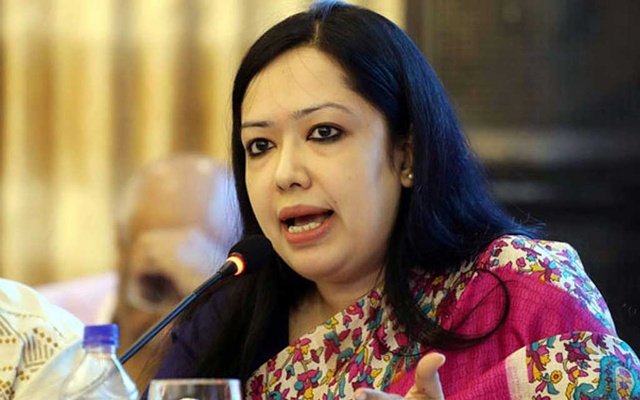

There can be no reconciliation with the ousted Awami League, whose political activities remain banned, without justice and accountability, Deputy Speaker Kayser Kamal said today.
National reconciliation without justice is not peace but “simply a pause between conflicts”, he said while speaking at a session titled “Justice, Accountability, and National Reconciliation” at the Bay of Bengal Conversation 2026 in Dhaka.
He said transition from autocracy to democracy is often threatened by institutional remnants of former regimes.
“Transitional justice requires far more than symbolic gestures or premature calls for unity. It demands forensic, systemic dismantling of impunity,” he said.
He said reconciliation had at times been used around the world as a political shield to protect perpetrators of state violence from legal consequences.
Referring to Bangladesh’s political transition following the July-August uprising of 2024, the deputy speaker said the events culminating on August 5 represented more than a change of government.
“What occurred leading up to and on the 5th of August was not merely a change of administration. It was fundamentally redefining our political paradigm,” he said.
Those responsible for abuses under the previous government must be brought to justice, he said, arguing that accountability was necessary not only as punishment but also to prevent authoritarian rule from recurring.
Kayser Kamal rejected calls from some quarters at home and abroad for reconciliation with the former regime.
“Their criminal, inhuman and ruthless actions against their own citizens have permanently disqualified them from any role in our political future,” he said.
“One cannot reconcile with an apparatus that systematically weaponised the state against the very people it was supposed to protect,” he added.
Kayser Kamal also said the post-August government must remain subject to accountability and public scrutiny.
“A government’s legitimacy is derived solely from its transparency and its willingness to subject itself to relentless public scrutiny,” he said.
Justice mechanisms, he said, must operate independently of political influence, while institutions should serve as custodians of the people’s will rather than instruments of those in power.
New Age Editor Nurul Kabir, speaking at the session, said genuine reconciliation required three elements: a shared investigation into the conflict, reparations for victims, and admission of guilt and punishment of perpetrators.
“After these three things are over, a genuine reconciliation can start,” he said.
He said conflict and confrontation were not inherently negative, citing anti-colonial struggles through which many societies secured political independence. But conflicts within nation states eventually required processes to establish responsibility and enable societies to move towards reconciliation.
He cited Northern Ireland, Colombia and South Africa as examples of efforts to develop frameworks for resolving prolonged conflicts.
In Bangladesh, Nurul Kabir identified three major unresolved areas of confrontation: the legacy of the 1971 Liberation War, the conflict in the Chittagong Hill Tracts and the violence surrounding the 2024 uprising.
On 1971, he said those who collaborated with Pakistani forces had yet to acknowledge their role and admit guilt, adding that many of them were now organised under the banner of Jamaat-e-Islami.
On the Chittagong Hill Tracts, he said reconciliation required both Bengali and non-Bengali communities to recognise their mistakes and jointly assess responsibility for the prolonged conflict.
Referring to the 2024 uprising, Nurul Kabir said he had yet to see remorse from those responsible for killing pro-democracy protesters.
“They are rather still blaming or accusing millions of protesters who took to the streets in July and August 2024,” he said.
Nurul Kabir said reconciliation cannot begin until those responsible for wrongdoing recognised their actions and accepted accountability.
Karori Singh, professor at the University of Rajasthan, said public office should be treated as a position of trust and adequate safeguards were needed to prevent office-holders from exercising arbitrary power.
Madalitso Zililo Phiri, a researcher at Wits University in South Africa, said debates on justice and reconciliation also needed to address structural inequalities inherited from the past, including those based on race, geography, ethnicity and gender.
Drawing on Cambodia’s experience, Nikki Singer, executive director of the Centre for Peace and Conflict Studies, said reconciliation could continue for decades after formal conflict ended.
She stressed the importance of narratives, dialogue and how societies remembered the past, while cautioning that an exclusive focus on assigning blame could make it difficult for societies to move forward.
Source: https://www.thedailystar.net/news/politics/news/no-reconciliation-awami-league-without-justice-says-deputy-speaker-4291141