
Two years ago on this day, Dhaka was unrecognisable; its chaos replaced by an eerie stillness. Streets once clogged with traffic now lay empty, wrapped in the spectral quiet of curfew. The air itself seemed to tremble, as if anticipating violence. There was no internet, no WiFi, no television broadcasts to provide factual information. Security forces patrolled the city with heavy firearms. The smell of death and terror hung over it all.
Between mid-July and early August 2024, Bangladesh entered an unprecedented state of repression. In an attempt to suppress the countrywide student protests, which were turning into a violent popular uprising, the Awami League government took a harsh, repressive stance — a full-scale internet blackout, an indefinite curfew, and coordinated block raids on entire neighbourhoods.
On 18 July 2024, after the attack on students at public university campuses across the country, students at private universities banded together. They poured onto the streets, and ordinary citizens joined them, demanding justice.
For BRAC University students, that day was supposed to begin with something more solemn: an absentee funeral for those killed in the protests so far.
The preparations had begun the night before. Discord calls stretched into the early hours of the morning as students coordinated with neighbouring universities and made last-minute decisions. They discussed carrying sticks for self-defence, keeping thick books in their backpacks to lessen the impact of rubber bullets, preparing homemade pepper spray, blocking roads and, above all, looking out for one another.
None of them knew how quickly those precautions would be tested.
By morning, people had begun gathering outside the BRAC University campus in Rampura. There were attempts to negotiate with the police. Those gathered wanted to continue the peaceful protest; the police insisted the area be cleared. Negotiations quickly broke down.
Soon, armoured personnel carriers rolled in, followed by tear gas shells and sound grenades. Those who had moved a little farther from the main gate were struck by splinters, leaving several seriously injured.
Medical teams were unable to reach the campus, as roads had already been blocked to prevent protesters from nearby neighbourhoods from joining those gathered inside. BRAC University was effectively encircled.
As the clashes intensified, BRAC University’s alumni tried to reach those on campus, offering to arrange emergency funds, doctors and any other assistance they could. But the phone network barely functioned. Calls dropped repeatedly, and getting through often took several attempts.
Two years on, the trauma of that day still shapes how it is remembered. Some moments remain vivid; others survive only in fragments. Afiya Jannat Ananna, a BRAC University student who was there that day, said she still struggles to piece together the sequence of events.
Some memories, however, remain painfully clear.
Md Zillur Sheikh, a student from nearby Imperial College, was shot by police near Hatirjheel. He was brought towards the BRAC University gate.
Among those who carried him was Md Shahriar Mahbub Joy, an LLB student at BRAC University.
Joy had not been on campus when the clashes began. After receiving a phone call that his friends were under attack, he rushed to the area, only to find every entrance blocked. He eventually climbed over one of the locked entrances to get inside.
Inside, he found several people with severe splinter injuries. Then he saw Zillur.
“There was a head injury. He was bleeding,” Joy recalled.
For Afiya, that was the turning point. The medical room was overflowing with the injured. As she stood near the dead body, a student beside her broke down, crying out: “Jalim er bacchara amar bhai ke mere felse. (Those oppressors have killed my brother).”
Afiya remembers that as the moment the movement stopped being just about quota reform. It had become a matter of life and death.
In the university cafeteria, a staff member was preparing lemon water for the students.
“I hugged her and cried,” Afiya recalled. “I cried the way you cry with your mother.”
That day, university staff and security guards became more than employees. Their presence is still remembered in the graffiti that remains on a wall beside the campus.
There were so many female students. I kept thinking that in all this chaos, they could face all kinds of problems. If I wasn’t there, who would look after them? Now I think about what could have happened. A bullet could have hit my eye. I could have been seriously injured. Then who would have looked after my family? But at that moment, none of that crossed my mind. I only felt that I had to stay.
Mustari Begum, who has worked at BRAC University for nearly 20 years, was one of them. Although she was not required to report for duty at the gate that day, she came anyway.
“There were so many female students,” she said. “I kept thinking that in all this chaos, they could face all kinds of problems. If I wasn’t there, who would look after them?
“Now I think about what could have happened,” she reflected. “A bullet could have hit my eye. I could have been seriously injured. Then who would have looked after my family? But at that moment, none of that crossed my mind. I only felt that I had to stay.”
The events at BRAC University were only one part of a much larger story.
Across Dhaka, students at other private universities were confronting similar violence, resistance and uncertainty — and the crackdown that followed would engulf the entire capital, and the country beyond it.
The Bangladesh Telecommunication Regulatory Commission (BTRC) suspended internet services. Access to Facebook, Messenger, WhatsApp, YouTube and Telegram was cut off across all mobile networks. Mobile internet, broadband and even home WiFi connections became unusable at first, then were shut down altogether at night.
Zunaid Ahmed Palak, the former ICT state minister, claimed, “The government didn’t shut down the internet, the internet shut down by itself.”
The blackout disrupted daily life at every level. Journalists were unable to send updates, students could not access educational materials, and families were cut off from loved ones. Local businesses reliant on digital services suffered heavy losses. Anxiety spread across the country, and non-resident Bangladeshis grew restless, unable to reach their families.
Then came the curfew — unlike any in Bangladesh’s history. Long, sleepless nights began. Shops closed. ATMs stopped working. Groceries ran out. Children could not go to school. Ambulances were halted at checkpoints. People could not go out for work. Young men and women were searched and rounded up if they were found carrying anything related to the protests.
The blackout was a deliberate strategy to sever communication between protesters, making it harder for them to mobilise, organise or even report human rights abuses. But the strategy backfired. In several cases, university students and ordinary citizens continued to protest even without digital coordination, relying on phone calls, text messages, physical gatherings and word-of-mouth mobilisation.
Azaher Uddin Anik, a prominent online activist who was active during the July Uprising, recalled, “At that time, the government significantly reduced internet speeds, particularly for Facebook, to prevent the spread of protest images. I began writing about this — explaining how to use VPNs and how to stay connected even if Facebook were shut down. Before the complete internet shutdown, when police were stopping people on the streets and checking their phones for evidence, I had already figured out ways to securely hide footage or evidence using certain apps.
“On 18 July, I realised just how dire the situation around us was. There was no way to communicate with anyone. During this time, I would go out to the Shahbag area. When house raids began, many became concerned about me because I had been regularly engaged in activism,” he added.
“Even now, my dystopian experiences from that time haunt me. To this day, if the doorbell rings at night, I lock the door, fearing that someone might come to take me away. Perhaps it was my mother’s prayers that kept me safe,” he said.
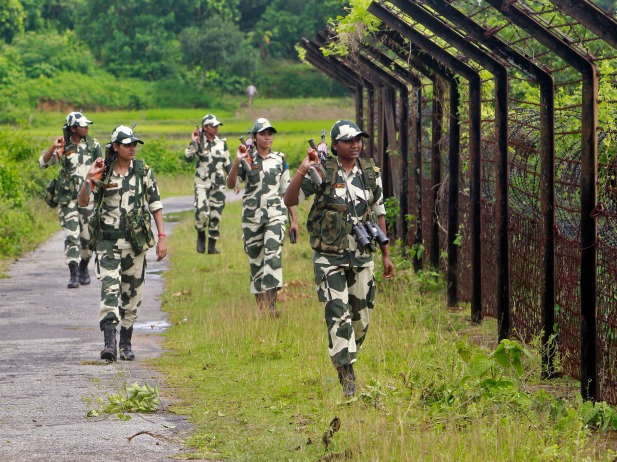
From 17 July onwards, access into and out of Dhaka was severely limited. Checkpoints mushroomed across the capital. Army, Border Guard Bangladesh (BGB), Rapid Action Battalion (RAB) and even coast guard personnel were deployed. Roads were blocked, and residents were warned not to leave their homes unless absolutely necessary. In some places, police beat people who came out of their houses.
Curfew passes were issued only to essential service providers, including journalists — and in some areas, even these were not honoured. Emergency personnel were regularly stopped, interrogated and sometimes beaten.
Amjad Hossain Hridoy, the Dhaka University correspondent for Desh Rupantor, played a vital role during the uprising, maintaining direct correspondence with the coordinators.
“Even going to the office was highly risky — it wasn’t always possible. I would gather news and relay it to the office via mobile phone,” he recalls.
“On one such occasion, while reporting on the nine-point demand after collecting information, an Awami League leader and a ward commissioner in Dhaka grabbed me, confiscated my phone, and held me. Despite showing my press ID and identifying myself as a journalist, they refused to believe me.
“They interrogated me for an hour, accusing me of being a protester, and even tried to have me taken to the police station. After considerable effort, I managed to convince them to some extent, but they warned me never to be seen in that area again. Additionally, I was stopped and searched multiple times by police and Chhatra League members,” Hridoy recounted.
Outside Dhaka, Chattogram, Rajshahi and Khulna felt haunted, as if life had paused, waiting for either liberation or collapse.
As protests spread, the government intensified its crackdown through mass block raids, targeting university areas, student dormitories and the residences of political activists. From 19 July onward, these raids were conducted across various residential areas of Dhaka, including Mohammadpur, Mirpur, Dhanmondi, Azimpur, Tejgaon, Bashundhara and Uttara. Law enforcement carried out door-to-door searches, checking mobile phones for “anti-state” content, reviewing private messages, and making arrests without warrants.
In some cases, individuals were detained simply for having protest-related material on their phones — images of graffiti, screenshots of social media posts, or even memes criticising the government. According to human rights organisations, more than 10,000 people were arrested between 16 July and 1 August alone, among them students, teachers, journalists and even parents of protesters.
Newsrooms operated in near-secrecy. With no internet access, many relied on analogue methods to gather and share information — hand-delivered reports, printed flyers, handwritten notes. Reporters had to rely on AFP for news, as it was one of the few remaining outposts in the country with outside communications, enabled via satellite internet.
The government maintained tight control over the media, and independent outlets faced constant threats of shutdown or censorship. Intelligence personnel paid visits to media houses, demanding that photographs and videos related to the protests be deleted.
Without internet access, rumours were rife, and journalists often had no way to confirm the news. Publishing newspapers became a tall order too: instead of simply emailing PDFs of news layouts, production managers had to carry them on pen drives to the printing presses.
Source: https://www.tbsnews.net/features/panorama/siege-brac-university-and-blackout-followed-1490911