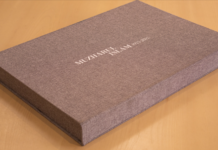
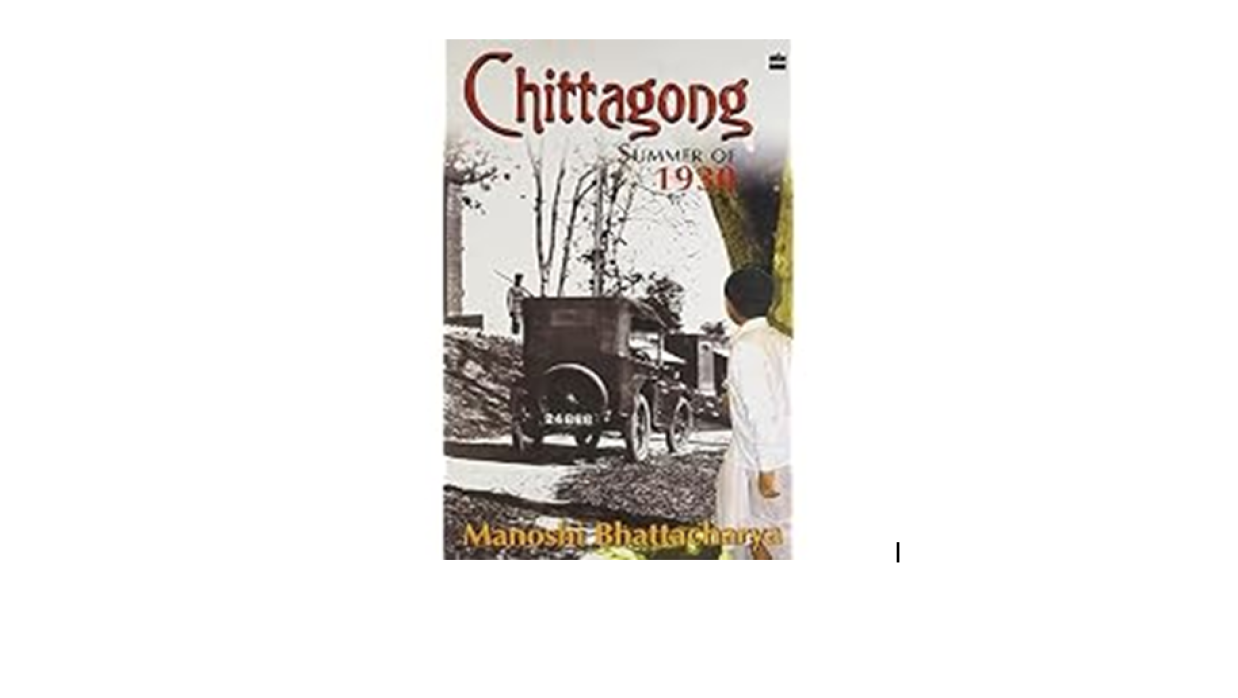
Book: Chittagong: Summer of 1930
Author: Manoshi Bhattacharya
Publisher: HarperCollins
Publication: 17 April 2012
Pages: 428
ISBN: 9789350292129
Manoshi Bhattacharya’s Chittagong: Summer of 1930 revisits one of the most dramatic episodes of the anti-British struggle in Bengal: the Chittagong Armory Raid, led by Surya Sen, affectionately remembered as Master-da. It is a story of extraordinary courage, youthful idealism, sacrifice, and ultimately tragedy. For a Bangladeshi reader, however, the book raises another set of questions that extend beyond the bravery of Surya Sen and his followers. Whose history was this? Who participated in Bengal’s revolutionary movements, who remained outside them, and why? And, nearly a century later, how should Bangladesh remember Surya Sen?
She pieces together the story from archives, official accounts, and memories from those involved. She explores the lives of the Bengalis and their British counterparts. Bhattacharya depicts this as more than just an event on one night in April. It becomes a revolutionary movement that continued through the 1930s.
The operation’s audacity remains remarkable. On 18 April 1930, about sixty-five revolutionaries of the Indian Republican Army, Chittagong Branch, attempted to seize the principal British armories in Chittagong. They planned to cut telephone, telegraph, and railway communications; isolate the city from Calcutta; attack important symbols of colonial authority; and establish a revolutionary government.
The mission was half successful. They took over the police armory and the Auxiliary Forces’ armory but couldn’t get ammunition. However, they did manage to destroy lines of communication and railways. Surya Sen gathered his men outside the police armory and saluted as they hoisted a national flag. He declared a provisional revolutionary government, and they fled to the Chittagong hills.
This turned the raid into an uprising. 22nd April, revolutionaries hid in the Jalalabad Hills, where they fought British troops in battle. Surya Sen sent his men in different directions. Some fled to nearby villages, while others were apprehended. Many raids were conducted by the British to hunt down revolutionaries, but they weren’t able to end it all.
Pritilata Waddedar is one of the more fascinating people in this story. She attacked the Pahartali European Club in September of 1932. While fighting, she was injured, and instead of being captured, she committed suicide with cyanide. She became a symbol for Bengali revolutionaries.
Surya Sen himself remained underground until February 1933, when his whereabouts were betrayed. He was eventually sentenced to death and hanged by the British authorities on 12 January 1934. The gallows at Chittagong Central Jail, where he was executed, have subsequently been designated a historical monument by the Government of Bangladesh.
Bhattacharya’s achievement is to restore human dimensions to an episode that can otherwise become a collection of dates, martyrs and patriotic slogans. The revolutionaries were not professional soldiers commanding a conventional army. Many were extraordinarily young. They understood that they were confronting one of the world’s most powerful empires with vastly inferior resources. They did not necessarily expect military victory. They hoped their example would inspire others.
That distinction is important. Judged purely as a military operation, the Chittagong uprising could hardly have overthrown British rule. Judged as an act of revolutionary symbolism, however, it was immensely powerful. A small group demonstrated that colonial authority was not invulnerable. In doing so, they entered the mythology and history of the anti-colonial struggle.
For a Bangladeshi reader, however, an uncomfortable question lurks behind this heroic narrative.
Surya Sen was born in Chittagong. His battlefield was Chittagong. The Jalalabad Hills, Pahartali, and the streets these revolutionaries moved through now belong to Bangladesh. Bangladesh has appropriately preserved his memory. Yet when we examine the names of the principal participants in this revolutionary network, something is striking: Bengali Muslims appear conspicuously absent from the central group described in the account. The prominent names include Ganesh Ghosh, Lokenath Bal, Ambika Chakraborty, Ananta Singh, Pritilata Waddedar, Kalpana Dutta, Binod Bihari Chowdhury, and others.
Why?
The answer should not be reduced to communal stereotypes. Rather, it invites us to examine the social history of colonial Bengal.
Following the establishment of British power in Bengal, particularly after Plassey in 1757 and the subsequent consolidation of Company rule, different communities adjusted differently to the new political and educational order. Over the nineteenth century, sections of the Hindu bhadralok embraced English education comparatively early and became prominent in the professions, administration, journalism and intellectual life. Large sections of Bengal’s Muslim population, meanwhile, remained economically and educationally disadvantaged for complex historical, social and political reasons.
The consequences extended beyond employment and education. Political movements generally emerge within social networks: schools, colleges, debating societies, literary circles, and professional associations. If one community is underrepresented in those institutions, it may also be underrepresented in the political movements that emerge from them.
This provides a more useful framework for considering the composition of Surya Sen’s movement than simply asking why Muslims were missing.
It also raises a broader question about how Bengal’s history has been written. Bengali cultural history contains towering personalities such as Rabindranath Tagore, Bankim Chandra Chattopadhyay, Sarat Chandra Chattopadhyay, Khudiram Bose and Subhas Chandra Bose. A Bengali Muslim growing up after Partition could admire these figures as part of a common Bengali inheritance while nevertheless wondering why comparatively few Muslim personalities received equivalent prominence in the standard narratives of nineteenth- and early-twentieth-century Bengal.
That question should not diminish one community’s achievements. It should encourage historians to recover the experiences of those who received less attention.
It is also necessary to distinguish anti-colonial nationalism from the social interests of the people who participated in it. Bengal’s revolutionary politics included nationalists, socialists, communists and individuals influenced by religious and cultural nationalism. Some came from relatively privileged families; others did not. Political motives were similarly varied.
So, it would be inaccurate to say the Chittagong uprising resulted from upper-class Hindus trying to shield themselves from British rule. There isn’t enough information to support this claim. Surya Sen and his comrades wanted to take over the country by force, and they all risked their lives. Some even went so far as to spend time in jail, go into exile, and die for their cause.
But the social composition of revolutionary nationalism remains a legitimate subject of inquiry. Nationalist histories frequently turn complicated people into uncomplicated heroes. Once that happens, questions about class, religion, economic interest, and political ideology can disappear beneath the monument.
Bhattacharya’s book is valuable precisely because the Chittagong uprising deserves examination beyond mythology.
Another important distinction applies to Bangladesh. In 1930 there was no sovereign Republic of India and, of course, no independent Bangladesh. Chittagong belonged to the Bengal Presidency under British rule. The political boundaries through which Indians and Bangladeshis now view Surya Sen were created later.
That means neither country needs exclusive ownership of him.
Surya Sen can belong simultaneously to the history of the Indian independence movement, the history of Bengal, and the territorial history of modern Bangladesh. The categories overlap rather than cancel one another.
So, should Bangladesh remove Surya Sen? No. They should keep him as one of their great figures. A Bangladeshi who stood up against the British and gave his life for what he believed in. By keeping his gallows standing, they acknowledge that history is something passed on.
But there is a difference between remembering a revolutionary and turning him into an unquestionable national icon.
For Bangladesh, the most mature approach may be to place Surya Sen within the full complexity of Bengal’s history. He was unquestionably courageous. His followers demonstrated astonishing commitment. Pritilata Waddedar’s willingness to die rather than surrender remains difficult to contemplate without admiration. Yet their movement also belonged to a particular political and social milieu whose composition deserves examination.
The absence, or at least severe underrepresentation, of Muslims among the movement’s celebrated leadership should therefore lead to inquiry rather than accusation. What were Muslim peasants, students and political leaders in eastern Bengal doing during the same period? What economic and educational circumstances shaped their politics? Why did some join other anti-colonial movements rather than revolutionary organizations of the Chittagong type? And why have some of those stories received less attention?
These questions would broaden Bengali history rather than narrow it.
That is ultimately what makes Chittagong: Summer of 1930 worth reading today. The book recounts a thrilling revolutionary episode, but for a thoughtful Bangladeshi reader it does something more valuable: it provokes questions about memory, identity and ownership of history.
Surya Sen need not be either sanctified or diminished. He should be understood.
He was a son of Chittagong who challenged an empire with a handful of young followers and paid for that rebellion with his life. India understandably remembers him as an independence hero. Bangladesh should remember him too, not because today’s national boundaries require us to inherit every political assumption of 1930, but because the soil on which he fought is part of our history.
At the same time, Bangladesh should continue searching for the missing voices in that history. The story of Bengal’s struggle against colonialism was larger than any single community, organization, or ideology. Recovering those neglected Muslim, Hindu, and other voices would not diminish Surya Sen’s courage. It would give us something more valuable than a pantheon of heroes: a fuller understanding of our own past.
Bhattacharya’s work should be read as more than just a biography of revolutionary Bengalis. It should also be viewed as a stepping stone to look at what colonial Bengal has left us. Perhaps for Bangladeshis, this is where this book shines most.

Ghulam M. Suhrawardi
Ghulam M. Suhrawardi is the Publisher of South Asia Journal.
Source: https://southasiajournal.net/post/book-reviews/61816/chittagong-summer-of-1930-heroism-revolution-and-the-questions-history-leaves-behind