
Democrats taking over the US House and Senate after the November 2026 midterm elections will dent Trump’s power. It will pressure his war and economic decisions while adding uncertainty on the world stage. Here’s what it means for war with Iran, Israel’s playbook, India, China vs. the USA, and Asia’s future.
US Midterm Elections 2026 And The Impact On World Stage
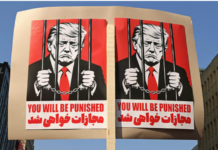
With the US midterm elections coming to a close on 3rd November 2026, Donald Trump has just faced one of the biggest defeats in his presidency. As reports suggest Democrats have taken over the US House and Senate, it could mean much more than a midterm loss in American elections. The party will push back against the President’s policies on the economy, domestic life, and international relations.
Trump has had free rein as president for almost 2 years, with Republicans controlling the House and Senate. His policies on tariffs, immigration, and foreign policy have made many of his allies nervous and scared.
It seems that Americans are starting to tire of his ways. High food and fuel prices have Americans angry, and the war with Iran has been dragging on. Democrats tapped into that.
The election showed many first-time winners in the House and Senate. Many women, younger members of the House, Muslims, Blacks, and Native Americans took their spots. This suggests that nationalist views and being anti-DEI are not the views of the American people.
That being said, we should not jump the gun and assume that Trumpism will not stand a chance in the near future. There are still many Americans who support the Republican Party, and Trump will be President until January 2029.
The immediate consequence is divided government, with a president whose legislative ambitions will face greater resistance and a Congress increasingly able to investigate executive decisions.
For the international community, however, the key question is whether a politically weakened Trump will moderate his policies or become more confrontational to preserve his political legacy.
The Iran War: The Most Immediate Test of American Power
No world issue better highlights why the midterms matter than the current war between America, Israel, and Iran.
It has grown into a regional war that can impact gas prices worldwide as well as shipping lanes and national security. From Iranian strikes on targets within the region to allies striking using their militias and attacks on ships passing through the Strait of Hormuz, we are seeing financial repercussions.
For American voters, these developments have translated into higher fuel prices, increased transportation costs, and inflationary pressure on essential commodities.
According to an NBC exit poll cited by the Stimson Center, 63 percent of surveyed voters considered military action against Iran the wrong decision, while 74 percent regarded the conflict as an important factor in their congressional vote.
These findings suggest that foreign military intervention has become an unusually prominent domestic electoral issue.
Iranian leaders have interpreted the Democratic victory as evidence that their strategy of resisting American military pressure has weakened Trump’s political position. Tehran nevertheless recognizes that the president retains substantial military authority.
The danger is that both sides could miscalculate.
Trump may conclude that escalating military operations would restore American deterrence and demonstrate strength. Conversely, Iran may believe that Washington’s domestic political divisions provide an opportunity to demand greater concessions.
Either calculation could prolong the conflict.
Another outcome could be that Congress and citizens grow fed up and try to renegotiate with the Iranians. A smaller deal on shipping rights in the Strait of Hormuz and limiting attacks on each other, as well as easing some sanctions, could be a good stepping stone to a larger deal.
With a Democratic-led House, they will have power over the military budget and can oversee Congress. But they will not be able to call off a war or override the president’s veto.
The central question is whether American political institutions can translate public opposition to war into a sustainable diplomatic settlement.
Israel Faces a Changing Political Environment in Washington
Israel may confront some of the most profound strategic consequences of the American electoral reversal.
For decades, successive American administrations maintained strong military, diplomatic, and financial support for Israel. Although disagreements occasionally emerged, bipartisan congressional backing remained essential to the relationship.
That consensus has weakened considerably.
The Gaza conflict, mounting civilian casualties, regional military escalation, and American involvement in the war against Iran have generated increasing criticism of Israeli government policies.
It would also be interesting to see how long this goes if Trump decides to stop aiding Israel. This would require new laws to be put into effect.
Netanyahu may have less power to act on his wants. With election defeats back home and possibly America not having his back, he may have less room to maneuver.
Washington’s unconditional support could constrain Israel’s strategic choices.
A Democratic-controlled Congress may scrutinize arms transfers, military assistance, civilian protection, and the conditions under which American weapons are employed.
However, the erosion of unconditional support does not necessarily imply abandonment of Israel’s security. Many American lawmakers who criticize Netanyahu remain committed to Israel’s defense.
The distinction between supporting Israel’s security and endorsing every action of its government may become increasingly important.
For Palestinians, the changing political climate offers the possibility of stronger congressional demands for humanitarian access, reconstruction assistance, and renewed attention to Palestinian political rights.
It all depends on whether Israeli and Palestinians leaders and surrounding states, as well as Washington, want to find a political solution.
Peace will not come simply from having different majorities in Congress. Security guarantees must be met, political solutions created, and each side’s rights upheld.
Gulf States
The election results offer some positives for the Gulf States: Saudi Arabia, UAE, Qatar, Bahrain, Kuwait, and Oman.
These countries have long depended on American military protection while simultaneously developing extensive economic relationships with China, India, and other Asian powers.
The Iran conflict has exposed vulnerabilities in their energy infrastructure, airports, ports, and commercial shipping networks. Continued instability threatens its economic diversification programs and ambitions to become an international center of investment, tourism, logistics, and technology.
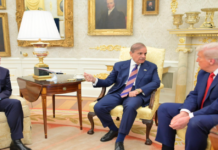
Saudi Arabia, in particular, faces the difficult task of balancing its security relationship with Washington against the need to avoid an extended confrontation with Tehran.
A weakened Trump administration might become more receptive to diplomatic initiatives sponsored by Qatar, Oman, or other regional intermediaries. Alternatively, uncertainty about Washington’s intentions could encourage Gulf governments to accelerate their efforts to develop more independent security arrangements.
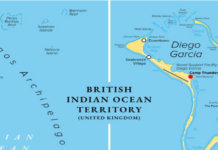
The implications for maritime trade are especially serious. The Strait of Hormuz remains one of the world’s most strategically important waterways. Disruptions there affect energy supplies to China, India, Japan, South Korea, and numerous developing economies.
According to a November 4 Reuters analysis, oil shipments had recovered to approximately 80 percent of prewar levels, but prices remained around 40 percent higher amid continuing security concerns.
This illustrates why ending the war is not merely a diplomatic priority. It is an economic necessity for much of the world.
South Asia: India, Pakistan, and Bangladesh Confront a Changing Washington
South Asia occupies a particularly sensitive position in the emerging geopolitical environment.
India initially expected Trump’s second presidency to strengthen bilateral cooperation, especially in countering China’s influence. Instead, disagreements over tariffs, immigration, Russia, Iran, and Pakistan have complicated the relationship.
The Democratic victory may provide New Delhi with an opportunity to restore some predictability to American policy. A Congress less willing to endorse unilateral tariffs could improve the atmosphere for trade negotiations.
However, India should not assume that Democratic control automatically guarantees preferential treatment. American concerns about market access, human rights, and India’s relationship with Russia are not confined to one political party.
India’s strategic importance remains considerable because of its economic size, technological capabilities, geographic position, and role in the Indo-Pacific.
For Pakistan, the changing political environment offers different possibilities. Islamabad may seek stronger engagement with Congress on regional security, economic assistance, and counterterrorism cooperation.
Yet Pakistan’s relationship with China, domestic political instability, and financial vulnerabilities will continue to complicate its diplomacy.
A more balanced American approach to South Asia could benefit regional stability, provided Washington avoids treating India-Pakistan relations exclusively through the lens of strategic competition with China.
Bangladesh, meanwhile, has significant interests at stake.
Its export-oriented economy remains sensitive to American trade policy, particularly tariffs affecting garments and other manufactured products. Any congressional initiative promoting more predictable trade arrangements could benefit Bangladeshi exporters.
Bangladesh also has an interest in restoring American development assistance and support for international humanitarian institutions. These programs are important for public health, economic development, climate adaptation, and the Rohingya refugee response.
Democrats may want to increase aid that was cut during the Trump administration. But appropriating funds alone will not restore agencies that the Trump administration eliminated or restructured.
Another concern for Bangladesh is continued turmoil in West Asia. Rising oil prices can raise freight costs and may affect migrant workers’ jobs, further straining Bangladeshi forex and family income.
Dhaka should not try to side with one party over the other. It should build better relations with both parties and focus on economic ties with other Asian countries.
The broader lesson for South Asia is that dependence on any single external power carries increasing risks.
China and the Indo-Pacific: Rivalry May Intensify Rather Than Decline
China’s leadership will watch the American electoral results closely, but Beijing has little reason to assume a Democratic Congress will produce a softer American policy.
Indeed, competition with China remains one of the few major foreign policy issues enjoying substantial bipartisan agreement in Washington.
Both Republicans and Democrats have expressed concerns about Chinese technological advancement, industrial subsidies, military expansion, and influence over critical supply chains.
The Democratic victory could therefore complicate Trump’s attempts to negotiate bilateral understandings with President Xi Jinping.
Congressional committees may demand tougher export controls, greater scrutiny of Chinese investments, and additional restrictions on advanced semiconductor technologies.
Taiwan will remain a central concern.
Although Trump has sometimes emphasized transactional diplomacy, congressional support for Taiwan’s security has historically crossed party lines. Increased congressional pressure for arms deliveries or stronger security assurances could create friction between Washington and Beijing.
This presents a dangerous contradiction: American domestic political changes might moderate certain unilateral trade measures while simultaneously intensifying strategic competition with China.
Japan, South Korea, Australia, and the Philippines will welcome greater congressional oversight of American security commitments. Yet they must also recognize that political divisions in Washington could complicate decision-making during a regional crisis.
As analysts cited by Singapore’s Channel NewsAsia have argued, a Democratic Congress could be more hawkish toward China on certain security and technology issues even while seeking greater consistency in America’s treatment of its allies.
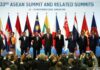
For Southeast Asian countries, the challenge will be preserving economic relationships with China without becoming entangled in military confrontation between the two superpowers.
ASEAN’s longstanding preference for strategic flexibility may become even more important.
The Korean Peninsula: Diplomacy or Renewed Uncertainty?
The Korean Peninsula represents another region where Trump’s weakened political position could produce unexpected consequences.
North Korean leader Kim Jong Un may calculate that an American president seeking a foreign policy achievement would be more willing to reopen direct negotiations.
As we have seen before, Trump was willing to meet with the country in very unconventional ways. Even if we made little progress through conventional diplomatic channels.
North Korea wants us to accept them as a nuclear power; this will be the biggest sticking point.
If a meeting takes place with no movement on limiting their arsenal, inspecting them, or keeping the Korean peninsula safe, then we may be doing them a favor.
South Korea will want some kind of assurance from America that we have thought about their safety.
There is always the risk that if a president feels pressured at home, he may try to achieve something big in foreign policy.
Meeting with world leaders can only go so far; we need achievable goals and agreements that work.
Ukraine, Russia, and Europe’s Search for Strategic Independence
The Democratic victory could improve Ukraine’s prospects of receiving continued American military and financial assistance.
Trump’s approach to the Russia-Ukraine conflict has created uncertainty about Washington’s willingness to maintain its traditional commitments to European security.
A Democratic Congress may attempt to restore assistance, strengthen sanctions against Russia, and scrutinize any agreements that appear to reward territorial aggression.
Nevertheless, Russia may interpret Trump’s remaining time in office as an opportunity to improve its military position before a potentially different American administration emerges in 2029.
For Europe, the lesson extends beyond the immediate political contest.
European governments increasingly recognize that American security guarantees cannot be treated as permanently insulated from domestic political change.
The European Union and NATO’s European members will therefore continue strengthening defense production, military readiness, and strategic autonomy.
A more assertive Democratic Congress could improve transatlantic communication, but it is unlikely to reverse Europe’s determination to assume greater responsibility for its own security.
Global Trade, Financial Markets, and Maritime Transportation
The election’s economic consequences may prove as significant as its diplomatic implications.
Trump’s extensive use of tariffs has disrupted established trading relationships and increased uncertainty for manufacturers, exporters, and investors.
A Democratic Congress could seek to limit certain tariff measures, introduce exemptions, or reclaim some authority over international commerce.
However, the president retains substantial executive powers, and bipartisan support for protecting strategically important American industries remains strong.
Consequently, the world should not expect an immediate return to unrestricted globalization.
The more likely outcome is a gradual reassessment of trade policies accompanied by continued competition over technology, semiconductors, artificial intelligence, and critical minerals.
For maritime transportation, the situation is particularly serious.
Shipping companies face the combined effects of geopolitical instability, higher insurance premiums, fuel price volatility, and uncertainty over major trade routes.
Conflict affecting the Strait of Hormuz and the Red Sea can increase voyage distances, disrupt schedules, and raise freight costs.
These additional expenses ultimately reach consumers through higher prices for imported commodities and manufactured goods.
For developing economies dependent on maritime commerce, such as Bangladesh, the financial consequences can be substantial.
A diplomatic settlement in West Asia would therefore deliver benefits extending far beyond the countries directly involved in the conflict.
Can Congress Restrain Trump?
Despite the scale of the Democratic victory, the American constitutional system imposes important limitations on congressional power.
The president remains commander-in-chief and retains considerable authority over diplomacy, military operations, and executive administration.
Congress controls appropriations, possesses investigative powers, and can establish statutory restrictions. The Senate also exercises authority over important presidential appointments.
But without a two-thirds majority in both chambers, Democrats cannot routinely override presidential vetoes.
The incoming Congress will not assume its new powers until January 2027. Until then, the outgoing Republican-controlled Congress remains in office.
The Council on Foreign Relations and other policy institutions have emphasized that congressional oversight and funding control can influence foreign policy without necessarily determining presidential decisions.
The greatest risk may emerge if Trump interprets congressional opposition as a challenge requiring an aggressive response.
Historically, presidents facing domestic legislative paralysis have sometimes focused more on foreign affairs, where executive authority is comparatively extensive.
Whether Trump chooses confrontation or accommodation will help determine the election’s international consequences.
A Turning Point, but Not Yet a New World Order
The Democratic victory in the 2026 midterm elections has changed the political balance in Washington, but it has not resolved the fundamental contradictions of American foreign policy.
The United States remains the world’s most powerful military actor and one of its largest economies. Yet its ability to exercise international leadership increasingly depends on domestic political legitimacy, economic resilience, and allies’ confidence.
For West Asia, the immediate priority is ending the Iran conflict and preventing another regional escalation.
For South Asia, the opportunity lies in pursuing more balanced relationships with Washington while protecting economic interests from geopolitical instability.
For East Asia, the challenge is managing competition between the United States and China without allowing strategic rivalry to develop into military confrontation.
For Europe, the task is strengthening security independence while preserving transatlantic cooperation.
The election also carries a broader message about democratic accountability. American voters have demonstrated that foreign military adventures and economic policies carry political consequences when they affect household finances and public confidence.
Whether the Democratic Party can translate this electoral mandate into a coherent alternative foreign policy remains uncertain.
Equally uncertain is whether Trump will see the result as a reason to reconsider his international strategy or as an incentive to take more dramatic action during his remaining presidency.
The distinction is crucial.
A weakened American president may become more receptive to compromise, or more determined to demonstrate power. The world has witnessed both tendencies in American political history.
It will hopefully help us realize that diplomacy is irreplaceable when it comes to being superior to another country. We cannot force other countries to do what we want economically, or assume one country can keep world peace.
The November 2026 elections have opened a window for reconsidering America’s role in the world. Whether that opportunity produces peace or greater confrontation will depend not only on Washington but also on the choices made in Tehran, Jerusalem, Beijing, Moscow, New Delhi, and other centers of international power.
The blue tsunami has weakened Trump’s political authority. Whether it also reduces global tensions remains the unanswered question that will shape the next two years of international relations.

Ghulam M. Suhrawardi
Ghulam M. Suhrawardi is the Publisher of South Asia Journal.
Source: https://southasiajournal.net/post/global-issue/61910/blue-tsunami-hits-america-what-does-trumps-loss-in-us-midterm-elections-mean-for-the-world