
More than three out of five young people in Bangladesh do not complete higher secondary education, despite significant progress in expanding access to education over the past three decades, according to UNESCO’s 2026 Global Education Monitoring (GEM) Report.
The country’s higher secondary completion rate stood at just 38 percent in 2024, well below the South Asian average of 57 percent. Globally, the rate was 61 percent. Completion is measured among those aged three to five years above the official graduation age.
Between 1990 and 2024, Bangladesh’s primary completion rate rose from 34 percent to 90 percent, while the lower secondary rate increased from 23 percent to 74 percent. Progress has slowed at the primary level but accelerated at the lower secondary level.
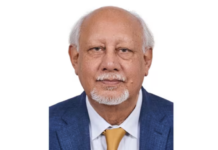
“The progress had been more in numbers than in actual learning,” said Manzoor Ahmed, professor emeritus at BRAC University.
Over half of children, both boys and girls, complete Class V without acquiring basic literacy and numeracy skills, he said. “They continue with deficits into the secondary level, but it becomes too difficult to keep up with lessons in higher grades.”
Poverty forces older children to leave school for work, while early marriage and safety concerns push girls out of school, he said. “These problems are more pronounced in Bangladesh than elsewhere in South Asia,” he added.
The higher secondary completion rate stood at just 38 percent in 2024, well below the South Asian average of 57 percent.
Bangladesh’s higher secondary completion rate has risen faster than the regional average since 2015. In 2005, 72 percent of young people of higher secondary school age in Bangladesh were out of school, compared with 53 percent in South Asia. By 2023, Bangladesh’s rate had fallen by two-thirds, to below the regional average.
Citing data from the Bangladesh Bureau of Educational Information and Statistics (Banbeis), the report said the dropout rate among students enrolled in Classes XI and XII halved from 42 percent in 2009 to 21 percent in 2023.
Girls have made greater gains. In 2024, 15 percent of boys of lower secondary school age were out of school, compared with 4 percent of girls. At the higher secondary level, the rates were nearly identical until the early 2010s. By 2024, the rate for boys was 8 percentage points higher, according to administrative data. Estimates incorporating household survey data put the gap at 10 percentage points.
Manzoor, who led the interim government’s consultation committees on primary and non-formal education and secondary education, questioned the reported lower secondary gender gap and urged further investigation.
The report linked the progress to declining rates of early marriage and fertility and growing employment opportunities for women. According to the 2022 Bangladesh Demographic and Health Survey, 39 percent of women aged 18-24 had married by age 18, compared with over 60 percent of those aged 40-64. Only a quarter of girls aged 15-17 continued schooling after marriage, and most did not continue beyond a year.
The fertility rate fell from 6.7 births per woman in 1975 to 2.2 in 2015. Women’s labour force participation reached 44 percent in 2023, surpassing India and Pakistan. Garment industry jobs encouraged girls to pursue education and delay marriage and childbirth, although factory employment slightly reduced school enrolment among 17- and 18-year-olds.
The secondary school stipend programme for girls, introduced in 1994, improved educational outcomes for girls and their brothers. The World Bank-funded Reaching Out-of-School Children programme helped enrol around five lakh out-of-school children. Between 2002 and 2022, technical and vocational institutions increased from 1,600 to nearly 8,000, while enrolment rose tenfold to 13 lakh. Three-quarters of those enrolled were boys.
However, efforts to simplify public exams to reduce dropout have drawn criticism that access has been prioritised over quality, the report said. The Secondary School Certificate (SSC) pass rate rose from 48 percent in 2004 to 93 percent in 2014. In 2021, amid relaxed examination arrangements during the Covid-19 pandemic, 95 percent of Higher Secondary Certificate (HSC) and equivalent examinees passed.
“Clearly, numerical expansion has been prioritised over ensuring learning outcomes,” Manzoor said.
Independent assessments have shown no improvement, and even some deterioration, in students’ basic knowledge and skills. Wide variations in results across years and education boards raise questions about the credibility of public exams as indicators of learning, he said.
Public expenditure per student was insufficient to ensure quality education. “It makes education a commodity,” he said, referring to private coaching, guidebooks and high private school fees.
He stressed spending funds directly on classroom teaching and supporting teachers. “Stipends and school dress cannot help if teachers do not or cannot do their job in classrooms.”
Ensuring enough qualified teachers and an effective headteacher at every school, and holding them accountable for results, should be the priority, he added.
https://www.thedailystar.net/news/education/news/61-youths-do-not-complete-hsc-unesco-4335536