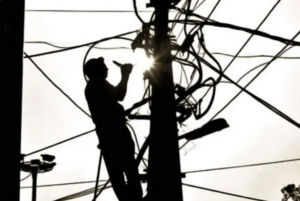
In Dhaka’s slums, electricity is stolen from utility poles and resold to poor families by local syndicates, often with the collusion of those tasked with preventing such theft. While households across the country face rising electricity bills, these networks have turned an essential public service into a source of private profit. A recent investigation by this daily found that thousands of low-income families depend on unauthorised intermediaries for electricity, paying monthly charges ranging from Tk 200 to Tk 700. This relatively low cost helps explain why cash-strapped families rely on these arrangements despite these being organised extraction of public resources. A share of the money almost certainly goes to corrupt utility employees who facilitate the theft or turn a blind eye while the syndicates pocket the rest. The same practice extends to roadside tea stalls and unauthorised autorickshaw charging points where electricity is consumed without proper metering or billing. This practice has lasted so long that it is widely accepted as an unavoidable feature of city life despite the fact that it is a criminal enterprise.
Such tolerance creates two distinct sets of victims. Citizens who pay their electricity bills on time are the first victims. The cost of the diverted units is never borne by those who steal them. Instead, it is written off as system loss and recovered through higher tariffs, meaning the households that follow the rules end up subsidising those that do not. Second are poor families living in slums. The government’s failure to provide them with direct, formal connections has left them dependent on criminal syndicates for the basic need of lighting their homes. With no reliable alternative, these households have little bargaining power and no way to escape the arrangement. The danger is not confined to household finances. In crowded settlements, high wattage electric heaters connected through makeshift wiring can overload circuits. This can trigger fires that spread through homes built close together from tin, bamboo and other flammable materials in minutes.
The authorities’ response to this theft so far consists of repeated excuses and limited operations that never confront the organised character of the trade. DESCO says it conducts monthly drives against illegal connections, but what could those operations realistically achieve if the syndicates return as soon as the teams leave? Disconnecting illegal lines without dismantling the syndicates behind them merely gives the racket a predictable interruption to work around. Officials who carry out disconnection drives need adequate security since sending small teams into hostile settlements is setting them up to fail. The Bangladesh Energy Regulatory Commission should also complement these efforts by requiring transparent, area-wise reporting of electricity theft and holding distribution companies accountable when it continues unchecked.
The experience of Dhaka WASA in formalising water services in low-income settlements shows exactly what can be achieved when there is real will. By bringing water supply under formal arrangements, it successfully cut out the middlemen and stopped vested groups from profiting off poor residents. Electricity distribution can easily follow the same course. At the same time, the government must ensure that eligible slum households get legal access at normal, regulated rates so that dismantling the syndicates does not leave poor families without power. Just as important, those involved in illegal electricity distribution must be brought to justice. They have operated with little fear of punishment for years and that will not change through disconnection drives alone. Until those responsible face the consequences, electricity theft will certainly remain a profitable business at the expense of both the poor and the public.
Source: https://thefinancialexpress.com.bd/editorial/cracking-down-on-electricity-theft-syndicates