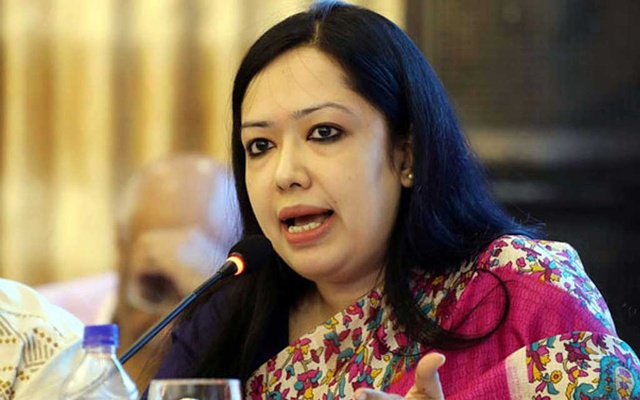

A parliamentary standing committee on the Ministry of Power, Energy and Mineral Resources today asked the ministry to provide detailed data on how much electricity rooftop solar systems are supplying to the national grid, raising questions over the progress of the government’s renewable energy programme.
At its first meeting at the Jatiya Sangsad Bhaban, the committee recommended that the ministry present the figures at its next meeting, along with written answers to questions raised by lawmakers.
The committee also sought details on capacity payments to power plants, fuel stockpiles, LPG prices, domestic gas exploration and the costs of proposed energy projects.
According to information presented at the meeting, Bangladesh has an installed power generation capacity of 29,000 megawatts, while actual generation stands at around 14,125MW, committee members Nazibur Rahman and Hasnat Abdullah said afterwards.
Nazibur said ministry officials could not provide specific data on progress under the government’s rooftop solar incentive programme. Officials said around 2MW of solar power was being added to the national grid daily, but supporting details were not available.
Hasnat said the government aims to add 4,000MW of solar power to the grid by next February. However, ministry data showed that only 60MW had been added over the preceding 30 days.
At that rate, he said, the total addition by February would fall far short of the target. The committee has sought monthly progress reports and details of letters of credit opened for importing solar panels and inverters.
Under the incentive scheme, customers installing rooftop solar systems by February 28, 2027, will receive Tk 10.50 per unit for surplus electricity supplied to the national grid until February 28, 2030, the meeting was told.
The committee also questioned the cost of rooftop solar projects.
Hasnat said a 50MW rooftop solar project would ordinarily cost around Tk 150 crore, but the ministry had proposed spending more than Tk 350 crore on a project of that capacity.
The committee has asked the ministry to provide a detailed breakdown of costs for each project at its next meeting.
It also sought information on the country’s planned power generation mix by 2030, including projected demand and the respective shares of gas, coal, solar and nuclear power. Lawmakers want a timeline for shutting down idle oil-fired power plants.
The committee also raised concerns over the substantial payments made to power plants as capacity charges.
Hasnat called for a forensic audit of Tk 2.89 lakh crore paid in capacity charges in the power sector, saying the expenditure should be examined under the Quick Enhancement of Electricity and Energy Supply (Special Provisions) Act, 2010.
“We must pay capacity charges based on actual generation capacity. Excessive expenditure, subsidies and overhauling charges are putting pressure on the economy,” he said.
He added that the committee wanted to know what measures had been taken to curb such expenditure, particularly when a significant portion of the country’s installed generation capacity remained unused.
Nazibur said the ministry’s presentation acknowledged mismanagement, corruption and a lack of planning as factors behind the country’s power and energy crisis. However, the progress in implementing recommendations made by an earlier investigation committee into capacity charges was not presented.
He said the committee had asked the ministry to explain the earlier probe’s findings and the steps taken to implement its recommendations following a High Court ruling on capacity charges.
The committee also sought measures to increase diesel reserves, which Hasnat said stood at only 31 days’ supply.
He warned that disruptions in diesel supplies could affect agriculture, transport and the rural economy, and called for a clear plan to strengthen reserves.
Hasnat also criticised the government’s monitoring of the LPG market, saying consumers were paying Tk 2,500 to Tk 2,600 for a cylinder despite the government-set price being around Tk 1,800.
Nazibur said Section 34 of the Bangladesh Energy Regulatory Commission Act, 2003 provides for determining energy prices through public hearings and framing regulations for the process. Yet, he said, the required regulations had not been made effective even after 23 years.
Although the ministry said a draft regulation had been prepared, the committee was not given a satisfactory explanation for why it had not been approved, he added.
Lawmakers stressed the need to accelerate domestic gas exploration to reduce dependence on imported gas.
Committee Chairman Mia Nuruddin Ahmed Apu presided over the meeting, attended by Power, Energy and Mineral Resources Minister Iqbal Hasan Mahmud, State Minister Anindya Islam Amit and other members.
Source: https://www.thedailystar.net/news/power-and-energy/news/parliamentary-body-questions-4000mw-solar-power-target-after-just-60mw-added-month-4295236