- Introduction: The Wrong Questions, the Wrong Frame
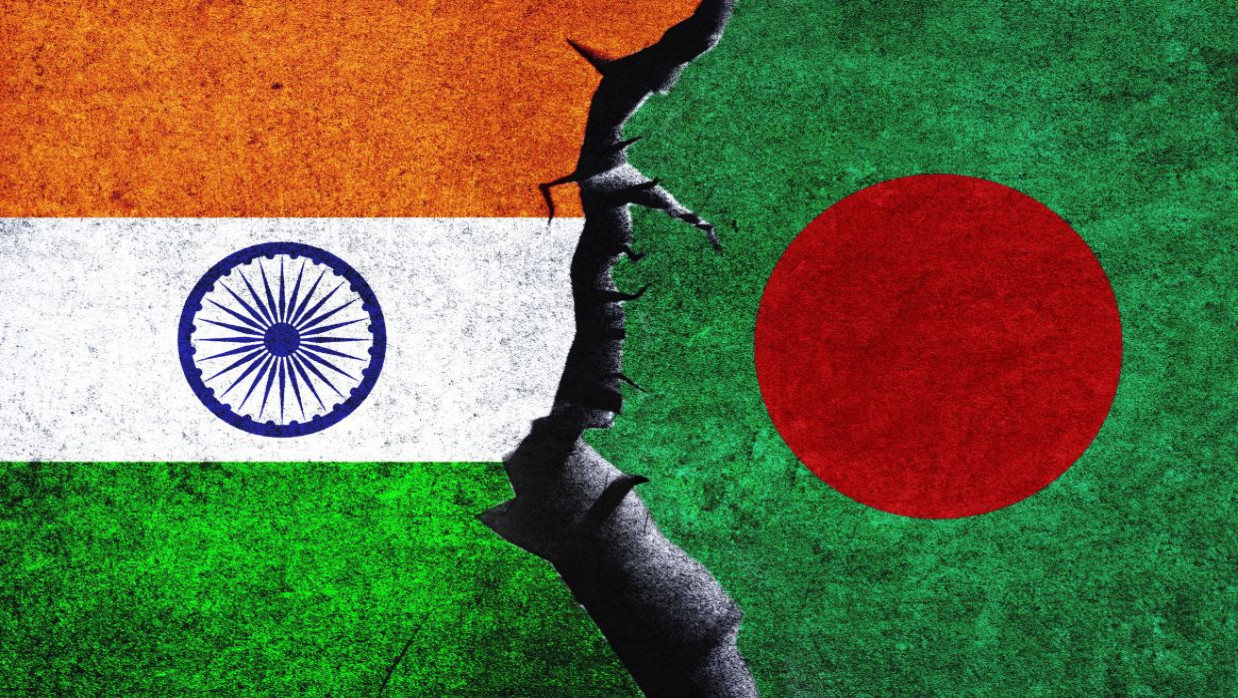
Two questions keep cropping up in the discourse on the present impasse in Bangladesh–India relations: (a) When will Sheik Hasina be extradited by India? and (b) Will Prime Minister Tarique Rahman be going to Delhi? However, to restrict the relationship to the two questions is diplomatically immature. A visit by a former prime minister is important, as is a visit by a current prime minister, but the relationship between two states is much bigger than either. To get to the bottom of the real nature of the stalemate, we need to move beyond personality questions and conduct a structural and geostrategic analysis.
- The Post-Hasina Transition: The Source of the Crisis
The 15-year-old Bangladesh-India model relationship, which many analysts have called the “golden era”, became inoperative after the downfall of Sheik Hasina in August 2024. The close ties between the Awami League government and India, and New Delhi’s decision to grant Hasina asylum, generated anti-India sentiment in Bangladesh. Following the BNP’s return to power in February 2026, the Delhi–Dhaka relationship confronted new realities.
India has stated that it is reviewing Bangladesh’s extradition request through its own legal and institutional processes. Dhaka, meanwhile, maintains that if Hasina continues to deliver political statements from Indian soil, it will be detrimental to bilateral relations. Indian High Commissioner Dinesh K. Tripathi has avoided direct comment on the extradition question, stating that political statements are a separate matter. This position has created a clear distance between the two sides.
- Water: The Long-Term Test of the Relationship
Far more significant than Sheikh Hasina’s status is the issue of water. The 1996 Ganges Water Sharing Treaty is set to expire in December 2026. President Mirza Fakhrul Islam recently called upon the Indian High Commissioner to take effective steps for the equitable sharing of waters from common rivers, including the Ganges and Teesta. India’s Ministry of External Affairs has stated that discussions on the 54 common rivers with Bangladesh will continue through the Joint River Commission and structured dialogue.
Following the failure of the Teesta agreement in 2011, this issue has acquired new dimensions. During Prime Minister Tarique Rahman’s visit to Beijing in June, China offered assistance for the management and rehabilitation of the Teesta River. Many have interpreted this as a strategic signal to India. However, China has stated that this is a “livelihood project” and is not directed against any third country.
- Shifting Strategic Equations: The China–India–US Triangle
Bangladesh’s foreign policy is currently operating within a trilateral framework—maintaining balance among the United States, India, and China. China is Bangladesh’s largest trading partner, military supplier, and second-largest foreign investor. In June, Prime Minister Tarique Rahman’s first foreign visit was to China, where 11 Chinese companies proposed investments exceeding $9.2 billion.
India, meanwhile, is Bangladesh’s second-largest trading partner. The United States is Bangladesh’s largest export market and recently signed a trade agreement with Bangladesh. In this context, Bangladesh seeks to maintain strategic autonomy—engaging with India, China, the United States, and Europe simultaneously. As Asia Times has noted, “autonomy is a hard-won capability, not a slogan.”
- The Regional Framework: BIMSTEC’s Potential
Bangladesh currently chairs BIMSTEC. This organization comprises seven member states (Bangladesh, India, Bhutan, Nepal, Sri Lanka, Myanmar, and Thailand), representing a market of 1.7 billion people. The BIMSTEC Secretary-General has stated that bilateral tensions among members cannot halt the platform’s progress. A Maritime Transport Cooperation Agreement has recently been signed.
This platform can serve as a significant strategic instrument for Bangladesh, linking bilateral relations with a broader regional framework and expanding Bangladesh’s bargaining space.
- A Proposed Framework for Restructuring Relations
Rather than confining Bangladesh–India relations to the Hasina issue or the question of a prime ministerial visit, the relationship may be restructured around the following eight strategic pillars:
The first pillar is firm but restrained diplomacy on the Hasina issue. Bangladesh will maintain its position on the basis of its sovereign and judicial rights, but will not confine the entire bilateral relationship to this single issue. Diplomatically, this represents coexistence of firmness and restraint—respecting legal processes while keeping other dimensions of the relationship active.
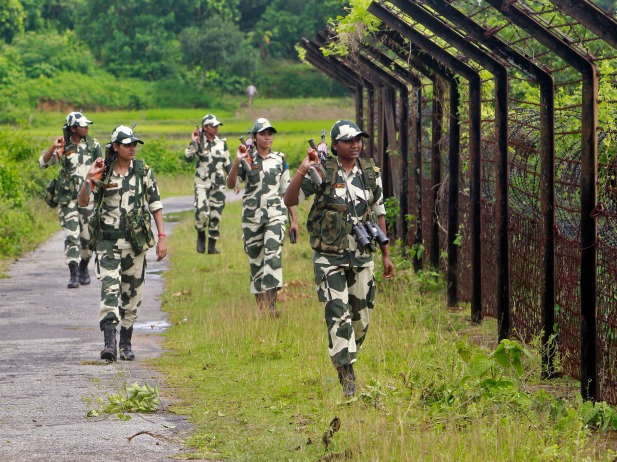
The second pillar is structured dialogue and a humane approach to border management. Regular and effective dialogue between the two countries is essential to reduce casualties and tensions at the border, prevent forced infiltration, and improve the quality of life for border communities. Without border cooperation, diplomatic relations remain incomplete.
The third pillar is time-bound negotiations on water. Equitable sharing of common rivers, including the Ganges and Teesta, along with river dredging and ecological balance, require completion of negotiations within specified timeframes. Water is not merely a resource; it is a question of life and livelihoods for millions, which will ultimately determine the foundation of the relationship.
The fourth pillar is reciprocity in trade ensuring access for Bangladeshi products to India’s vast market, alongside Indian products in Bangladesh’s market, in a manner beneficial to both economies. Reducing trade deficits and eliminating tariff and non-tariff barriers are central to this pillar.
The fifth pillar is connectivity and communication based on mutual benefit. Development and joint use of rail, road, waterway, and land ports will facilitate the movement of people and goods between the two countries. Implementing initiatives such as the Maitree, Mitali, and Bandhan Express trains, and creating new connections, are part of this pillar.
The sixth pillar is security cooperation, particularly information sharing. Regular intelligence and information exchange, and coordinated initiatives between the two countries’ security agencies to combat cross-border crime, trafficking, terrorism, and cyber threats. This cooperation will enhance mutual trust and protect shared interests.
The seventh pillar is regionalization through BIMSTEC. Bangladesh currently chairs BIMSTEC. This platform can be used to link bilateral relations with the broader regional framework of South and Southeast Asia. This will expand Bangladesh’s bargaining space and make the relationship multidimensional.
The eighth and final pillar is identifying the Bay of Bengal as a joint strategic space. Coordinated initiatives between the two countries to protect the Bay of Bengal’s resources, sea lanes, fisheries, and environmental security. Developing joint frameworks to counter third-party influence in this region and ensure sustainable use of marine resources is essential.
A relationship built on these eight pillars would transcend the politics of the Hasina issue or any single visit, creating a stable and long-term framework that shifts the relationship from personality-centric to state-centric and interest-centric foundations.
- Conclusion: From Person-Centric to State-Centric Relations
In conclusion, the underlying cause of the stalemate in Bangladesh–India relations is the struggle to transition from person-centric to state-centric strategic relations. Prime ministers will come and go; ruling parties will change; Sheikh Hasina’s political future will one day become a matter of history. But the Padma will remain, the Teesta will remain, the Ganges will remain, the border will remain, the Bay of Bengal will remain, Chittagong Port will remain, India’s Northeast will remain, and Bangladesh’s geography will remain. It is this geography that will repeatedly bring the two countries back to the negotiating table.
India’s wisest strategy would be to move from “regime preference” to “state preference”—that is, the larger question is not which party is in power, but what are India’s long-term interests with the Bangladeshi state. Bangladesh, too, must exercise caution: in the name of resolving problems with India, it must not turn India-bashing into foreign policy, nor should it return to India-dependence. Bangladesh needs to treat India neither as a master nor as an enemy, but as a neighbour and strategic partner.
The most severe lesson of geopolitics is that states do not last as friends or enemies; they last through the interdependence of interests. What Bangladesh needs now is not a visit to New Delhi but a perspective from New Delhi. And what India needs is not the search of a new Dhaka, but the political courage to understand a new Bangladesh. The future of the relationship will not be decided by the extradition of any one leader, but by the extent to which the two states respect each other’s interests, accept equality and make their shared geography a joint opportunity. There is the real diplomacy. There is the real geostrategy.

Dr. Mahfuz Parvez
Mahfuz Parvez, Ph.D. Professor and Chairman, Department of Political Science University of Chittagong, Bangladesh mahfuzparvez.pol@cu.ac.bd
Source: https://southasiajournal.net/post/bangladesh/61718/where-is-bangladeshindia-relations-stuck-a-geostrategic-analysis