South and Central Asia are once again showing up as areas with big geopolitical weight, sort of again, because yes decades back the security debates mostly revolved around military campaigns, terrorism, and those urgent political crises that pop up fast. Now though the discussion has moved, not only a little. The strategic conversation feels way more expanded, because competition over trade routes, access to energy, critical minerals, and influence across emerging markets has pushed the region higher into global policy thinking. In this shifting environment, instability isn’t just a local security headache, it carries real costs that spread outward.
The United States still has long-term interests across South and Central Asia. Those interests include maintaining regional security, backing economic connectivity, stopping the comeback of transnational terrorist threats, and making sure strategic rivals do not win outsized influence in certain key zones. To actually get there, the U.S. needs a stable regional setup, and Pakistan sits in the middle of that setup, kind of a hinge point.
Pakistan’s geographical position gives it strategic weight all on its own. Being at the crossroads of South Asia Central Asia, China and the Middle East , the country basically can act like a link between big economic zones. In practice trade corridors, energy undertakings, and transportation systems are more and more tied to steadiness across this wider map.
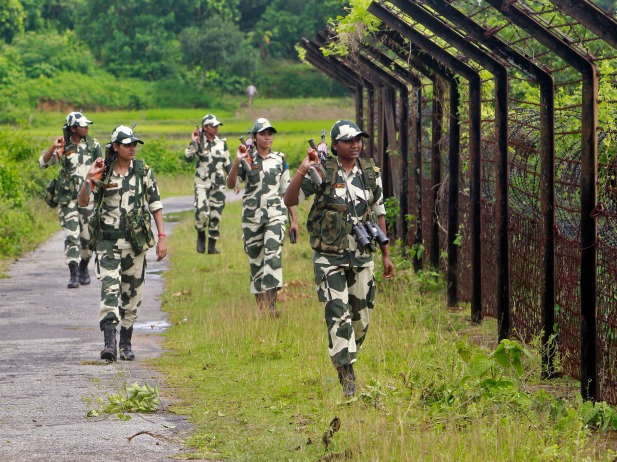
Still, the regional situation is not so easy. Afghanistan goes on with political and economic uncertainty, and security worries do not really go away especially near border areas. Analysts and people watching the region, have often pointed out worries about militant networks operating in places where governance is thin, and how that could spill into wider instability. And that kind of change matters not only for nearby countries but also for international actors who want clearer expectations, and better safety.
Instability in Pakistan’s western regions, in particular, can create effects that are bigger than many people notice. When security gets disrupted their trade routes can get hit, international investment becomes less likely, and regional integration moves slowly or even stalls. Infrastructure schemes get harder to protect, confidence among investors drops, and authorities end up redirecting funding and attention toward urgent security problems instead of longer-term development goals.
The economic consequences really do deserve serious attention, and not just in a quick way. Central Asia has quite substantial energy reserves and also more and more chances tied to critical minerals, which are becoming necessary for modern industries. On top of that, advanced technologies renewable energy systems, and the strategic manufacturing sector all rely on dependable supply chains. The international struggle for these resources probably will grow louder in the next few years, even if nobody admits it yet.
At the same time economic possibilities need secure conditions. Investors generally tend to avoid places linked to long term instability, uncertainty, or a slow kind of friction. Even when the benefits look large on paper, worries about violence, security risks, and political unpredictability quite often cancel out the optimistic expectations. This is why instability can stall development efforts, and also reduce the amount of international economic engagement that would otherwise happen.
From a wider strategic viewpoint, such circumstances can create openings for rival powers that are trying to gain more regional influence. In global politics, influence now depends not only on military capacity, but also on infrastructure partnerships, economic ties and development initiatives. Regions with fragile governance or persistent insecurity often turn into spaces where geopolitical rivalry intensifies, a bit like the pressure finds its own direction.
At the same time, concerns around terrorism stay pretty darn relevant. The international community put in huge political, financial, and military resources into counterterrorism over the last two decades. Yes, there were notable operational wins, but the whole underlying issue didn’t really vanish… it kind of evolved, not disappeared, you know.
Militant organizations tend to adapt to shifting conditions. They take advantage of governance gaps, recruit across borders, and then turn instability into something like stronger networks. The idea that extremist groups could benefit from fragile security settings is still on the radar for both regional and international actors. And if those threats come back, the consequences wouldn’t just stop at South Asia, it would spill over elsewhere too.
So, for policymakers in Washington, the challenge calls for a broad and comprehensive response. Security can’t be treated as purely a military matter. Sustainable solutions, increasingly, lean on intelligence cooperation, diplomatic engagement, economic support mechanisms, and practical regional partnerships, too.
Pakistan is still a key part of this kind of strategy. Even with these stretches of tension, and even if the priorities in bilateral relations don’t always line up, Islamabad and Washington continue to share the same goals, like stopping extremist dangers, keeping regional security intact, and backing long term steadiness. If they step up cooperation in intelligence sharing ,and align counterterrorism efforts more closely, that can help move toward those aims.
In the same vein, dealing with Afghanistan, plus staying in sync with regional partners, remains needed to handle worries about militant sanctuaries and the wider security problems. Real solutions won’t come from quick fixes; they will need continued political work and international coordination.
The main thing, really, comes down to strategic priorities. The United States is dealing with growing competition in several regions, all at once, and because of that preventive policies can be more useful than reactive ones. You usually see the price of instability described through security headaches in the moment, but there are also missed economic opportunities and a slow shift in geopolitical influence that doesn’t show up right away.
If Pakistan is stable, the whole region becomes more secure and more connected. That kind of stability helps trade move, strengthens regional coordination, and it tends to attract investment. It also reduces those conditions that can, over time, turn into deeper security challenges. And since South Asia and Central Asia keep changing, stability should start being treated not only as a regional aim, but also as a strategic interest that matters globally.