South Asia Journal
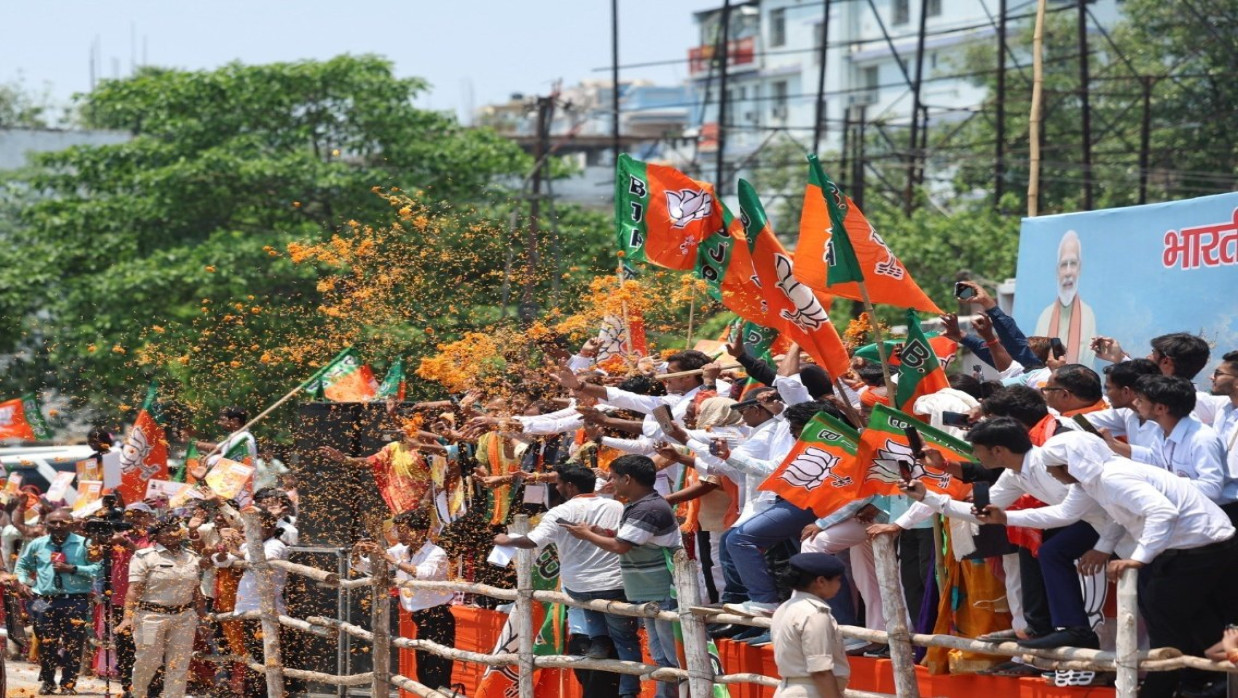
The West Bengal election of 2026 was one of the most debated and politicized elections ever seen in modern Indian politics. The election that started as an otherwise state assembly election held in Kolkata and the rest of Bengal soon snowballed into national questions of nationalism versus immigration, religion versus irreligion, mainstream media versus social media, India versus Bangladesh, and more. Engineering malpractices at polls, communal polarization and mobilization, sensationalism among media houses (many of whom were accused of being extensions of Bharatiya Janata Party-BJP government propaganda machines), narratives of Bangladeshi citizenship and voting in West Bengal quickly elevated the state assembly election to something bigger than just people of West Bengal voting for TMC or BJP.
Bangladesh politics were deeply entangled with West Bengal election politics. Hate speeches and vote bank politics surrounding questions like Illegal Immigration, Hindu Genocide in Bangladesh, and Islamic terrorism reached a fever pitch via galleries of partisan media houses, who arguably acted less like journalists and more like lapdogs of the BJP government.
Allegations of Electoral Manipulation
Allegations of the entire election being rigged emerged from day one. Opposition activists complained of rigging through booth capturing, ballot replacement, voter list manipulation, and the deletion of voters’ names from lists. Accusations of unfair elections have always been common across South Asia. What made this election highly polarizing was the sheer degree of such accusations against the 2026 Bengal election.
Questions were raised about whether election machinery had become so politicized that, in constituencies with stark demographic and communal divides, rigging could take place unchecked. Accusations of deleting voters from electoral rolls became one of the most polarizing topics of elections. Allegations of names of voters, particularly among certain demographics of the Matua community as well as Muslims, being selectively deleted from voter rolls became heated topics of discussion. BJP defended the rollback, stating it was done to remove bogus and illegal voters from the list. Critics, however, alleged that it was primarily aimed at removing minority voters and voters who would ‘vote against the BJP’ from the electoral rolls.
In such an atmosphere, the election was not just seen as a fight for power but for democracy itself. The narrative shifted towards allegations of “conspiracy”, “engineering”, and “state-sponsored tampering”.
Media, Propaganda, and the Rise of “Godi Media”
The BJP had also built a narrative around the infiltration of Bangladeshi Muslims into Bengal and the dilution of Hindu identity and security during the campaign. Illegal immigration from Bangladesh and issues around borders and citizenship were themes that Amit Shah and many other BJP leaders frequently returned to during election rallies.
The toppling of Sheikh Hasina government in Bangladesh in 2024 also fed into this narrative. Attacks on Hindus in Bangladesh were widely reported in Indian media, and figures like Dipu Chandra Das, who was killed during the violence, became potent talking points during the campaign after his father protested outside the Bangladesh Deputy High Commission in Kolkata. BJP campaigned that Mamata Banerjee had lost control of Bengal and let down the State’s Hindus while also allowing illegal immigration to persist to win votes.
The Bangladesh Narrative in Bengal Politics
The single most important story to emerge in the 2026 election was undoubtedly the salience of Bangladesh-centric narratives in Bengal politics. West Bengal had witnessed, over decades, a relatively nuanced and pluralistic political culture, one in which the thrust of class politics trumped the polarizing politics of religious identities. The BJP changed all that by pushing Bangladesh to the heart of its political discourse.
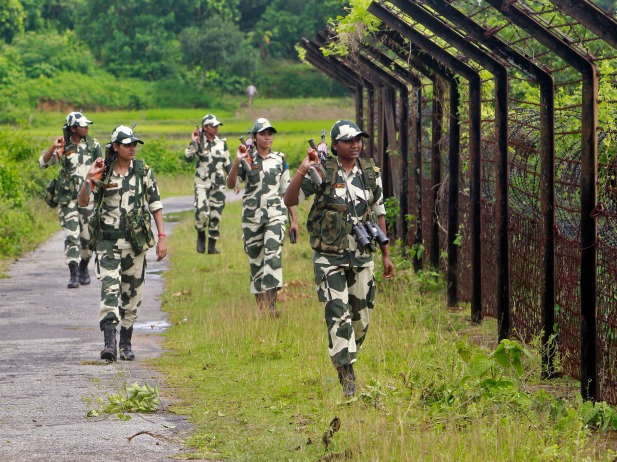
The BJP hammered on a single point that Bangladeshi Muslim infiltrators were altering the demographic character of Bengal while posing an existential threat to Hindu safety and primacy in the State. Rally after rally by BJP leaders like Amit Shah focused on infiltration, borders, and citizenship questions.
This acquired a sharper edge after the Sheik Hasina government fell in Bangladesh in 2024. Stories about attacks on Hindus in Bangladesh were splashed across media outlets in India. When protesters killed Dipu Chandra Das in Bangladesh and staged protests outside the Bangladesh Deputy High Commission in Kolkata, the BJP connected the dots by warning that Mamata Banerjee’s apathy towards Hindus was risking their lives. At the same time, she allegedly appeased illegal migrants who had votes.
The BJP was able to make substantial political capital out of this in border districts and among refugee-origin communities.
Mamata Banerjee and the Crisis of Bengali Secularism
Banerjee has historically positioned herself as a secular populist grounded in Bengal’s syncretic political culture. The TMC not only continued much of Bengal’s Left movement’s anti-communal legacy but also became far more militant in its welfare populism.
But by 2026, cracks in this strategy began appearing. Banerjee was accused of appeasing minorities, allowing infiltration, and neglecting Hindu voters who felt threatened by the expanding Muslim population. Critics of Banerjee charged that her government was too soft on illegal immigrants and not doing enough for Hindu refugees fleeing Bangladesh.
Secular forces also criticized Banerjee for failing to build a strong ideological bulwark against Hindutva. Rather than offering a convincing economic or social alternative to India’s burgeoning communal narrative, the TMC often resorted to personality-cult-driven populism and welfare initiatives.
This created a rhetorical space for the BJP to maneuver with its own appeals to nationalism and identity politics.
The Matua Community and the Politics of Memory
Arguably, the most swing-y bloc of voters in Bengal today is Matuas.
Rooted in East Bengal/Bangladesh, Matuas are primarily lower-caste Hindu refugees who fled Bangladesh and settled in India during Partition and after.
BJP organizers found traction with this community by playing up hurt sentiments regarding persecution, exile, and refugeehood.
Coupled with the Citizenship Amendment Act-driven promise of Indian citizenship, the BJP organizers effectively consolidated the Matua vote.
We see a trend here. Political scientists call it the “politics of memory”.
Triggered by the violence in post-Hasina Bangladesh, fear and insecurity gripped the State’s refugee populations. Trauma and refugeehood became electoral fodder.
TMC attempted damage control with Matuas too, but Hindu nationalist undertones of the BJP’s campaign carried an emotional appeal, linking the BJP’s campaign to the survival of Hindus as a civilization.
Politics within Bangladesh
The developments within Bangladesh cannot be ignored while analyzing the Bengal election. The ousting of Sheikh Hasina government in Bangladesh in 2024 has majorly shifted political equations in the region. Sheikh Hasina, the prime minister of Bangladesh till recently, was closely aligned with India and the Modi government.
The Sheikh Hasina’s ouster led to questions over Bangladesh’s future trajectory and concerns in Delhi over instability, Islamist revivalism, and Bangladesh tilting away. Indian media began depicting Bangladeshis as susceptible to radicalization and anti-India forces.
Bangladeshis have pushed back on such narratives. Many Bangladeshis said the 2024 revolt had very little to do with Islamists and more to do with authoritarianism, corruption, unemployment, and hereditary politics. Accusations were aimed at India’s attempt to ‘paint Bangladesh with a broad brush’ of Islamist violence.
The discourse exposed a lack of trust between the two neighbors. In Delhi’s strategic community, Bangladesh is often viewed through the lens of security. To Bangladeshis, it’s seen as an infringement on the country’s democratic moves.
Deep Halder and the Politics of Representation
Works by journalist Deep Halder were put under the lens too during this time. His piece titled “Why Bangladesh played a big role in BJP’s West Bengal win” highlighted how Bangladesh contributed to Bengal’s change in fortunes.
Halder wrote about Hindu insecurity prevailing in Bangladesh, refugee mentality in groups like the Matuas, demographic anxieties playing out in Bengal politics, and more. He faced criticism for echoing certain establishment tropes that try to view Bangladesh through the prism of disruption, migration, and communalism.
The debate over this topic intensified further after the publication of Inshallah Bangladesh by Halder et al. in 2024. The book was criticized for seeing developments through a pro-India strategic narrative and glossing over Bangladeshis’ resentment towards authoritarianism and external interference. Similarly, another book, “Being Hindu in Bangladesh, the untold story,” seems to have delved into Hindu “persecution” in Bangladesh and how this is contributing to the gradual reduction of the Hindu population, which, according to the authors, is declining annually. A total bogus analogy without pointing to logical reasons.
Notably, the spat surrounding the book served as evidence of how books and journalism have become contested battlegrounds themselves.
Communal Narratives and Historical Memory
Long-simmering memories also came into play. Memories of Partition, migration, and the communal violence of those times were reopened during the Bengal election. Memories of trauma were selectively deployed by actors across the political spectrum.
The BJP talked up Hindu anguish at being persecuted and forced to flee East Pakistan/Bangladesh to seek refuge in India. Their opponents said they were conveniently forgetting Bengal’s intertwined histories of Hindus and Muslims living together for decades.
Opposition leaders also took on assertions that Islamist radicalization was sweeping Bangladesh. They pointed out that attacks and vandalism were often due to local criminality, trade union disputes, or political scoring between parties. However, creating a sense of alarm over Islamic militancy served the political interests of Hindu nationalism in India well.
Politics played on memories.
A Regional Political Turning Point
The Bengal election of 2026 may come to be seen as a defining moment for South Asian politics. In many ways, the contest brought to an end old certainties along ideological lines and gave rise to new politics of memory, identity, and cross-border paranoia.
West Bengal was once seen as the pride of India’s secularism, with a dash of intellectual pluralism, but the State has now often become ground zero for the BJP’s cultural revolution. Bangladesh’s refugee crisis, political turmoil, and legacy of religious riots have been ingrained in Bengal politics this election.
Issues around press freedom, democratic disillusionment, and hyper-nationalism were also on ballots in Bengal. Claims of voter suppression and disinformation bolstered perceptions of divisive, distrustful electioneering.
In short, Bengal was no longer just about Kolkata or West Bengal. The election showed what concerned or unified people across the South Asian borderlands when nationalism, great-power competition, and broken democracies defined global politics.

Ghulam M. Suhrawardi
Ghulam M. Suhrawardi is the Publisher of South Asia Journal.