SAJ
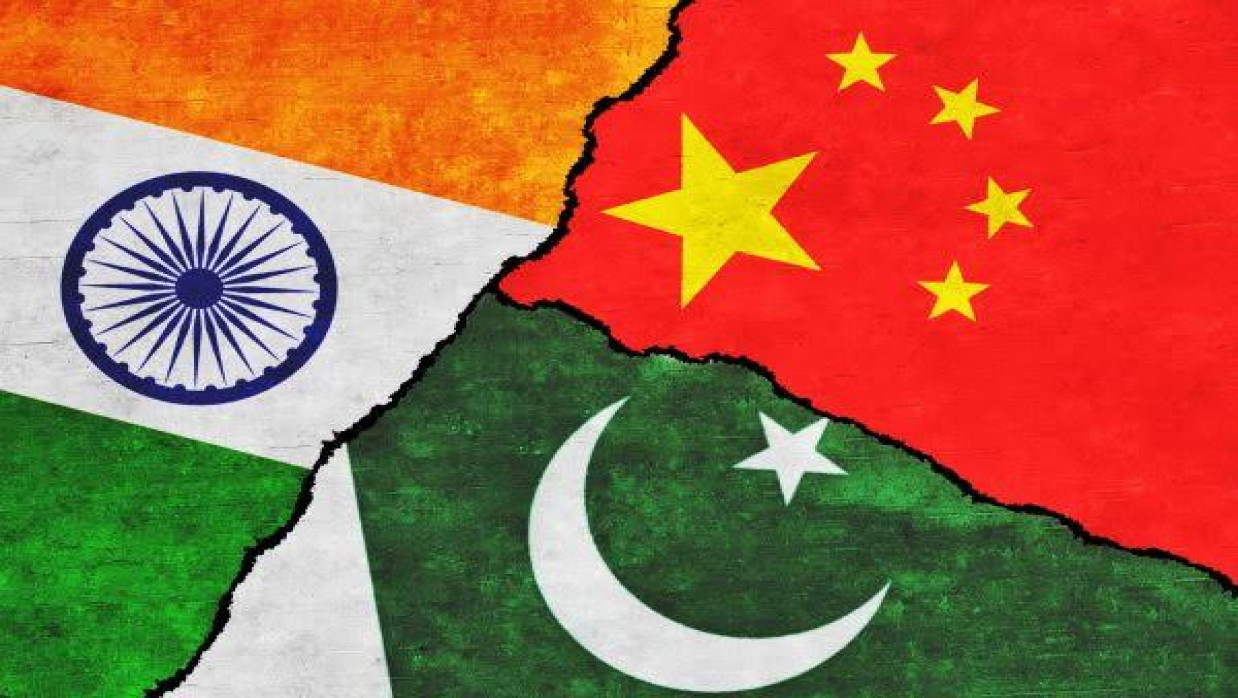
The geopolitical landscape of the twenty-first century is changing radically. Foundations of post–Cold War stability, America’s unipolar moment, Indo-Pacific centrism, and India as a balancing force against China are being shaken by new geostrategic compulsions. There is an emerging shift from the Indo-Pacific worldview to the broader Eurasian continent, where connectivity infrastructure, energy routes, cyberspace, and overland trade will define geopolitics of the future.
The US-China-India-Pakistan equation will remain central to these changes. India’s role as a military-strategic ally of the West is diminishing, while Pakistan’s relevance as a geoeconomic and geopolitical connector between China, Central Asia, West Asia, and Eurasia is increasing once again.
The Changing Nature of U.S.-China Competition
There has been a recalibration in Washington’s China policy. Over the past few years, the United States has been very vocal about containing China by building alliances and enhancing its military presence in the Indo-Pacific region. However, of late, there are indications that the Biden administration does not want to destabilize China.
Reports quoted US Defense Secretary Pete Hegseth as saying in March 2026 that the Pentagon is not seeking a military competition with China. Washington seems hell-bent on reinforcing defensive cooperation with treaty allies such as Japan, Korea, Australia, and the Philippines, while avoiding further provocation of China. Gone are the days when the Indo-Pacific was the battle cry of the Trump administration.
This change of course will have serious repercussions for India. India was being showcased as the leader of the Quad that included the US, Japan, and Australia. The unstated purpose was to contain China. But if the US is not seeking confrontation with China, what is the need for the Quad?
India’s importance in the broader China containment narrative might now take a back seat.
India’s Emerging Economic Dependency
Even as India’s military relevance within the Indo-Pacific framework appears to decline, its economic relationship with the United States continues to expand rapidly. Massive trade and technology agreements are reportedly under discussion, involving energy purchases, advanced technologies, military hardware, and nuclear cooperation.
Critics also point out that such a relationship poses long-term structural dangers to India. While China embraced foreign investment, it built up its own manufacturing and tech ecosystem. India risks becoming reliant on American platforms and technologies. Questions of national sovereignty and autonomy may become compromised if India imports its technology, chip architecture, energy chains, and defense platforms.
With increasing US-China tech rivalry, India may become a dumping ground for all things Western without developing its own manufacturing base. India also faces challenges amid rising US-China tensions in the technology sector. New Delhi may be forced to choose sides as the US embarks on decoupling from China. There are also concerns that China is restricting exports of rare earth materials used in electronics.
Eurasia Replaces the Indo-Pacific as the New Strategic Center
The rebalancing of power away from the Indo-Pacific construct may be the defining geopolitical shift underway.
The Belt and Road Initiative continues to alter Eurasian continental dynamics with railways, ports, oil and gas pipelines, and digital connections crisscrossing the landmass. Instead of sending goods exclusively through chokepoint-prone shipping lanes, Beijing is forging several overland trade routes between East Asia and Europe, Central Asia, West Asia, and Africa.
The Northern Corridor through Kazakhstan, Russia, and Belarus into Europe is perhaps the most significant. Despite the current Russia crisis, this is still one of the shortest and easiest land routes between East Asia and Europe.
The recently inaugurated China-Iran rail route is also of considerable importance. The over 10,000-kilometer-long route greatly expands China’s connectivity to the South while avoiding chokepoints.
Another strategic development is Russia’s “Polar Silk Road” through the Arctic Ocean. As climate change gradually opens the Northern Sea Route, commercial shipping between the Pacific and Europe could increasingly shift northward, dramatically reducing transit times.
Meanwhile, the so-called Middle Corridor, running from Kazakhstan through Azerbaijan, Georgia, and Turkey into Europe, is gaining prominence as a trade and critical minerals route. Interestingly, this corridor also aligns with the interests of certain American and European actors, demonstrating that Eurasian connectivity is becoming a shared strategic priority even among competitors.
These developments collectively indicate that the center of gravity in global geopolitics is moving inland toward Eurasia rather than remaining confined to the maritime Indo-Pacific theater.
Pakistan’s Strategic Revival
Against this backdrop, Pakistan is experiencing a significant geopolitical resurgence.
The recent high-level visit of Prime Minister Shahbaz Sharif and Pakistan’s Army leadership to China reportedly produced outcomes far more substantive than previous engagements. Beijing reaffirmed its support for Pakistan’s sovereignty, territorial integrity, and diplomatic positions, particularly regarding Kashmir.
It’s not just talk, either. Pakistan is also geo-strategically located at the heart of the China-Pakistan Economic Corridor (CPEC), a pet project of China’s Belt and Road Initiative. Ports. Roads. Railways. Energy. Digital infrastructure. China is poised to make Pakistan its gateway to the Arabian Sea and beyond, into West Asia and Africa. Thus, they are considering an association to replace SAARC.
China has been rumored to favor such a setup with Pakistan as the leader of the pack. SAARC has always had India’s disproportionate influence, and here Pakistan might finally get China involved as a partner with skin in the game.
Were such a bloc to come into being, power dynamics in South Asia would change drastically. Peripheral states would find incentive in Beijing-centric connective initiatives, marginalizing Delhi.
And it goes digital too. Beijing wants to build interoperable digital infrastructure with partner countries as part of China’s Digital Silk Road. If Pakistan joins China’s flagship projects, it could further integrate its technology ecosystem with the rest of Eurasia, and India to a lesser extent.
Such developments could contribute to regional digital fragmentation in South Asia.
A New South Asian Alignment?
One of the most consequential possibilities emerging from recent diplomatic discussions is a new regional grouping centered on trade, connectivity, and development, potentially replacing or supplementing the long-stagnant South Asian Association for Regional Cooperation.
Pakistan’s diplomatic outreach across Central Asia, West Asia, and the Muslim world further strengthens its position as a mediator and connector state in the emerging Eurasian order.
BRICS and the Diplomatic Isolation of India
The possibility of Pakistan joining BRICS and its New Development Bank represents another potential turning point.
If China, Russia, and several other BRICS members support Pakistan’s inclusion, India could face growing diplomatic discomfort within an organization where it once served as a central pillar.
That would also reflect how power equations are changing elsewhere in Eurasia. Moreover, it would indicate how China has successfully used global multilateral platforms to harm India’s interests.
Kashmir and Ladakh
Territorial disputes continue to define the trilateral dynamics between India, China, and Pakistan.
China’s backing of Pakistan on Kashmir at forums such as the UNSC and under various bilateral agreements only emboldens Pakistan further. At the same time, India has its own problem with China’s stationed troops in Eastern Ladakh.
The concern for India is if and when the next war comes, China and Pakistan could open up fronts in the West and north. While we know skirmishes take place along the Line of Actual Control (LAC), Kashmir is no longer the only region where power play is taking place.
This creates a scenario in which India faces sustained pressure from two nuclear-armed neighbors with deepening strategic coordination.
India’s Strategic Dilemma
India today faces a complex geopolitical dilemma. On the one hand, it seeks closer economic and technological integration with the West. On the other hand, it confronts an increasingly consolidated China-Pakistan partnership along its continental periphery.
India’s uncontested supremacy in South Asia is slipping away. Neighboring countries are hedging their bets by engaging with other external powers and participating in Chinese-sponsored infrastructure projects despite India’s protests.
Likewise, India cannot afford to reset ties with China until China resolves its border dispute. So long as that remains the case, India cannot cut its losses with Pakistan and take a wait-and-see approach diplomatically.
India has lost its century.
Asia’s New Shape
We are living in transitional times. New Eurasia-centric Ideas will eventually replace the concept of Indo-Pacific. Whether it be connectivity, trade, energy access, or the digital landscape, China seeks to shape Eurasia through Silk Road routes and various partnerships.
Pakistan will play a pivotal role in this scheme because of its ties with China, serving as a gateway connecting different regions of Eurasia.
However, that doesn’t mean India will go quietly into the night. While it might not be able to stand up to China in a conventional sense, it still has a couple of trump cards up its sleeve. But for India to remain relevant in Eurasia, it will have to stop taking South Asia for granted.
If there’s tension in South Asia, Eurasia will remain tense as well. If India can swallow its pride and act pragmatically towards Pakistan, who knows what the future of South Asia could look like?

Ghulam M. Suhrawardi
Ghulam M. Suhrawardi is the Publisher of South Asia Journal.