

South Asia Journal
Powerful in Bangladesh today, not only through political parties, financial coercion, or muscle-flexing of armed might. There exists a quieter, uglier, and hidden force working covertly beneath the comforting umbrella of soft power through cultural institutions and literary organizations. Institutions that claim, loudly and proudly, to serve humanity selflessly as the temples of light, intellect, and culture. Institutions that claim to build and develop society through advocacy of literacy, humanism, and internationalism. Cultural Hegemony, as these institutions are more accurately known, might very well be acting as Trojan horses through which unknowing Bangladeshis are allowing themselves to be brainwashed by outside influencers, primarily from India.
Joseph Nye famously described Soft Power as co-optive Power or getting others to want the same things you want via cultural or ideological means. Given South Asia’s shared past, language, culture, and, you guessed it, insane space-time continuum, it is uniquely susceptible to such influences. Bangladesh stands to lose out overtly or otherwise, as our closest and colonized neighbor.
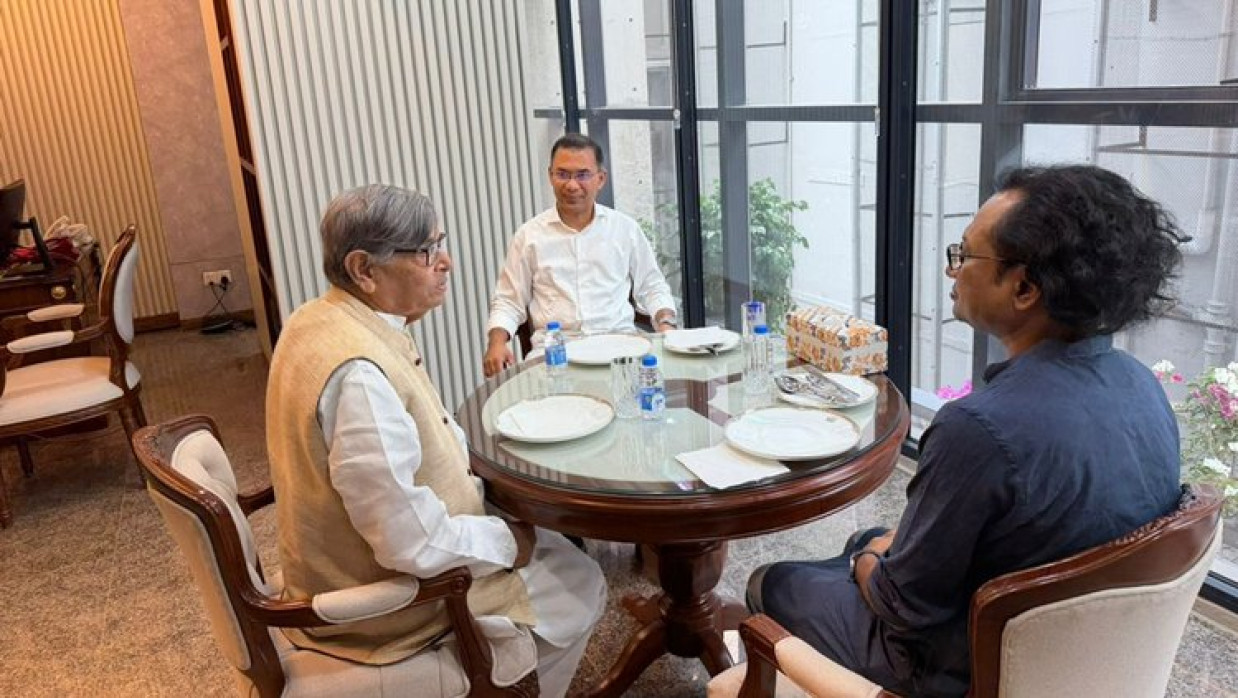
If someone told you about Soft Power Cultural Influence, thoughts of Abdullah Abu Saeed’s Bishwa Sahitya Kendra (BSK) should rightfully pop up. Founded with the intent to get young people interested in books and to boost brainpower, Abdullah Abu Saeed and his organization deserve all the acclaim they get. Their initiatives and traveling libraries have been miraculous for spreading literacy. But behind that sweet façade, a question remains: what ideologies are being propagated through this initiative? Why?
My point is not that literature is bad or anything. Literature can free your mind and broaden your perspectives. The problem starts when you choose which literature to read, when only a handful of stories are told, instead of millions. When you are subtly pushed towards a certain kind of culture. Bangladeshi Literature taught at these centers leans heavily towards Indian Culture. Themes of secular humanism, syncretic-religious philosophy, etc. Indian literature. Nothing wrong with that on its own. But after a while, Islamic literature and indigenous Bangladeshi literature get shoved aside.
Something similar happened here: the zamindars (landlords) were also influenced or controlled, not by direct foreign rule, but by cultural or religious movements like bhakti. Bengal has had Hegemony since forever – whether it was zamindars from the British Raj or high-caste Hindus taking over religious spaces or ideological movements spreading Marxist and Naxalite thoughts. Tools might have changed, but what’s instilling that subconscious thought has remained the same.
Even the Bengal Renaissance needs to be critiqued – as much as it pushed for neo-Vedanta through the Brahmo Samaj or propagated modern education, it also created many soft-seated versions of mono-cultural Brahminical nationalism.
Similar trends can be witnessed today, with literary centers, socio-cultural organizations, and educational movements mushrooming across Bangladesh, funded by money that does not always come from visibly transparent sources. Questions like “who funds them?” become extremely important, as they help us figure out whose ideology we will be feeding our minds with. When organizations that stand connected to foreign governments, NGOs, or even cultural organizations that have interests in destabilizing and maneuvering strategically support our cultural centers, promoting “soft power”, does it remain soft power or turn into something else?
India, as a regional power with significant soft-power capital, has been using its cultural prowess to spread its ideological tentacles far and wide across South Asia. Indian newspapers, films, books, and authors find their way into societies across South Asia, including Bangladesh. With the Bengali connection, Bengali literature becomes an easy target for exploitation.
Now the concern is not so much blatant brainwashing but mental alignment. If every year generations upon generations of Bangladeshi students are force-fed textbooks and magazines/books/articles focusing mainly on Dhaka-centric Bangladeshi culture and ideology, which incidentally focuses on secularism (in their definition), distorted history, anti-Hindu narratives, and marginalization of indigenous culture and beliefs, what could be the cumulative effect? Mentally, little by little, Bangladeshis will begin to sway towards ideological beliefs, values, and even favor politicians who embrace that mindset.
Sound familiar? This perfectly complements the title of the article pasted above. A lot of oppression happens not in the obvious. Colonialism was based on the policy of “divide and rule,” which has now fragmented our society. Soft power oppresses by normalizing mentalities. By controlling the mainstream narrative and subtly brainwashing a majority into believing certain ideologies and dismissing others as radical, extremist, etc., it creates a culture of invisible mental Hegemony.
Of course, we also need to understand that these institutions are rarely singular and/or consciously evil. People working at literary/cultural organizations can believe they are spreading light and knowledge just as genuinely as anyone else. Large-scale systemic change/coercion doesn’t need conspiracies. It just needs laws, incentives, and legacy. Nevertheless, even well-meaning actions can be part of such a pattern.
Bangladesh stands at such a juncture today. Who are we? What do we want to be? Whose books do we want to read? It is not about rejecting literature/cultural exchange/intellectualism. It’s about reading smarter and reading better. If we want a free literary culture in Bangladesh, we need multiple voices, we need to know who funds what, and we need to be aware enough to keep our indigenous knowledge alive as we seek out the rest of the world.
As indicated above, one way forward is civic nationalism. Bangladesh could focus on equal citizenship, pluralism, and inclusive identity to stem the tide of external hegemony, whether political, economic, cultural, etc. This requires effort at the policy level, as well as from society becoming more critical and independent in its thinking.
Final Words:
Bangladesh must perceive this through the lenses of soft power/knowledge and Hegemony; think about institutions like Bishwa Sahitya Kendra, literary awards, and others, bringing positive intellectual values, but may have also acted as tools/libraries to keep a nation aligned with others who may not have had Bangladesh’s best interests at heart. Once you see this, you can make sure Bangladesh’s literary and cultural development is by the people of Bangladesh, which is what Bangladesh needs to remain neutral and well-rounded.

Ghulam M. Suhrawardi
Ghulam M. Suhrawardi is the Publisher of South Asia Journal.





0 Comments