
Highlights:
- BJP wins West Bengal decisively (leading 194 seats), ending 15 years of TMC rule with record 92.93% turnout.
- Dhaka’s ties remain centred on Delhi, so Dhaka-Kolkata relations will follow the broader Dhaka-Delhi framework.
- Mamata Banerjee’s exit may open scope to move forward on the Teesta treaty.
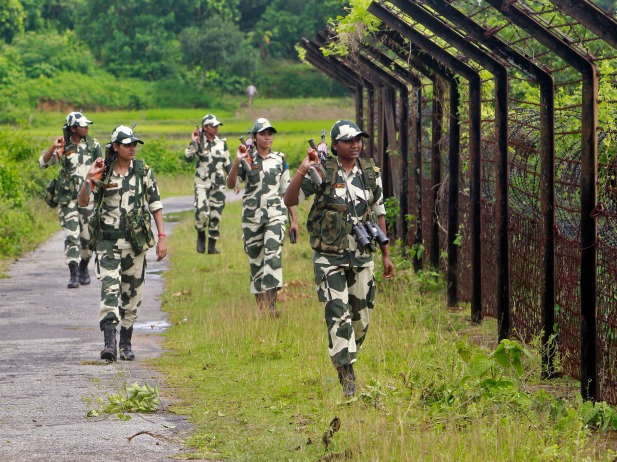
- Border pressure, migration controls, and “push-ins” may increase with BJP ruling both Assam and West Bengal.
- Rising communal rhetoric could impact societal relations and fuel tensions in Bangladesh.
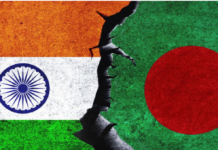
The historic victory of the Bharatiya Janata Party (BJP) in the 2026 West Bengal Assembly elections may present a tectonic shift in regional politics. After 15 years of Trinamool Congress (TMC) rule, the ‘Saffron Wave’ has secured a decisive mandate, leading in 194 seats at the time of filing this report.
This mandate was driven by a historic 92.93% voter turnout — the highest since Independence. For Dhaka, this transition introduces a new geopolitical calculus. With the BJP’s focus on border security and migration, long-standing issues like the Teesta water treaty and cross-border trade enter a period of uncertainty. The Business Standard spoke to five experts to decode what this change means for the future of Bangladesh-India ties.

‘BJP rule in Kolkata might help resolve Teesta dispute’
Amena Mohsin
Professor, International Relations, University of Dhaka
The fundamental reality we must acknowledge is that Dhaka deals with Delhi, not Kolkata. While the political shift in West Bengal is historic, we must remember that Dhaka is the national capital, and our primary diplomatic engagement remains firmly with the centre.
Since the BJP is in power at both the center and now in the state, and they currently seek a stable and productive relationship with Bangladesh, I believe they will keep that strategic interest in mind as they form this new government.
For years, the central government in New Delhi has claimed that the Teesta water-sharing treaty was stuck solely because of Mamata Banerjee’s opposition. Now that this political hurdle has ostensibly been removed, it will be a major point for Bangladesh to watch whether they actually move forward with the agreement.
This is a litmus test for the new administration’s approach toward its neighbour. However, this transition requires India to be extra sensitive toward our domestic context.
Considering that Bangladesh is a Muslim-majority country, the BJP leadership must ensure that no provocative statements are made that could hurt the sentiments of our people. They must understand that inflammatory rhetoric carries real consequences for bilateral stability.
Ultimately, I believe India has learned a vital lesson from past experiences: the people of Bangladesh will decide who stays in power here and who does not. I do not think they are going to commit the same mistakes of the past again by disregarding the agency of the Bangladeshi public. This new chapter should be defined by pragmatism and a mutual respect for the sentiments that drive our respective populations.

‘Dhaka-Kolkata relations will be subset of broader Dhaka-Delhi framework’
M Humayun Kabir
Former Diplomat and Current President, Bangladesh Enterprise Institute
The victory of the BJP in West Bengal presents a dual-track outlook for Bangladesh, where the outcome could range from diplomatic continuity to heightened regional pressure. While our social and economic ties with West Bengal are deeply rooted, it is essential to remember that our formal diplomatic relationship is conducted with New Delhi. This means the trajectory of Dhaka-Kolkata relations will largely be a subset of the broader Dhaka-Delhi framework.
Since the BJP now holds power at both the state and central levels, the West Bengal government will be obligated to follow the instructions and strategic decisions of the center; if New Delhi prioritises a normalised relationship with us, the local fallout of this election may be less alarming than feared.
However, there is a significant concern that the BJP may strengthen communal or anti-Muslim political narratives within West Bengal, especially considering they have already excluded a large Muslim community from voter lists and have previously discussed implementing the National Register of Citizens (NRC).
If such communal politics gain momentum, it could manifest as direct pressure on Bangladesh through forced migration, “push-ins”, or further restrictions on the movement of people across the border. We must also recognise that Bangladesh is now effectively bordered by BJP-governed states on two major fronts — Assam and West Bengal — which naturally raises a recurring fear that traditional and diplomatic pressure on our borders will increase.
Even the simple act of people-to-people movement, which has already seen a decline in recent times, could be further curtailed under a more rigid provincial administration. Ultimately, the overall atmosphere and framework of the India-Bangladesh relationship will dictate how these election results affect us. We are entering a phase where the political alignment of our neighbours will require a very balanced diplomatic response from Dhaka to maintain our regional stability.

‘Pressure along Assam, West Bengal border likely to intensify’
Altaf Parvez
Researcher, South and Southeast Asian History
The impact will be felt in multiple ways. When they (BJP) go to Parliament, everyone will inevitably face a certain degree of pressure, and as a reaction to that, there will also be a corresponding response here [in Bangladesh] as well.
This situation is not confined to West Bengal alone; they have also secured victory in Assam, meaning a similar political dynamic is emerging from both sides simultaneously.
As a result, pressure along the border is likely to intensify. Anti-Bangladesh propaganda is expected to increase in this context.
Furthermore, the rise of right-wing forces there signals a parallel rise of right-wing forces in Bangladesh as well, suggesting a broader regional trend rather than an isolated development.

‘BJP’s win opens door for renegotiation with India’
Asif Shahan
Professor, Development Studies, University of Dhaka
From a national political perspective, I don’t think Bangladesh will face any significant negative impact if the BJP wins in West Bengal. The reason is that the BJP has already been in power centrally in India.
So, the equation has always been between Dhaka and Delhi. From that standpoint, it seems to me that this could create a kind of incentive to engage in new ways of cooperation. The Trinamool Congress had already established its position, which, in essence, was not particularly beneficial for Bangladesh. In that sense, BJP’s win opens the door for renegotiation. If things go well, the situation could even improve.
This is how I see it at the national political level. However, at the societal level, there is a possibility of impact — particularly in terms of interaction patterns between people of West Bengal and Bangladesh, and in the sphere of religious harmony.
If the BJP comes to power there, there may be a risk of deterioration in religious harmony. This effect would likely be more visible at the societal level, while at the policy level, the status quo would probably be maintained.

‘Local communal forces could exploit West Bengal’s provocations for political gain’
Firoz Ahmed, Researcher and Writer
The rhetoric consistently employed by BJP leaders is so extreme that it would be impossible for any national leader in Bangladesh to make similar statements. However, these narratives have a direct impact on Bangladesh, as local communal forces attempt to exploit them for political gain.
Following the Babri Masjid incident, there were attempts to incite communal violence within Bangladesh. The type of provocative language used in this West Bengal election — where Bangladeshis were framed as “outsiders” — is deeply concerning. We fear that if the government does not take a firm stance, these developments could be used to foster instability across the country.
Even more dangerous is the potential for further crises regarding bilateral relations and shared river rights. We may also see an increase in border shootings and killings, as this administration might adopt any policy necessary to consolidate its power.
Nevertheless, I suspect the BJP will not find governing West Bengal to be a peaceful endeavour. Regardless of how the situation unfolds, Bangladesh must remain steadfast in upholding its national interests and ensuring that regional instability does not escalate.
Source: https://www.tbsnews.net/features/panorama/bjps-victory-west-bengal-and-future-bangladesh-india-ties-1429796