South Asia Journal
A Public Health Emergency with Political Consequences
Bangladesh is facing one of the worst public health crises it has seen in recent years. Tens of thousands of children have been affected by a rapidly spreading measles outbreak, parts of the healthcare system have buckled under pressure, and the situation has added fuel to existing political tensions over the country’s interim government, led by Muhammad Yunus. What began as a national health crisis has snowballed into political finger-pointing, inflamed discussions around institutional responsibility, media responsibility, and the politicization of healthcare.
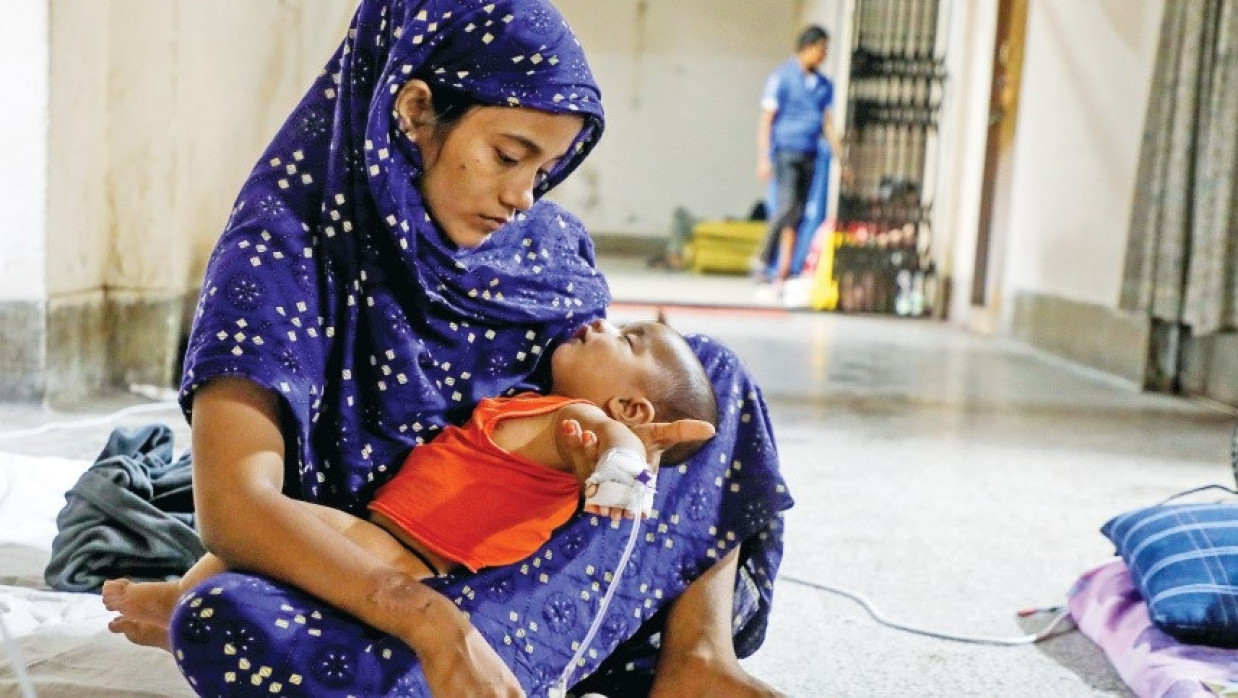
Behind the political blame game is a heartbreaking truth: children are unnecessarily falling ill, and some are dying. Public panic has mounted along with political grandstanding from both sides. Opponents of the Yunus government say he and his cabinet are responsible for healthcare negligence, slow vaccination rollouts, bureaucratic bungling, and procurement and coordination failures. Meanwhile, proponents of the interim government say the outbreak is being politicized in Bangladesh’s already tumultuous political environment, and that structural flaws and vulnerabilities existed well before Yunus and his team stepped in.
Both sides have valid points. The measles outbreak in Bangladesh was not caused by one isolated mistake. Nor is this public health crisis fueled by one particular malfunctioning government agency. Instead, this is a perfect storm of vaccine supply chain disruptions due to the pandemic, structural vulnerabilities in Bangladesh’s healthcare systems, transitional bureaucratic disarray, disjointed disease surveillance and data collection, and poor communication. Pinpointing blame will not solve the measles outbreak. Recognizing underlying institutional vulnerabilities will.
Bangladesh’s Long History of Vaccination Success
Bangladesh used to be considered a shining example of health successes in developing countries. Although malnourished and overcrowded, Bangladesh has improved child mortality, maternal health services, immunizations, and disease prevention. Bangladesh started its Expanded Program on Immunization (EPI) initiative in 1978. Since then, Bangladesh has developed one of the most highly regarded immunization programs among developing nations. Many global health organizations, such as WHO, UNICEF, and Gavi, the Vaccine Alliance, would often praise Bangladesh for its ability to distribute vaccines to people living far from healthcare facilities.
The national measles-rubella vaccination campaign began in 2012. Bangladesh maintained an immunization rate of over 90 percent for years through its routine immunization program, which was uncommon by South Asian standards. Bangladesh has NGOs and outreach programs that connect to rural citizens. Their healthcare workers helped design a program that was the envy of the global health world.
So why is measles suddenly making a comeback? There’s no quick answer. But what we do know is that there is a high chance that preventable immunity gaps have been building up for years.
The Scale and Nature of the Current Outbreak
By May 2026, the outbreak had reached nationwide levels. There were thousands of suspected cases. Most of these cases occurred in children younger than five years of age. Hospitalization rates began to rise, with some cases developing complications such as pneumonia, dehydration, encephalitis, and malnutrition. Rumors spread, and panic began to become public as child fatalities continued to rise, and misinformation about official statistics spread.
Thousands of cases occurring in densely populated urban slums and impoverished communities with inadequate sanitation, low rates of nutrition, and inability to reach healthcare facilities were also cause for concern among officials. Outbreaks in Dhaka’s slums, as well as poor rural communities, were believed to be at high risk for rapid spread.
Measles is considered one of the most contagious diseases. Even small decreases in vaccination coverage can result in catastrophe if the fraction of immune individuals in a population falls below a critical threshold. The discontinuities in public health gains were made apparent by the outbreak.
Political Transition and Administrative Disruption
Criticism of the interim government’s handling of public health services primarily focuses on the disruption of the sector’s efficient operation during political unrest. Bangladesh went through a period of instability, marked by frequent protests, institutional overhauls, bureaucratic ambiguity, and political turmoil. Opponents say this led to breaks in vaccination cycles, delays in vaccine orders, lack of on-field management, and ineffective deployment of health workers.
Most of the criticism focused on the postponed supplemental measles-rubella vaccination efforts in Bangladesh’s national vaccination programs. Bangladesh regularly administered nationwide supplemental mass vaccination campaigns periodically to reach children who might have been missed by standard vaccination programs. Following 2020, these supplemental campaigns were postponed because of staff turnover and political instability. Officials later acknowledged that this made more children nationwide more susceptible to illness.
Accusations of vaccine shortages, late vaccine procurement, withheld funds, and lack of healthcare personnel have also been made. Some opposition members questioned if officials were even fit to step into leadership roles during a vulnerable time for public health due to their lack of political background.
Criticisms of this administration’s approach to public health should not be seen as simple political pandering. Mitigating the spread of disease takes steady routine, fast communication, and reliable logistics. Setbacks in vaccinations can be catastrophic.
Global and Structural Factors Behind the Crisis
One government shouldn’t be singled out, either. This is not only a local problem. Measles outbreaks are occurring worldwide. In Bangladesh and beyond, routine childhood vaccination systems broke down during the COVID-19 pandemic. Stay-at-home orders, supply chain issues, health worker burnout, vaccine hesitancy, and eroding trust have led to significant declines in global vaccine coverage. Worldwide, millions of children did not receive their vaccines as scheduled from 2020 to 2024. Nations with far better public health infrastructure than Bangladesh’s have also seen sizable measles outbreaks following the pandemic.
Bangladesh was already on shaky ground internationally. What’s more, Bangladesh’s public health infrastructure already had longstanding structural vulnerabilities before the Yunus government took office. Urban slums, chronic malnutrition, sanitation issues, human capital shortages, a lack of rural health centers, and siloed data are among these vulnerabilities.
Malnutrition and a lack of emergency care allow measles to become deadly. This outbreak isn’t just reflective of gaps that arose during an abrupt leadership change. It reflects gaps that have existed for years.
Procurement Controversies and Governance Questions
Another scandal involved the procurement of vaccines. Modifications to procurements were claimed to have negatively impacted ongoing coordination structures with multilateral organizations such as UNICEF. The explanation here suggested that bureaucratic changes and turf wars over who controlled procurement policy led to shipment delays and the failure of routine immunization programs.
Proponents of the interim government argued that procurement changes were necessary to combat corruption and increase transparency. They further claimed that vaccine procurement was taking place through various international partners and that the issue was much more nuanced than opponents of the government were portraying it to be.
Both claims may hold some truth. The process of procurement reform is not inherently detrimental. However, conducting significant bureaucratic reform during a politically tumultuous period can inadvertently undermine programmatic continuity. Public health supply chains are dependent on exceptional levels of coordination and attention to detail. Momentary lapses can cost lives.
Data Confusion and Failures in Communication
The crisis also highlighted failures in Bangladesh’s disease-tracking and notification infrastructure. The government’s revised figures of measles deaths caused outrage amidst one of the worst controversies. DGHS later increased its tally of deaths, admitting negligence in reporting a large number of deaths.
Citizens were furious that statistics were being hidden from them. One story said that statistics were not centrally published by government-linked medical college hospitals. Another grievance concerned inconsistencies among local civil surgeons, hospital heads, and national organizations.
Confusion regarding how deaths should be reported from private hospitals and individual clinics was denounced, too. Bangladesh does not have well-connected healthcare networks, with three branches: public hospitals, NGO hospitals, and private hospitals. Surveillance is overloaded when there are many sources of information to look through.
Trust in the public system eroded as a result of this. Communication during a public health crisis is nearly as crucial as the healthcare response. If numbers don’t add up, doubt creeps in. Politicians, journalists, and social media thrive off such doubts.
Media Ethics and the Politics of Framing
Media coverage of the crisis is also controversial. Media pundits were accused of yellow journalism and politicizing the crisis to paint the government led by Yunus in a negative light. Claiming children’s deaths were directly linked to politics was criticized as being sensationalist and diverting attention from the complexity of the situation at hand.
On the other hand, however, journalists have a responsibility to hold the government accountable. In a country where bureaucratic incompetence can and does go unreported, media coverage allows citizens to see governmental mishaps. The importance of responsible journalism comes into play here. Accurate reporting is crucial when it comes to public health. Faulty media coverage can discourage people from vaccinating their children.
Political feuding in Bangladesh often overshadows important conversations. Any national issue is liable to be dragged into the political battleground. Issues such as a health crisis should ideally bring the public together, but end up being used as weapons.
Muhammad Yunus and the Burden of Symbolism
The stature Muhammad Yunus holds has also contributed to the emotionally charged tenor of the conversation. An internationally renowned microlender and Nobel Laureate who founded the Grameen Bank, Yunus has enjoyed a status that few others in Bangladesh have attained; he is seen by many locals and foreigners alike as a symbol of righteousness, social enterprise, and compassion. In times of political tumult, Yunus was even looked to by some as a figure who could right the ship of state.
Consequently, attacks on his leadership are often viewed as attacks on Yunus himself. Fans of Yunus and his supporters have cried conspiracy and political retaliation when his leadership has come under fire. However, detractors have been more than willing to point out that international acclaim means little if your government bungles the response to a preventable pandemic.
There is merit to both of these stances. On one hand, it’s only right that as a democracy, Bangladeshis hold their leaders to a high standard, especially in times of crisis. However, when offering criticism, it should be constructive and backed up by data. Using children as political pawns helps no one and may only serve to cause Bangladeshis to lose faith in vaccinations.
Emergency Treatment and the Human Cost
I think one particularly egregious element of the crisis was how skewed prevention and emergency treatment responses were. Programs understandably focused on vaccine drives, and these are, of course, critical. However, critics claimed that not enough effort was placed on increasing access to emergency treatment for symptomatic children.
Parents from rural districts were facing tremendous hardship, driving hours to packed college hospitals. There were demands for field hospitals and decentralized care centers outside Dhaka. This would’ve reduced mortality and eased the burden on major hospitals.
This pandemic showed us that vaccination drives can’t be the only focus once widespread outbreaks have already begun. Investment in emergency care must also be scaled up.
Lessons for Bangladesh’s Future
Lesson one: Vaccine drives should not be politicized. Immunization programs cannot afford shutdowns due to street protests, transfers of top leaders, or transfers of institutional oversight. Ensuring continuity of public health services should be regarded as an essential service delivery part of our national security.
Lesson two: Timing is everything when it comes to health-sector reforms. Restructuring and reshuffling may well be good policies, but not amidst chaos. Health agencies need an experienced, smoothly continuous workforce to ensure institutional knowledge and coordination.
Lesson three: Disease surveillance needs to be ramped up, along with investments in health technology, digital disease reporting, healthcare access in rural communities, and on-the-ground manpower. Bangladesh’s weak and compartmentalized health reporting system came back to bite us during this outbreak. Integrated real-time reporting needs to be the new normal.
Lesson four: Journalists and politicians must own their roles, too. In a crisis, responsible politicians will communicate clearly and lead with competence. Journalists should do their own digging and follow facts, but should not manufacture sensationalism that only spreads fear and further disinformation about vaccines.
Lesson five: We should stop politicizing the vaccines as well. Vaccine drives are easy targets for political point scoring. But what goes down in approval and confidence can take years to climb back up.
Conclusion
No, this is not just a story of government incompetence. Neither is it a conspiracy theory cooked up by talking heads against the State. Bangladesh’s measles epidemic has been complicated by a host of factors. There’s political upheaval, longstanding systemic weaknesses dating back decades, disruptions to routine vaccine delivery globally during COVID times, broken disease surveillance efforts, and communication failures.
Muhammad Yunus’ interim administration has some responsibility for that, too. Slow vaccine rollouts, vaccine shortages/distribution challenges, red tape, and other factors may have also contributed to limited coverage. Are there going to be hard questions asked about emergency preparedness and leadership? They should be.
Equally fair it is to say that Bangladesh was vulnerable before Yunus’s government took charge. The deep-seated fragilities that prevented the country from dealing with the crisis effectively have been there for years. COVID-19 disrupted routine immunization programs worldwide; Bangladesh was no exception. Add to that the hyper-partisan politics of the country, where every government mistake is weaponized.
Children are getting sick. And that’s the biggest tragedy of all. Children whose lives could have been saved. Talk of measles in Bangladesh should be less about blame and more about restoring faith in vaccines, catching up on lost ground, better surveillance, and ensuring politics never again takes away another generation’s right to health.

Ghulam M. Suhrawardi
Ghulam M. Suhrawardi is the Publisher of South Asia Journal.