
When journalist Nazrul Islam Mithu was stopped at Hazrat Shahjalal International Airport on World Press Freedom Day while attempting to travel abroad, the incident quickly drew attention within Bangladesh’s media community.
Mithu, the Dhaka correspondent of Deutsche Presse-Agentur (dpa) and president of the Overseas Correspondents Association Bangladesh (OCAB), had completed check-in formalities and collected his boarding pass before immigration officials questioned him and prevented him from boarding.
According to Mithu and OCAB, no written order or formal explanation was presented at the airport. An immigration official later anonymously told local media that the restriction followed objections raised by “intelligence officials.”
The incident occurred a day after OCAB publicly called for an end to repression against journalists during a World Press Freedom Day programme in Dhaka.
The case has since become part of a broader discussion about press freedom, legal transparency and the role of security institutions in Bangladesh’s post-2024 political environment.
Under Bangladeshi law, travel restrictions can be imposed in certain circumstances, including national security considerations. However, no publicly available legal basis linked to Mithu’s case has been disclosed.
The absence of a visible judicial or administrative order led media organisations and rights observers to question the procedural framework under which the restriction was imposed.
The incident has also drawn attention because it reflects a broader pattern increasingly observed globally, where restrictions affecting journalists are implemented through administrative, legal or procedural mechanisms rather than direct censorship.
In modern media environments, pressure on journalists often emerges through surveillance, criminal complaints, prolonged investigations, travel restrictions, digital monitoring, or financial and legal uncertainty.
The Mithu incident took place during a politically transitional period in Bangladesh. Following the fall of Sheikh Hasina’s government in August 2024, domestic and international observers expected the possibility of a more open political and media environment.
The interim administration led by Muhammad Yunus reversed some practices associated with media control, and several international assessments noted a relative reduction in direct pressure on journalists during 2025.
At the same time, developments under the BNP-led elected government suggest that several institutional and legal structures previously used in cases involving speech and dissent remain active.
Recent arrests linked to social media activity and speech-related allegations have continued under laws including the Cyber Security Ordinance, Section 54 of the Criminal Procedure Code and the Anti-Terrorism Act.
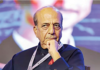
“The commitment to media freedom and accountable governance that political parties have made was supposed to be conducive to free media. But what is happening in reality is something we seriously need to ponder. The same winner-takes-all game is continuing, and all indications are that the same political forces are controlling the institutions of accountability.” – Iftekharuzzaman, executive director, Transparency International Bangladesh
In April 2026, Human Rights Watch stated that recent arrests connected to online criticism of the government reflected continuity in the use of laws regulating speech.
Legal scholars and researchers interviewed by Bangladeshi media have also raised concerns about speech-related prosecutions.
Barrister Sara Hossain told The Business Standard that criticism of public officials does not automatically constitute criminal defamation, particularly in cases initiated by third parties rather than directly affected individuals.
Researcher Altaf Parvez argued that successive governments in Bangladesh have historically retained and reused coercive legal and administrative mechanisms established by previous administrations.
Political scientist Asif Mohammad Shahan similarly observed that concentrating interpretive authority over acceptable speech within state institutions creates risks of selective enforcement.
Questions about due process and legal consistency have also emerged in relation to journalists detained after the July 2024 uprising.
According to reporting by The Daily Star, five senior journalists — Farzana Rupa, Shakil Ahmed, Shyamal Dutta, Mozammel Haque Babu and Shahriar Kabir — have remained detained for periods ranging from 593 to 620 days without formal charges being framed against them.
In one case linked to the death of BNP activist Mahfuz Alam Shraban during the August 2024 protests, journalists were included among hundreds of accused individuals.
The FIR reportedly alleged that certain journalists disseminated “false information” and “provocative statements” that contributed to violence. However, publicly available reporting on the case does not specify particular publications or broadcasts directly linked to the killing.
Another case linked to the Jatrabari violence accused television editor Mozammel Haque Babu alongside political leaders and security officials of spreading “rumours” connected to unrest.
Legal observers noted that such cases raise questions about evidentiary standards, causation and the legal threshold required to establish criminal liability for speech-related activity.
The prolonged duration of detention has also become a point of concern within Bangladesh’s legal community.
Defence lawyers representing detained journalists told local media that, in several instances, detainees received bail in one case before being shown arrested in another.
In the case involving Farzana Rupa and Shakil Ahmed, a High Court bail order was later stayed by the Appellate Division. Hearings and investigations in multiple cases have continued for extended periods following the original arrests.
The trend has also extended beyond nationally recognised journalists.
In May 2026, police in Khagrachhari arrested local journalist Jiten Barua in five separate cases filed across multiple police stations. Four cases were linked to clashes between BNP and Awami League activists in 2023, while another related to an alleged attack on students during the August 2024 unrest.
International human rights institutions have also reviewed some of the cases.
In March 2025, three UN special experts questioned the interim government over the detention of Rupa and Ahmed. Their communication expressed concern over the use of serious criminal allegations, including murder and incitement, against journalists without publicly available evidence showing direct participation.
The intervention highlighted a distinction frequently emphasised in international legal discussions on media freedom: criticism, bias, propaganda or unethical journalism may lead to professional or civil consequences, but criminal liability for violent acts generally requires direct evidentiary links between speech and criminal conduct.
The detention of Shahriar Kabir also drew international scrutiny.
The UN Working Group on Arbitrary Detention questioned the legal basis of his imprisonment and raised concerns about due process, legal representation, detention conditions and allegations of mistreatment.
Taken together, these cases have contributed to broader debate about institutional reform within Bangladesh’s policing, prosecutorial and judicial systems after the 2024 political transition.
While the transition altered the country’s governing structure, debate continues over how far administrative and legal practices associated with previous governments have actually changed.
Broader data also provides historical context.
According to the Sweden-based V-Dem Institute, Bangladesh has experienced hostile conditions for journalists across multiple political periods since independence. The lowest rankings recorded by the dataset include the BAKSAL period, the military government of Hussain Muhammad Ershad and later years of Sheikh Hasina’s administration between 2014 and 2024.
The broader historical trend suggests that restrictions affecting journalists have appeared under governments with differing ideological and political orientations, although implemented through different legal instruments and institutional approaches.
At the same time, Bangladesh’s media landscape has expanded significantly over the past two decades. Independent online platforms, digital journalism, television networks and social media-based reporting have widened the country’s information ecosystem and increased public political engagement.
However, the coexistence of media expansion with broadly framed speech-related legislation has created continuing legal uncertainty for journalists and media organisations.
The Mithu incident has therefore been interpreted within a broader institutional and legal framework rather than merely as an isolated airport restriction.
The case has generated discussion about procedural transparency, the authority exercised by intelligence institutions and the practical implementation of constitutional protections relating to speech and press freedom under Article 39 of Bangladesh’s Constitution.
Debate continues over whether Bangladesh’s post-2024 political transition will produce lasting institutional reforms affecting the relationship between the state, security institutions, dissent and the media.
“The commitment to media freedom and accountable governance that political parties made was supposed to create conditions for free media. But what is happening in reality is something we seriously need to reflect on,” Transparency International Bangladesh Executive Director Iftekharuzzaman said at the Bangladesh Journalism Conference 2026.
“The same winner-takes-all game is continuing, and all indications suggest that the same political forces are controlling institutions of accountability.”
Veteran journalist Kamal Ahmed said, “No matter how much we speak about democracy, we often forget other voices. In the name of democracy, we have witnessed the rule of majoritarianism.”
“Journalists themselves need to become more coordinated, and media houses must create an ecosystem for political reporters,” he added.
Source: https://www.tbsnews.net/features/panorama/after-uprising-old-pressures-bangladeshs-media-resurface-1434361