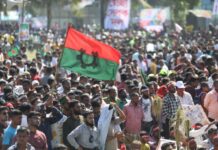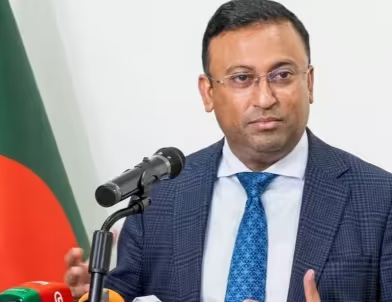
The Awami League is trying to create an atmosphere of fear and insecurity, provoke confrontations with law enforcement agencies and undermine Bangladesh’s peace, stability and democratic freedoms, State Minister 1 for Foreign Affairs Humaiun Kobir told diplomats in Dhaka yesterday.
At a closed-door briefing on the current political situation and recent security challenges, he alleged that AL activists were involved in violence and sabotage aimed at creating a perception of political disorder and undermining economic opportunities.
He called on international partners to support and engage constructively with Bangladesh as it navigates its democratic transition.
“We greatly value the understanding and constructive engagement of our international friends and partners. We count on your continued support as we advance our democratic transition, institutional reforms and economic recovery towards a peaceful, stable and prosperous Bangladesh,” Humaiun said.
The foreign ministry organised the morning briefing He also heads and representatives of Dhaka-based diplomatic missions, United Nations agencies and international organisations. Foreign Secretary Salahuddin Noman Chowdhury and other senior officials were also present.
Around 60 diplomatic missions were represented at the briefing, including those of China, Japan, the United States, the United Kingdom and India, as well as those of several other South Asian, East Asian and Eurasian countries. Representatives of international organisations, including the United Nations, also attended.
“They are trying to create an atmosphere of fear and insecurity among people and provoke confrontations with law enforcement agencies to generate an impression of political disorder,” Humaiun told the diplomats.
He also alleged that AL activists were involved in terrorism and money laundering abroad and sought international cooperation in bringing them back to Bangladesh.
The state minister said the government remained committed to ensuring that such incidents did not derail the country’s democratic transition.
“Law enforcement agencies had been instructed to respond firmly, professionally and proportionately, while investigations were underway and those responsible were being held accountable in accordance with the law.”
He added that the government was equally committed to upholding due process, human rights and the rule of law.
158 INCIDENTS IN 21 DAYS
During the briefing, Humaiun said the government had recorded 158 incidents across 41 administrative units between November 1 and 21.
These included crude bomb explosions, petrol bomb attacks, arson, vandalism, looting, assaults on police installations and blockades of major highways.
He said the activities of the AL and its affiliated organisations had been banned under the Anti-Terrorism Act, while the party’s registration remained suspended.
“Despite this, its activists continued to organise processions, blockades, demonstrations and other activities in different parts of the country.”
Citing specific incidents, he said a police station in Gopalganj was attacked on November 17. The attackers set fire to police vehicles and the station building, looted arms and ammunition, and freed detainees from custody. A member of Border Guard Bangladesh was also seriously injured.
On November 19, another police station in Muksudpur came under attack, with vehicles set ablaze and the residence of its officer-in-charge damaged, he said.
He also referred to attacks and vandalism targeting the residences of elected MPs, BNP offices and Grameen Bank branches, as well as crude bomb explosions and road blockades near the Padma Bridge’s southern toll plaza.
The state minister said reports also documented attacks on police in Chattogram, crude bomb explosions and arson attacks on buses in Dhaka, attacks on police vehicles in Sylhet and an attack on a Grameen Bank office in Noakhali.
According to Humaiun, law enforcement agencies had filed 39 cases and arrested 66 people in connection with the incidents.
He further alleged that labour unrest in the RMG sector was being orchestrated by the AL and its activists to disrupt the economy and cause suffering to workers.
The government had prioritised strengthening democratic institutions, restoring law and order, rebuilding public confidence and reviving the economy by seeking to control inflation, attract investment and create jobs, he said.
“The recent incidents of violence and sabotage run counter to the aspirations of the people of Bangladesh, who seek peace, stability, democratic freedoms, economic opportunity and a better future.”
DIPLOMATS URGE CIVIL SOCIETY INPUT ON CYBER LAW
Foreign diplomats yesterday advised the government to involve civil society in finalising the draft Cyber Security (Amendment) Act 2026 and give due consideration to their views, according to a diplomat who attended a separate morning consultation at the foreign ministry.
The meeting, attended by heads of diplomatic missions and representatives of development partners, was chaired by Posts, Telecommunications and Information Technology Minister Faqir Mahbub Anam, with Law, Justice and Parliamentary Affairs Minister Md Asaduzzaman as chief guest.
State Minister for Foreign Affairs Shama Obaed Islam and Rehan Asif Asad, the prime minister’s adviser on posts, telecommunications and information technology, were also present.
Speaking to reporters afterwards, Asaduzzaman said diplomats and development partners appreciated several provisions aimed at protecting citizens’ rights and recommended improvements to others.
The government invited additional written recommendations within a week, assuring participants that their observations would be carefully examined before the draft was finalised, he said.
Asaduzzaman said the consultations aimed to hear objections and address legitimate concerns before placing the proposed legislation before parliament.
The government had already consulted newspaper editors and journalists and would hold further discussions with civil society organisations and business representatives, he said.
Addressing concerns over possible restrictions on independent journalism and freedom of expression, Asaduzzaman said the government would adhere to constitutional and international legal frameworks governing fundamental rights.
He cited Article 19(3) of the International Covenant on Civil and Political Rights (ICCPR) and Article 39 of the Constitution, both of which permit certain restrictions on freedom of expression under specified conditions.
“We are not doing anything beyond those provisions, and we will not do so,” he said.
Acknowledging concerns over ambiguity in the draft, Asaduzzaman said the government was working to clarify definitions and eliminate potentially confusing provisions.
Source: The Daily Star