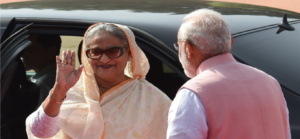
Implications of Sheikh Hasina’s ouster on Bangladesh’s internal politics, its relations with India and wider South Asian order
The sacking of Sheikh Hasina’s government on 5 August 2024 was the culmination of a long-standing complicity of India with the former Prime Minister of Bangladesh. In return for her propping up of Bangladesh’s independence of political will from India’s interests, Hasina was permitted to build an authoritarian rule in Bangladesh over many years. The ramifications are still playing out across Bangladesh’s domestic politics, its bid to build a democratic polity, and its relations with India and other regional actors.
Under Sheikh Hasina, Bangladesh was held in an authoritarian stranglehold for over 15 years, with rigged elections, crippled political opposition and institutions, and reports of serious human rights abuses. India had a vested interest in sustaining Hasina’s government to serve its strategic and economic interests. While India and the Hasina regime enjoyed mutual advantages, this meant New Delhi had over-invested in keeping one political figure alive in Bangladesh, at the cost of fostering a broader relationship with the Bangladeshi people.
This ended in 2024, when students led the mass movement that toppled the Hasina government. Indian political establishment figures have sought to pin this development on US interference, the growing influence of Islamists, or some other external country.
Such explanations fail to recognize the many failings of the Hasina government which drove the people of Bangladesh to revolt, and are symptomatic of the wider failings in Indian policy-making with regard to its immediate neighborhood.
The Hasina–India Partnership: Political Survival and Strategic Dependence
Sheikh Hasina emerged victorious in the general elections of December 2008 and ruled Bangladesh unbroken until August 2024. During this time, she built extremely close relations with India under the Prime Ministerships of both Manmohan Singh and Narendra Modi.
This benefited India in several ways. It allowed engagement with Bangladesh to contain insurgency spilling over into India’s north-east, facilitate transit and connectivity, open up trade, and help India project its influence into the Bay of Bengal. Bangladesh was also a key part of India’s counter to China in the region.
It benefited Hasina by providing a strong ally in India, giving her confidence amid internal dissent and global criticism.
However, it drew criticism as Bangladesh’s democracy continued to slide, with the main opposition coalition declining to participate in the 2014 general elections and the 2018 elections marked by voter coercion and manipulated results. The BNP also refused to contest the January 2024 election.
India continued to focus on maintaining constructive ties and downplayed its concerns about the democratic deficit under Hasina, unlike its Western counterparts and several civil society groups.
India did not give rise to Bangladesh’s autocracy, but it demonstrated that it was comfortable doing business with an autocratic leader in Bangladesh and thereby invited criticism of valuing subservience over democracy in its neighborhood.
There has also been growing discussion within Bangladesh whether the country’s relationship with India is one of mutual partnership or merely an extension of Sheikh Hasina’s desire to stay in power.
This distinction matters because while good ties between two neighboring countries are essential and welcome, subordinating one’s interests to another can pose significant risks.
From Liberation-Era Friendship to Diplomatic Paternalism
India was instrumental in Bangladesh’s 1971 war of independence – from providing overt military aid, to sheltering and supporting millions of refugees, to arming the Mukti Bahini. It is a significant chapter in the history of India-Bangladesh relations.
India should be duly acknowledged for this role. However, playing a part in a country’s formation does not give India any inherent right to meddle in that country’s affairs.
Huseyn Shaheed Suhrawardy’s relationship with Sheikh Mujib is another facet of Bangladesh’s political history. Mujib came to prominence in the milieu of the Bengali left – of the street protests and partisan politics. His role in the language and greater autonomy movement, and then in Bangladesh’s independence, placed him at the heart of the country’s history.
As Bangladesh descended into a one-party rule under Mujib’s BAKSAL, it highlighted the perils of allowing one dominant leader to control the state apparatus.
This was mirrored to some extent in the Hasina years, albeit under very different circumstances. The nurturing of the Hasina dynasty, the concentration of power in Hasina’s person, and intolerance of dissent and opposition parties suggested that the Awami League increasingly viewed its political ascendancy as a birthright.
India at times contributed to these impressions through the conduct of some of its high commissioners, whom Bangladeshis accused of adopting the air of overseers of Bangladesh’s political affairs.
These may be exaggerations, and one cannot infer from this that India was ‘controlling’ Bangladesh. But they speak of a level of frustration in Bangladesh with what was perceived as excessive Indian interference.
This was apparent in Pinak Ranjan Chakravarty, former High Commissioner of India to Bangladesh, weighing in on the issues arising from Hasina’s situation – whether she can be extradited and the impact of her return.
This indicates the significance India places on the political situation in Bangladesh. The question therefore is whether it can come to terms with Bangladesh electing governments and political formations that do not align with its interests.
A relationship built on mutual respect requires recognition that Bangladesh’s political legitimacy must originate from its own citizens, not from diplomatic approval in New Delhi.
The 2024 Uprising and the American Conspiracy Narrative
There is significant debate over whether the US caused Hasina to be ousted in the July-August 2024 unrest. The claim is that she did not agree to allow the US to utilize an island in Bangladesh as a military outpost.
The allegation became linked to discussions about Saint Martin’s Island, in the Bay of Bengal near Myanmar.
Hasina herself raised claims about foreign pressure involving military access. However, no publicly established evidence has demonstrated that Washington demanded sovereignty over Saint Martin’s Island or that American intelligence agencies organized the student uprising to secure such an arrangement.
The US has refuted claims that it sought to occupy the country.
The US had previously censured the government of Bangladesh over elections and human rights concerns, and took a number of steps to promote democracy in Bangladesh, including visa bans. While this may have created tension, it does not suggest the US was responsible for the large-scale popular revolt.
Clear internal factors led to the popular revolt. It was sparked by a student agitation over reservations in jobs, and snowballed following killings, detentions, and a heavy-handed regime crackdown.
The grievances were not manufactured abroad. They developed within Bangladesh’s universities, workplaces, political institutions, and communities.
Crediting the movement primarily to Washington dismisses the contribution of Bangladeshi students and the wider populace. It also insinuates that Bangladeshis are incapable of mounting an anti-government movement on their own.
This framing is of course politically useful to Hasina’s backers, who seek to depict her fall as a US-backed coup.
It also lets Indian strategic commentators explain the loss of a favored regional partner without acknowledging that New Delhi misjudged the depth of public opposition to her rule.
Foreign governments undoubtedly maintain interests in Bangladesh. China, India, Pakistan, and the United States all monitor developments in Dhaka. Their diplomatic engagement, intelligence activities, and strategic ambitions deserve scrutiny.
But geopolitical competition must not become an all-purpose explanation that erases Bangladesh’s own political history.
The Human Cost of Authoritarian Rule
The most devastating indictment of Hasina’s government emerged from the violence accompanying its final weeks.
As of February 2025, the UN OHCHR has estimated the death toll to be as high as 1,400 in the course of the July-August 2024 protests. There is credible evidence that the former ruling regime, its security apparatus, and Awami League-affiliated entities committed serious violations of human rights.
This included killings, unlawful detention, and torture, as well as organized violence to curb political dissent.
This added a new dimension to the ousting of Sheikh Hasina and showed that it was precipitated by an authoritarian state’s violent response to its citizens’ desire for democratic reforms.
The extensive use of the security and intelligence forces by the government and Awami League groups signaled that exercising political opposition came at a significant risk to the individual’s safety.
The downfall of the Sheikh Hasina government consequently highlighted the fragility of many state institutions underpinned by the patronage of the ruling party.
For India, the implications were uncomfortable. A government celebrated in New Delhi as a reliable security partner had lost the confidence of a substantial section of its own population.
Strategic stability resting on a dictatorial regime can therefore be very unstable. Once a dictatorial regime falls out of favor, the power that is linked to it will be the target of much of that
India’s Influence Over Bangladesh’s Institutions
One area of concern in the Hasina government has been the growing Indian presence in the Bangladesh army, intelligence agencies, police forces and civil services.
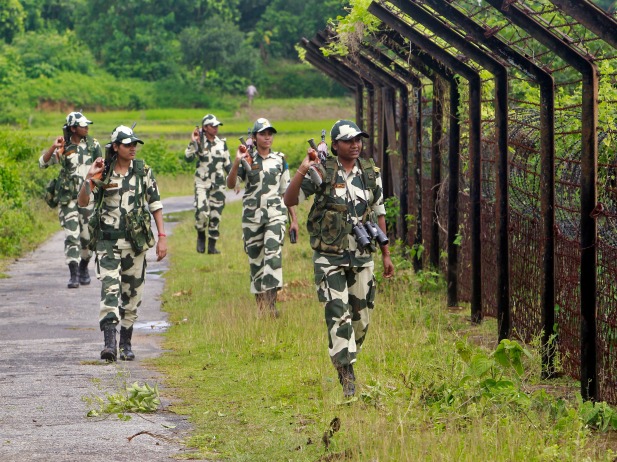
Security-related cooperation has grown significantly during Hasina’s tenure, including on counter-terrorism, intelligence sharing, defense/military cooperation, border control, and military exercises.
Such cooperation is not inherently improper. Neighboring countries with long shared borders have legitimate reasons to coordinate security activities.
However, critics argue that the depth of this relationship created opportunities for excessive Indian influence over Bangladeshi institutions.
These are at least worth exploring as possibilities – i.e., that some Indian officers may have had insider knowledge of State decisions, or that Bangladesh RAB has been malleable to Indian interests. However, they should not be assumed to be a fact absent evidence.
There is, of course, a clear line between working with foreign agencies and being effectively run by them. States can cooperate with other states without ceding autonomy over their security apparatus. But when the latter’s will starts to shape the former’s politics, a problem emerges.
Hasina’s departure from Bangladesh on a military jet on 5 August 2024 has fueled speculation that India orchestrated it. But that alone is not indicative of India’s hand in ousting her or commandeering the Bangladeshi military to do so.
The interim administration led by Muhammad Yunus subsequently attempted to reposition Bangladesh’s foreign relations and reduce the perception of dependence on any single external power.
For New Delhi, this represented a significant strategic adjustment. India could no longer assume that its preferred political leadership would determine Dhaka’s policies.
Hasina’s Proposed Return and the Renewed Threat of Violence
By late November 2026, further uncertainty grew over Hasina’s stated desire to re-enter Bangladesh in December.
According to Reuters on 9 November, her legal team had applied to Bangladeshi authorities to reissue her passport and NID, but the authorities denied the application and said she should follow due process to return.
Her announcement coincided with reports of renewed Awami League mobilization and violent disturbances in parts of Bangladesh.
In Gopalganj, Hasina’s home district, supporters reportedly marched carrying wooden poles and oars, broke through police barricades, vandalized public property, and disrupted traffic. Reports also described attacks on political opponents’ premises and increased deployment of police and border security personnel.
The imagery recalled the stridency of Awami League politics, and the street rallies of their past.
Violent acts would of course need to be properly attributed by investigators. There should be no assumption that a political group is guilty by association, or that the party may be culpable for any sabotage from the top.
The key concern remains the threat of renewed political violence if Hasina does return to Bangladesh.
This would embolden her followers and worry her detractors who suspect the former Awami League machinery could work to undermine the current transition to democracy.
For Prime Minister Tarique Rahman’s administration, the challenge is to maintain public security without reproducing the arbitrary methods that undermined its predecessor.
Bangladesh cannot establish democratic legitimacy by replacing one form of political intimidation with another.
Extradition, Justice, and India’s Diplomatic Dilemma
The issue of Sheikh Hasina remaining in India is arguably the most thorny aspect of India-Bangladesh ties.
Following a verdict handed down by the International Crimes Tribunal (ICT) of Bangladesh in November 2025, she was sentenced to death in absentia for crimes committed during the 17 August 2024 crackdown. She has rejected the charges and contested the tribunal’s jurisdiction.
Bangladesh has asked India to hand her over under the existing extradition treaty between the two countries. India has so far stopped short of affirming it would hand her over.
India will need to navigate several legal complexities to bring about an extradition, including scrutiny of the evidence, the terms of the relevant treaty, due process, and the sentence to which she is exposed.
These include observations by legal experts (e.g., Barrister Tania Amir) that must be weighed to ensure a credible trial that meets international benchmarks.
It is also reported that India may seek certain guarantees, such as permitting a re-trial, allowing her to appeal the death sentence and/or not carrying it out in the short term. However, at this stage, this cannot be presumed to be India’s official position without any official statement or notification.
Simply put, it is in the interest of the 2024 victims to see justice done, and Hasina is entitled to a fair trial.
There is no reason why these two goals cannot be achieved simultaneously.
A credible ICT trial would go a long way in bolstering the standing of Bangladesh’s legal framework and foreclose grounds for any government to take issue with it.
On the other hand, it is increasingly difficult for India to continue sheltering Hasina, given it will further invite criticism of India prioritizing its erstwhile ally over the democratically elected government of Bangladesh.
Handing her over to Bangladesh will also raise a host of issues that India must carefully evaluate.
Neither country benefits from letting this single issue dominate their entire relationship.
Minorities, Religious Politics, and Selective Narratives
Another recurring controversy concerns the treatment of religious minorities in Bangladesh.
India-based writers regularly raise concerns about the targeting of Bengali Hindus, persecution of minorities, and possible Islamist parties taking a more dominant role in Bangladesh politics.
This is not disinformation. Minority groups have faced attacks, and it is incumbent on the Bangladesh govt. to investigate these incidents and bring the culprits to justice, ensuring safety for all its citizens, regardless of faith.
The UN has likewise reported instances of retribution against followers of different faiths and ethnic groups in the wake of the Hasina government falling.
Such focus on only minorities’ plight weakens India’s hand on the issue of broader human rights in the region.
India itself faces serious questions concerning anti-Muslim violence, discriminatory political rhetoric, religious polarization, and the conduct of authorities in communal disputes.
A consistent human rights position would examine abuses in both countries using comparable standards.
The security of Bangladeshi Hindus should not become a geopolitical instrument, just as the rights of Indian Muslims should not be dismissed as an internal matter unworthy of scrutiny.
Religious communities must never be treated as extensions of neighboring states.
Hindus in Bangladesh are Bangladeshi. They do not represent India. Similarly, the Muslims in India are Indian citizens with equal rights under the Indian Constitution.
Characterizing the series of political events in Bangladesh as simply being driven by Islamists would fail to recognize the breadth of the political currents at work.
Students and people from a range of beliefs and political affiliations took to the streets in 2024, with the core issues being political authoritarianism, job opportunities, and demands for democratic governance.
China, Pakistan, and the Limits of Indian Regional Dominance
Bangladesh’s changing political environment has also intensified competition among regional powers.
China remains an important infrastructure investor, defense supplier, and commercial partner. Pakistan has opportunities to improve diplomatic and economic relations with Dhaka. The United States maintains interests in trade, maritime security, democratic governance, and Indo-Pacific strategy.
India understandably monitors these developments, particularly given Bangladesh’s proximity to its northeastern states and the Bay of Bengal’s strategic importance.
Yet Bangladesh’s engagement with China, Pakistan, or the United States should not automatically be interpreted as hostility toward India.
A sovereign country has the right to diversify its diplomatic relationships.
Indeed, overdependence on any single external power creates vulnerabilities that can weaken national bargaining capacity.
Bangladesh must avoid exchanging excessive dependence on India for comparable dependence on China or another major power.
Its strategic interests are best served through balanced relationships, transparent infrastructure agreements, diversified trade, and independent security institutions.
For India, the most effective response to growing competition is not political pressure but a more equitable relationship with Bangladesh.
Unresolved questions involving the Ganges water-sharing arrangements, border incidents, trade restrictions, connectivity, and energy cooperation provide opportunities for constructive diplomacy.
India’s regional influence will ultimately depend less on its ability to cultivate compliant political leaders than on its willingness to respect neighboring countries’ sovereignty.
Bangladesh’s Democratic Future and India’s Necessary Reassessment
Former American Ambassador to Bangladesh Dan Mozena has offered a useful perspective on the diplomatic challenge. In a recent interview, he argued that Bangladesh should not allow Hasina’s political future to overwhelm its relationship with India.
His broader argument emphasized the continuing importance of cooperation over trade, borders, water, migration, and climate change.
That assessment recognizes an essential geopolitical reality: Bangladesh cannot relocate its geography, and India cannot disregard the political aspirations of nearly 175 million Bangladeshis.
The two countries are bound by history, commerce, shared rivers, cultural connections, and extensive human relationships.
Their future cannot sustainably depend on the fortunes of one political family.
For Bangladesh, the near-term task will be no less onerous. The BNP-led government needs to credibly establish that the change from Hasina marks a real break in the institutional order, not simply the replacement of one regime by another.
Police reform, judicial independence, integrity in public office, free and fair elections, and guarantees of political freedoms are all essential.
The question of the Awami League going forward also needs to be addressed responsibly. Individuals who have committed violent acts and other grave offenses ought to be put on trial where the evidence warrants. However, those who seek to engage in normal democratic processes should not be deemed criminals per se for having belonged to the AL.
Nor can political parties that advocate violence or attempt to unseat a democratically elected government be granted carte blanche under the rubric of a free democracy. But sweeping proscription and permanent disenfranchisement are also not desirable.
A careful balance is needed between accountability and vendetta.
India too needs to reflect on its position. Its reliance on the incumbent AL government as a pillar of stability in Bangladesh has clearly been misplaced.
While India can derive some benefit from its ties with Hasina for the time being, it may entrench anti-Indian sentiments in a population that views her rule as authoritarian and responsible for the abrogation of their civil liberties.
The central question is whether India wishes to maintain influence through political dependency or develop a relationship based on reciprocal national interests.
The first approach is inherently unstable. The second offers the possibility of durable cooperation.
Conclusion: Sovereignty Cannot Be Negotiated Through Political Patronage
Since 2008, Bangladesh’s experience highlights the dangers of allowing authoritarian tendencies at home to be underpinned by the strategic interests of a foreign patron.
Under Hasina, the goal was to ensure the continuation of her own power and influence – via authoritarianism, co-option of domestic institutions, and secure external relations. In turn, India benefited from a compliant Bangladeshi government that aligned with its strategic and economic interests.
The convergence of these goals persisted for many years.
However, in 2024, it became clear that this was not sustainable indefinitely.
The people of Bangladesh demonstrated their desire to exercise sovereignty over their political future, beyond the reach of authoritarianism and foreign patronage.
The challenge now is to ensure that this assertion of popular sovereignty produces lasting constitutional government rather than another cycle of authoritarian politics.
India’s security concerns are legitimate, but they cannot supersede Bangladesh’s right to determine its political future. Bangladesh’s grievances against Hasina are substantial, but they cannot justify abandoning due process or democratic protections.
Whether Hasina returns, whether extradition is sought, and how the Awami League reignites its politics on the roads will test Bangladesh’s institutional development and India’s resolve to maintain mature, courteous relations with its neighbor.
A stable South Asia requires more than cooperative governments. It requires governments that recognize the sovereignty, dignity, and democratic aspirations of neighboring peoples.
Bangladesh’s future must be determined in Dhaka and through the choices of its citizens, not through political calculations made in New Delhi, Washington, Beijing, or elsewhere.
Perhaps the biggest takeaway from the Hasina years is that while foreign power can prop up a regime, it cannot give it long-term legitimacy at home. Domestic legitimacy must be earned from the citizenry and cannot be substituted by a strategic tie.

Ghulam M. Suhrawardi
Ghulam M. Suhrawardi is the Publisher of South Asia Journal.
Source: https://southasiajournal.net/post/bangladesh/61951/sheikh-hasina-india-and-the-struggle-for-bangladeshs-sovereignty