
Academics have proposed constitutional checks and balances to prevent any government from concentrating power and turning authoritarian on the strength of a parliamentary majority.
They said constitutional reform should define the powers of state organs and ensure accountability.
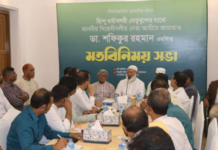
The proposals came at a meeting between academics and the special parliamentary committee on constitutional reform at the Jatiya Sangsad yesterday.
Speaking to reporters after the meeting, Home Minister Salahuddin Ahmed, chair of the committee, said he was unsure whether the opposition’s absence would trigger controversy, but there would be opportunities for debate.
Responding to academic Ali Riaz’s concern that reform could become a partisan agenda without opposition participation, Salahuddin said the government was working to implement the July National Charter.
Opposition leaders would be welcome if they submitted their names, he said, adding that the initiative would proceed even without them.
At the meeting, academics said majoritarian politics and the “winner takes all” principle fuel discrimination and autocracy. Checks and balances and accountability were needed to prevent political parties from becoming ruling establishments after taking power.
Proposals included defining the judiciary’s authority over constitutional interpretation and fundamental principles, ensuring judicial accountability and establishing a separate constitutional court. One academic proposed a mechanism to hold courts accountable for violating the Constitution.
Discussions on the caretaker government system included removing the president’s role as a last-resort option and involving the judiciary if consensus could not be reached on earlier alternatives.
National Professor Mahbub Ullah said a constitutional amendment or a new constitution should reflect the views of political parties, intellectuals, professionals and ordinary citizens.
He proposed bringing state agencies that exercise coercive powers, including intelligence agencies, under accountability mechanisms.
Prof Mohammad Tanzimuddin Khan said proposals had been made to recognise the Liberation War and those who contributed to the independence movement before and during the war.
Prof Samina Luthfa said proposals had been made to ensure women’s equal rights through legal amendments and replacing “Mohila” with “Nari” (woman), “Upajati” with “different ethnic communities” and “Upasampraday” with “religious communities” throughout the Constitution, as the existing terms carry discriminatory implications.
Forty-five academics were invited to the meeting, but only 17 attended.
Source: https://www.thedailystar.net/news/politics/news/ensure-safeguards-against-autocratic-rule-constitution-4298301