South Asia Journal
Great Power Rivalry in South Asia and the Emerging Indo-Pacific Order
South Asia and the Indo-Pacific region are undergoing one of the most significant changes since the end of the Cold War. The world order is shifting from an Atlantic-centric to an Asia-centric one, drastically changing the political, military, economic, and diplomatic equations in the region. South Asia, a region that was once analyzed mostly from the perspectives of regional powers’ interests and rivalry shaped by post-colonial baggage, is now at the forefront of major power competition among the US, China, and India. Smaller states like Bangladesh, Nepal, and Myanmar, among others in the region, are no longer bystanders; they have emerged as key strategic grounds.
The Indo-Pacific phenomenon is one of the defining features of geopolitics in the new century. The world is witnessing an ocean shift as nations realign their interests and policies around the Indian and Pacific Oceans. Trade, military, technological, and energy security rivalries are bringing the two oceans closer together. South Asia stands at the crossroads of East and West Asia and Africa. Whoever dominates this region would be able to control access to markets, minerals, and major military geography.
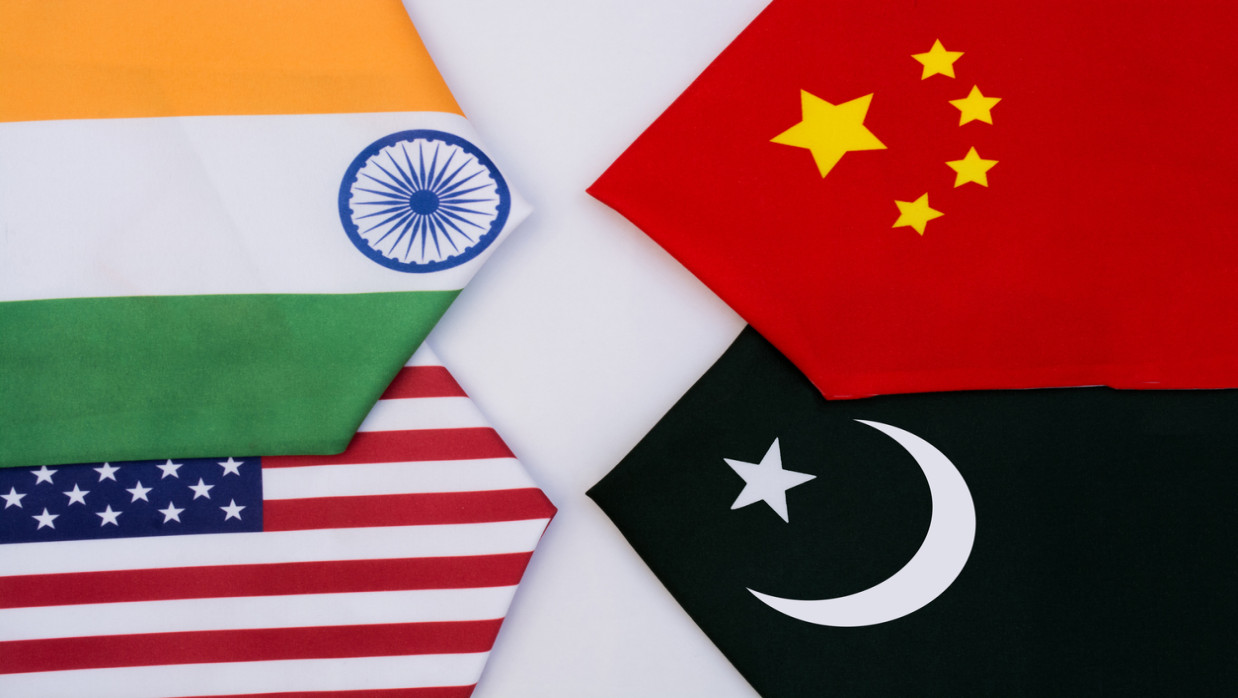
Fundamentally, this geopolitical handover falls under the US-China-India triangle. Beijing has emerged as an Asian juggernaut in both military and economic terms in recent decades, with its Belt and Road Initiative running through ports, roads, energy pipelines, and even data infrastructure across South Asia. Washington, meanwhile, is actively seeking to assert its supremacy in the Indo-Pacific through alliances, defense partnerships, and technological collaboration. New Delhi, too, wants to take advantage of great-power politics and become a leading player on the world stage while managing its relationships with Washington and Beijing. Caught in the middle are smaller South Asian states that are often being coerced into choosing sides.
Bangladesh and Regional Power Shift
Bangladesh emerged as one of South Asia’s geopolitically important states. Strategically positioned at the heart of the Bay of Bengal, Bangladesh is centrally located, connecting South Asia with Southeast Asia and the Indo-Pacific. Bangladesh’s internal power shifts have also influenced South Asian politics, particularly affecting India’s east flank.
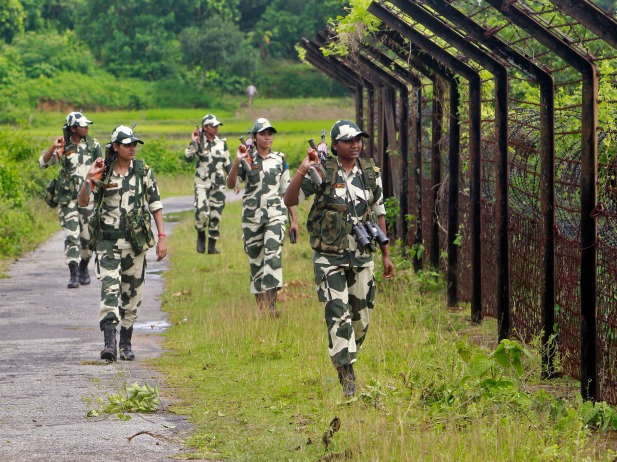
Domestic political developments in Bangladesh have had a strong impact across India’s border states of West Bengal, Assam, and Tripura. The ruling Bharatiya Janata Party (BJP) in India won sweeping victories in many border states, helping entrench the narratives of nationalist and hardline politicians on national security issues. This has further heated rhetoric around migration, border control, and population ratios. Bangladesh shares one of the longest international borders in the world with India, and this border has also seen increasing securitization.
Heightening border tensions have also been characterized by occasional deaths of civilians along the border, heavy patrolling by the border forces, and suspicion brewing among locals on both sides of the border. Residents have also alleged that Bangladesh authorities have been informing people living along the border about restrictions on movements and greater security measures. Bangladesh-India ties, now fraught with tension, shape not only regional geopolitics but also cannot be divorced from discussions of India’s domestic politics, its regional security concerns, and the Indo-Pacific equation.
Bangladesh, too, has had to balance its responses. On the one hand, Bangladesh has continued its economic partnership with India. But on the other hand, Dhaka has welcomed Chinese investments and continued to cooperate with Beijing on a range of infrastructure projects, trade, and military cooperation. Chinese investment in Bangladesh’s infrastructure, including ports and transit networks, has raised concerns in New Delhi and Washington. Importantly, Bangladesh has also maintained strong trade ties with the United States and has been receptive to American support for its development goals and diplomatic backing on the world stage. Bangladesh, like many of its smaller South Asian neighbors, has been hedging against great power rivalries.
India and the United States: Partners Under Strain
India and the United States were seen as like-minded, critical strategic partners in the Indo-Pacific region for a significant period over the last 20 years. As India and the US shared concerns about China’s rise, both governments converged on expanding defense ties, intelligence cooperation, and conducting joint military exercises. The India-US-Japan-Australia QUAD also brought both countries together. But these similarities aside, Indo-US relations have also witnessed major divergences recently. Differences over Bangladesh’s internal politics, India’s balancing approach in foreign policy, and competition over Myanmar’s rare-earth deposits have led Washington and New Delhi to drift apart somewhat. India remains reluctant to become an official US military ally and wants to maintain strategic autonomy. New Delhi continues to buy weapons and energy from Russia despite tensions in Indo-China relations.
The United States, on the other hand, increasingly demands that India help it compete with China in the Indo-Pacific. India’s own interests, however, are largely centered on its relationships with its neighbors, namely Pakistan, Bangladesh, and China along the Himalayan border. At times like these, the calculus between Washington and New Delhi fails to align.
Even so, both countries understand the need to cooperate. For example, US Secretary of State Marco Rubio is scheduled to visit India in May of 2026. He is expected to meet with Prime Minister Narendra Modi and join QUAD-related talks with officials. The visit will hopefully help Washington and New Delhi adjust the dynamics of their relationship and maintain India as a key partner in the Indo-Pacific.
As such, some say that the US government is taking a more “transactional” approach with India. Michael Kugelman of Foreign Policy magazine says that Washington cares less about pushing “values and ideology” and more about forging partnerships to contain China economically and strategically.
Nepal and the Politics of Strategic Balancing
Nepal is yet another battleground in this great game of tug-of-war. Nepal was traditionally within India’s sphere of influence due to geography, economics, and cultural affinities, but Nepal has warmed to China in recent years. Nepal has also been reaching out to the US recently.
New Delhi was reportedly displeased after Nepal’s Prime Minister declined to accord special diplomatic attention to a visiting U.S. official recently. Some analysts interpreted Kathmandu’s posture as reflecting broader regional unease amid growing strains in India–U.S. relations. Such moves by smaller South Asian states underscore their continuing effort to balance relations among competing major powers while avoiding excessive dependence on any single actor.
Similarly, Washington has stepped up its outreach to Nepal with initiatives on economic engagement, infrastructure development, and tech cooperation. Top US diplomats have been visiting Nepal in 2026, signaling that the US too wants a larger footprint in Kathmandu.
Nepal, visited by the US Special Envoy Sergio Gor, also indicated American interest in two projects run by the Millennium Challenge Corporation (MCC): electricity transmission and transportation infrastructure development. Several observers regard these projects as part of American attempts to encircle China with partners in the Himalayas. Nepal’s geographic significance between China and India far outweighs its small size.
The US also encouraged investment opportunities in technology and energy, as well as bilateral cooperation. Issues ranging from commercial drone technologies to tourism and renewable energy development illustrate the diverse range of topics now being discussed. Nepal’s government has not rushed into the arms of another country out of fear of upsetting the internal political balance or drawing Nepal into foreign policy entanglements.
Myanmar and the Rare Earth Battlefield
A rare few countries can serve as such an example of resource geopolitics converging with great-power politics like Myanmar. Myanmar contains vast reserves of rare earth elements (REEs), making the country a strategic flashpoint with international consequences. Rare-earth minerals such as lanthanides, scandium, and yttrium are used in everything from fighter jets and missile guidance systems to radars, electric cars, smartphones, batteries, and renewable energy technology. Rare earths are used in nearly all facets of modern technology and advanced military equipment. For that reason, NATO and the United States both consider rare earths critical to national security.
China today exercises near-monopoly power over the rare-earth industry. Beijing accounts for almost half of all reserves and about 69 percent of production. Processing capacity is overwhelmingly Chinese as well.
The countries with the greatest untapped reserves of rare-earth minerals are in Myanmar’s Kachin State. The KIA and other ethnic armed organizations control significant mining operations within their territories and have deep economic ties with Chinese interests. One analyst estimates that China-linked groups control 90 to 95 percent of Myanmar’s rare-earth industry.
The United States has an interest in loosening its reliance on China-dominated supply chains by finding alternative sources of rare earth elements. Myanmar thus finds itself of growing significance within US geopolitical calculations. However, there are significant challenges that come with this. Civil war, military fragility, and Chinese dominance make US involvement challenging at best.
India also has cause for concern. Its military build-up and electric-vehicle initiatives will require large amounts of rare-earth elements. Should China decide to limit India’s access to these elements, it will create strategic weaknesses that Beijing could exploit. This may be part of the reasoning behind India’s restrained behavior towards Myanmar.
The Indo-Pacific and the Future of Strategic Competition
Washington’s Indo-Pacific strategy is an attempt to balance or check China. The US conducts its diplomacy, deploys its naval forces, brokers trade deals, and cooperates on technology to maintain favorable power dynamics throughout Asia. But Asia and the Indo-Pacific don’t belong to America. Other countries have their own interests, ambitions, and goals.
India wants to be treated like a great power, not just another client state of the US. Bangladesh wants economic opportunities with anyone who can provide them. Nepal wants to avoid being bullied by whoever is the stronger neighbor at the time. Myanmar is trying to survive between a rock and a hard place. China is busy grabbing as big a slice of the pie as it can. And the US is walking a tightrope, trying to maintain its leadership as everything around it changes.
No one knows what the end state of this great power competition will look like. Everything is too up in the air right now. Alliances that were once considered “sacred” are becoming more flexible. Transactionalism rules supreme in global politics. Nations are economically intertwined yet militarily opposed. Everyone’s riding the great power competition for all it’s worth without getting too invested on either side.
Conclusion
South Asia, especially the Indo-Pacific region, is on the verge of entering a new era of great-power competition, resource-driven geopolitical competition, and geopolitical realignments. Because of global power shifts from the traditional West-led liberal order towards an Asia-centric order, states that previously had little role in global geopolitics, such as Bangladesh, Nepal, and Myanmar, are becoming regions where great-power competition plays out.
China, India, and the US’s great-power competition affects foreign relations, border security, economics, trade, and technology races in South Asia and the Indo-Pacific region. Conflict minerals in Myanmar are being fought over and are perhaps one of the most strategic resources in recent history. Minerals found in Myanmar’s regions that ethnic armed groups inhabit have been connected to China’s defense industry and the US’s high-tech industry. Bangladesh’s political landscape will continue to shape India’s domestic politics as it finds its regional footing. Nepal’s foreign policy is a dance of geopolitics as it continues to balance relations with its Himalayan neighbors.
The US will continue to work to contain China’s growing influence by engaging allies and partners through trade, technology, and security cooperation. China, however, has a strong foothold not only in the economics of the countries it engages with but also through infrastructure. India still has cards to play as it can either balance between the US and China or tilt towards one of the great powers.
We are going to see great-power competition intensify not only in South Asia but across the Indo-Pacific region as a whole in the coming years, from high-level diplomatic trips to negotiate deals and partnerships to soldiers dying on the border to securing resources and strategic locations. These are all activities that will be part of the 21st-century new world order.
Author:

Ghulam M. Suhrawardi
Ghulam M. Suhrawardi is the Publisher of South Asia Journal.