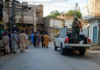

I was stuck in Uttara when the phone rang. The procession had come through after the Jummah prayer, and I was nearby. Armed Awami goons had come out to attack the protesters, and somewhere in the streets of Sector 11, the students had scattered into the alleys.
I received a call from a girl whom I had known from the protests. She was frantic, her voice pitched high over the noise. A few of her friends were cornered, the goons closing in, and they could not get out.
For the next hour, I did the only thing I could from where I stood. I called everyone I could think of, tried every number, and my own uselessness was sharp in my ears. Then I reached one of their teachers, who rang back with the only words that mattered that afternoon: they were out. They were safe.
That call was one of a thousand small terrors stitched through the day. It was 2 August. For the people, it was 33 July. It was a Friday, and after the prayers, the country came out in the rain to march. This was the day the movement stopped asking and began refusing. In Dhaka, Droho Jatra, the march of defiance, was organised. By nightfall, two people were dead and hundreds were hurt as the government continued killing its citizens.
A girl on a rickshaw
One image outlasted the day. A young woman on a rickshaw in the pouring rain, one fist in the air, her mouth open on a slogan, the water running off her face as though it were nothing. This image became a symbol of the Uprising.
By evening, the photograph was everywhere the internet still reached, and it said more than any of the speeches.
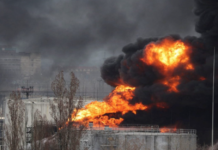
In Uttara, the police had sealed Garib-e-Newaz Avenue to keep the marchers off the Dhaka–Mymensingh Highway, and near Zamzam Tower in Uttara-11, a little after four, ruling-party men waded into a student procession. Someone in a helmet fired. Rubber bullets, stun grenades, tear gas; students bleeding in the side streets; a Special Branch training school set alight before the police declared the area theirs again by half past five.
Droho Jatra
On the afternoon of 2 August 2024, thousands of citizens, including students, teachers, and activists, gathered near Dhaka’s National Press Club for Droho Jatra (the march of defiance). Through chants, poetry, and songs, this symbolic chapter of Bangladesh’s July Uprising served as a public indictment of state repression and a demand for a new beginning.
The procession, scheduled to begin at 3pm, started half an hour late. But the delay did not dampen its spirit. Rather, it allowed the crowd to swell. There was anger and defiance — a harmonious convergence of protest and performance, resistance and remembrance. With each footstep forward, it became clear that this was no ordinary rally.
By 4pm, the crowd had reached the Central Shaheed Minar, where more groups joined in waves, pouring in from university campuses, neighbourhood streets, and underground networks. The Shaheed Minar, a monument built to honour the language martyrs of 1952, now witnessed a new generation laying claim to its legacy.
“Those who were involved in the massacre must be brought to justice. The government must resign, taking responsibility for the massacre. Our main issue is to restore democracy. There have been many protests since 1952, but no government has committed such atrocities before,” said Anu Muhammad, economist and former Jahangirnagar University professor.
The Students Against Discrimination announced a non-cooperation movement; and the six coordinators, freed only the day before, issued a statement confirming what everyone had suspected. The video in which they called off the protests had been filmed under duress inside the DB office.
The demands were etched in every placard and echoed through every megaphone: stop mass arrests; ensure justice for those killed in July; release detained students and citizens; lift the curfews; and reopen educational institutions. And, most definitely, the call for the current government’s resignation rang louder than ever.
Leftist activist Afzal Hussain snatched a mic from another activist and started chanting the slogan, “We have one demand, Sheikh Hasina resign at once!”
Doctors, urban planners, poets, and publishers formed their own human chains across the city, and 626 teachers at BRAC University put their names to a statement defending the students’ right to protest. The demand was no longer nine points, but one.
The non-cooperation movement
Students Against Discrimination announced a non-cooperation movement, and the six coordinators, freed only the day before, issued a statement confirming what everyone had suspected. The video in which they called off the protests had been filmed under duress inside the DB office. The withdrawal had been a lie, and now they said so themselves.
A death in Habiganj
The day’s first life was taken in Habiganj. Mostaq Ahmed, a 24-year-old labourer from Tuker Bazar in Sylhet, had come into town to buy a pair of shoes. After Jummah, students marching from the Board Masjid ran into Chhatra League men massed at the Town Hall. The police opened fire with firearms and tear gas, and some 50 people were wounded. Mostaq was one of them. Hit in the arm, he bled to death at the district hospital.
Before the night was out, a police constable, Suman Gharami, was beaten to death in Khulna. The violence had begun to run both ways.
In Sylhet’s Akhalia, a clash outside a hospital ran for four hours; a 12-year-old boy and a journalist were among those shot, and when the police chased students into the lanes, residents took them in — one woman in her sixties, Saheda Khan, squaring up to the police at her own door until they turned back.
In Tangail, thousands drove the border guards off a blocked highway with brickbats. In Chattogram, a police box burned at the Wasa intersection. Elsewhere, ruling-party offices were set alight and armoured vehicles battered.
The regime understood the danger of a picture like that. A little after noon, it had pulled the plug again. Facebook, Messenger, and Telegram were gone for some seven hours, and still the image travelled. UNICEF said at least 32 children had been killed in July; courts quietly granted bail to dozens of arrested schoolchildren. None of it moved the needle now.
The students already had a name for tomorrow and for the day after that. It was 33 July. The next day would be 34. The month would go on being July, in the rain, until it was finished.
Source: https://www.tbsnews.net/features/panorama/33-july-2024-droho-jatra-girl-rickshaw-and-regime-resumed-killing-1503951