
Much of what the world knows about the night of 25 March 1971 comes from a few voices that refused to be silenced.
Foreign journalists such as Michel Laurent, Sydney Schanberg, Robert Kaylor and Simon Dring wrote from within and beyond a city under attack.
Their dispatches, composed in fragments and under constraint, now stand as some of the earliest records of the violence that led to the birth of a nation.

How tanks crushed a city by Michel Laurent, New York Post, 30 March 1971
Associated Press photographer Michel Laurent was in Dhaka, the capital of East Pakistan, on 25 March 1971. It was at that moment that the Pakistan Army launched a brutal assault to crush the Bangali independence movement.
All journalists were confined to the Hotel InterContinental. Under the threat of being shot if they stepped outside, Laurent managed to slip out secretly and tour the devastated city of Dhaka.
Eventually, along with other foreign correspondents, he was forcibly expelled from the city. Here is an excerpt from Michel Laurent’s report.
Dhaka, East Pakistan (AP): On Thursday night, without any prior warning, the Pakistan Army took everyone by surprise and launched a campaign to annihilate the Bangali independence movement. Using M-24 tanks, artillery, and infantry, the army carried out widespread destruction across various parts of Dhaka, the provincial capital and largest city.
The army’s primary targets were the university and the densely populated areas of Old Dhaka, where support for Sheikh Mujibur Rahman and the Awami League was strongest, as well as the industrial outskirts of this city of 1.5 million people. In the capital alone, an estimated 7,000 people were killed.
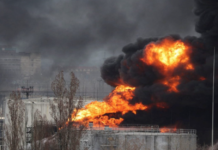
By Saturday and Sunday, those who ventured out saw fires still raging in many places. The charred bodies of students were found in their beds in the university halls; tanks had fired directly into the dormitories.
Mass graves were hastily dug at Jagannath College. At Iqbal Hall, 200 students were killed, and nearly 20 bodies were still lying in front of the dormitory. The military fired bazookas at the Medical College Hospital, though the exact number of casualties there remains unknown. Thousands of people are fleeing the city with whatever they can carry. Some are seen on the roads with pushcarts loaded with food and clothing. Following military orders, a few people have returned to government work.

26 hours of Dhaka drama by Robert Kaylor for UPI, 25 March 1971
Robert Kaylor of UPI was in Dhaka when the Pakistan Army took control. The following are excerpts from his eyewitness diary, recorded while staying with other foreign correspondents.
Dhaka, Hotel InterContinental: At 11pm, Thursday, 25 March, I went down to the hotel lobby. I was carrying a dispatch based on a statement by Sheikh Mujibur Rahman regarding the “dire consequences” of the military’s continued use of force against the people.
I planned to hire a taxi to go to the telegraph office to send the message. In the lobby, I saw a crowd — soldiers in full battle gear had arrived, wearing helmets and carrying open weapons. The hotel staff had placed a blackboard near the entrance with a notice written in chalk: “Please do not go out.”
Someone had pasted a statement over the board regarding the Sheikh’s call for a strike on Saturday. Other correspondents informed me that when they tried to leave, soldiers blocked them and ordered them back inside. The military leader warned that anyone attempting to leave would be shot.
11:45 PM
Everyone is trying to figure out what is happening. One theory is that these guards are protecting West Pakistani leader Zulfikar Ali Bhutto, who is staying on the hotel’s top floor and is a deeply hated figure in East Pakistan. Another theory is that a military coup is underway, and for that reason, President Yahya Khan has not taken a hardline stance to protect the interests of other generals.
As time passes, it feels more like a coup. After evening, military convoys were seen passing the hotel twice. I called the personal number of one of the President’s key aides to verify a rumour — that the President had already left Dhaka (he had been in Dhaka for negotiations).
Someone answered the phone but did not speak. I also called a local news agency to see if they knew what was happening. They couldn’t say either; they were unable to even leave their office.

Soldiers fire cannons to suppress the rebellion by Sydney Schanberg for NYT, 25 March 1971
Sydney Schanberg, the New York Times correspondent based in New Delhi in 1971, was in Dhaka to cover the rising tensions in East Pakistan.
He was among the 35 foreign journalists expelled from Dhaka on 27 March, 1971. He was a primary witness to the genocide of 25 March. His report was published in the New York Times on 28 March 1971.
The Pakistan Army used cannons and heavy machine guns against unarmed civilians to crush the movement for autonomy supported by 75 million people in East Pakistan. Without any warning, they began the attack on Thursday night. West Pakistani soldiers—who dominate the army—took to the streets of Dhaka. Their targets were the strongholds of the independence movement, including a siege of the University.
There is no way to know how many were killed or wounded. Even before the attack on Dhaka, reports of clashes between civilians and West Pakistani soldiers had been coming in from across the country.
From the Hotel InterContinental, Schanberg watched flames leap from various parts of the city. A horrific fire was raging in the University area. The headquarters of the paramilitary East Pakistan Rifles (EPR) was also on fire. The sound of gunfire echoed. This morning, 35 foreign journalists were expelled from Dhaka. Looking out the hotel window, a Pakistani student cried out, “Oh God, oh God, they are killing them, they are slaughtering them!”

Under the escort of a military truck convoy on the way to the airport, journalists saw soldiers setting fire to slums on both sides of the road and to the homes of staunch autonomy supporters. When the operation began on Thursday night, soldiers entered various parts of the city with victory cries, firing continuously from automatic rifles, machine guns, and recoilless rifles, and setting many places ablaze.
When foreign journalists at the hotel tried to go outside to see what was happening, the newly emboldened army forced them back in, stating they would be shot immediately if they tried to leave the building.
The fires and gunfire around the hotel increased, taking on a terrifying form across the entire city by 1am. At 1:25 am, under orders from the military guards, the hotel’s telephone lines were cut. At the same time, the light on the telegraph office tower went out. The sounds of heavy automatic weapons echoed from the University and other parts of the city.
At approximately 2:15 am, a machine-gun-mounted jeep stopped in front of a market on Mymensingh Road. A soldier fired a machine gun at a second-story window while an armed soldier on foot joined them. One group was carrying rocket-style weapons.
Suddenly, a shout was heard from the second floor: “Bengalis, unite!” Immediately, the troops began firing incessantly at the building. The vehicle that had been used to barricade the alley was overturned. From the 10th floor of the hotel, foreign journalists witnessed the flashes of gunfire—it was an unbelievable drama.
As the soldiers advanced while firing, about 15 to 20 Bengali youths stood 200 yards away, facing them in protest. They appeared to be unarmed and empty-handed. The machine gun atop the jeep swung toward them, and firing commenced. Soldiers with automatic rifles also joined in. The youths scattered to both sides of the road; it was impossible to tell from that distance who was killed or wounded. The soldiers then moved toward the alleys. They set fire to a spare parts shop. Their main targets were the office and press of The People. This English daily had been consistently supporting Sheikh Mujib and mocking the military.
The soldiers shouted in Urdu, warning anyone inside to surrender or be shot. No answer came, and no one emerged. They fired rocket shells into the newspaper office, followed by machine guns and small arms. Then they set the building on fire, destroying the printing press and other machinery.
Sydney Schanberg wrote that at 4:45 AM, massive flames were seen near the East Pakistan Rifles headquarters. By 5:45 AM, in the dim morning light, soldiers were seen patrolling the city’s main roads in Chinese T-51 light tanks.
Since yesterday morning, helicopters have been circling overhead, conducting surveys for attacks on targets. Following the cyclone and tidal bore in November, Saudi Arabia had given Pakistan four helicopters for relief efforts. Now, those same helicopters are being used in the military operation against the East Pakistanis.
As the foreign journalists, including Sydney Schanberg, were being removed from Dhaka for expulsion, a hotel official remarked, “This will no longer be a hotel; it will become a bloody hospital.” (New York Times)
The Daily Telegraph reports on 29 March 1971
Despite various changes in editorial policy over time, The Daily Telegraph of Britain maintained a tradition of objectivity and liberal analysis in its news reporting from the beginning.
In 1971, during the Bangladesh independence movement, the editor was Maurice Green. At that time, the Labor Party was in power.
In the first phase, The Daily Telegraph spoke of transferring power to elected representatives. In the second phase, it condemned the brutality of the Pakistani soldiers, making it clear that Pakistan had effectively broken apart. In the third phase, it wrote about the horror of the refugee crisis and the subhuman lives they led. In the fourth phase, it laid the responsibility for the war on Yahya Khan’s military government and Bhutto, while pressuring its own government to recognise Bangladesh.
Initially, Simon Dring’s report shook the global conscience. In the middle of 1971, Clare Hollingworth sent a dispatch from Dhaka: “Today, inside East Pakistan, 8 million people—men, women, and children—are displaced, hungry, and homeless. They are refugees in their own country.”
She wrote that the Pakistani soldiers took pleasure in killing Bengalis. On 29 March, The Daily Telegraph published three different reports regarding the massacre in East Pakistan under various headlines. This serves as proof of how much importance the paper gave to Bangladesh.

Ruthless Pakistani aggression by Simon Dring for The Telegraph, 29 March 1971
West Pakistani soldiers tightened their grip on the eastern province yesterday (28 March 1971). Reports from the past weekend indicate they have killed hundreds of citizens. Our correspondent in Delhi reported that East Pakistan’s communication with the outside world has been effectively severed. Meanwhile, the soldiers have carried out a massive massacre.
The curfew in Dhaka was lifted yesterday. To suppress the unrest, many more troops were sent to Chittagong by plane yesterday. Without showing any leniency, the Pakistani soldiers are terrorising the civilians to force them into submission. Supporters of Sheikh Mujibur Rahman’s Awami League continue to protest strongly.
West Pakistani officials have denied the allegations of a massacre brought against the army. They claimed that “peaceful conditions” have been restored and life has returned to “normalcy”. They alleged that all these rumours were being spread by a “secret radio station” anchored near Kolkata.
It is believed that the army arrested Sheikh Mujib last night; soldiers had surrounded his house since late Thursday night. There is a fear that this conflict could cross the border into West Bengal, where local Bengalis might join those from East Pakistan, creating a complex situation due to Indian political instigators. India currently appears unlikely to intervene in Pakistan’s internal affairs.
Emergency plans have been made to airlift 800 British citizens residing in East Pakistan if the situation worsens due to continued fighting.
East Pakistan cut off from the world
A massive massacre is being carried out in East Pakistan amid the horrific cycle of a people’s war. Based on the information received, this is the only conclusion. The province has been effectively isolated from the outside world.
According to diplomatic sources in Dhaka who maintain faint radio contact with their missions, and observers who left East Pakistan after the fighting began on Friday, 70,000 West Pakistani soldiers are showing no signs of reducing their cruelty in their attempt to suppress the independence movement.
It is believed that the number of Bangalis killed could be anywhere between 10,000 and 100,000. Whatever the actual number, there is no doubt that the army is imposing its will upon everyone with calculated and systematic ruthlessness.
Source: https://www.tbsnews.net/features/panorama/25-march-1971-through-eyes-foreign-journalists-1393331