South Asia Journal
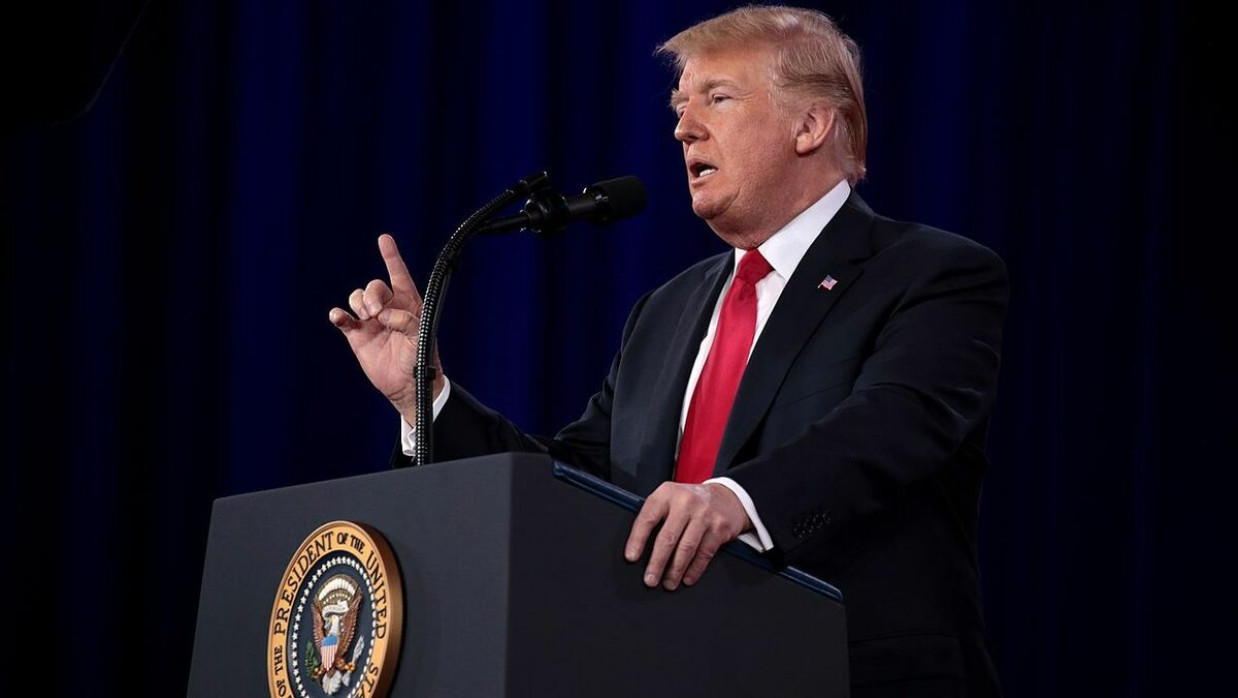
President Donald Trump’s latest attempt to end the war with Iran has taken an unexpected turn. Instead of focusing only on a cease-fire, the reopening of the Strait of Hormuz, and Iran’s nuclear program, Trump now appears to be linking any broader peace settlement to Arab and Muslim countries recognizing Israel through the Abraham Accords.
In a Truth Social post on Monday, Trump said he had spoken over the weekend with leaders of Saudi Arabia, the United Arab Emirates, Qatar, Pakistan, Turkey, Egypt, Jordan and Bahrain. He urged them to sign onto the Abraham Accords, the 2020 agreements that normalized relations between Israel and several Arab states. Israeli Prime Minister Benjamin Netanyahu was reportedly not part of the call.
The demand is ambitious, but it also creates serious diplomatic complications. The Abraham Accords were one of Trump’s major foreign-policy achievements during his first term. Brokered in September 2020, they led the United Arab Emirates and Bahrain to establish official diplomatic relations with Israel. Sudan later agreed to normalize relations, though its ratification was delayed by civil war. Morocco joined in December 2020, while Kazakhstan, which already had diplomatic ties with Israel since the 1990s, joined the accords last November.
The regional response to Trump’s appeal is likely to be cautious, if not resistant. Pakistan has already rejected the idea. Defence Minister Khawaja Muhammad Asif told Samaa TV that joining such an agreement would clash with Pakistan’s fundamental ideologies. Among the countries Trump named, Saudi Arabia, Qatar and Pakistan do not have formal diplomatic relations with Israel. Egypt and Jordan already recognized Israel through separate peace agreements in 1979 and 1994, while Turkey recognized Israel in 1949, although its relations with Israel have sharply deteriorated and bilateral trade was suspended over Gaza.
So far, no other country besides Pakistan has publicly responded to Trump’s demand. According to a U.S. official cited by Axios, leaders on the call, especially those from Saudi Arabia, Qatar and Pakistan, appeared stunned. The official said there was silence on the line, prompting Trump to joke and ask whether they were still there.
Saudi Arabia’s position remains especially important. After the Israel-Hamas cease-fire last October, Trump again suggested that Riyadh join the accords. Crown Prince Mohammed bin Salman later said Saudi Arabia was open to joining, but only if there was a clear path toward Palestinian sovereignty. Israel’s far-right government, however, opposes both Palestinian sovereignty and a two-state solution.
President Trump has failed to force Iran’s unconditional surrender and is now trying to tie regional peace to a fragile diplomatic process that does not address the root causes of the conflict.
The challenge is also linked to Israel’s position. Israel supported the Abraham Accords in 2020, but it has been critical of reported progress toward a peace deal with Iran. Israeli officials insist that Tehran must dismantle its nuclear program. Iran, meanwhile, maintains that its nuclear program is for civilian purposes and has resisted demands to abandon its enriched uranium stockpile. Netanyahu recently posted an AI-generated image of himself and Trump with the message that Iran will never have a nuclear weapon.
Washington wants Iran to give up enriched uranium. Iranian state-linked media says nuclear issues should be handled in later talks, while Tehran wants frozen assets released and U.S. sanctions lifted. Iran also says the Strait of Hormuz will remain under its management.
The bigger risk is that regional military activity could undermine diplomacy. Netanyahu has announced intensified strikes in Lebanon against Hezbollah despite a nominal cease-fire. Iran has said any peace agreement must also include Lebanon. If Israel continues operations there, Iran may see little reason to accept a U.S.-backed agreement, especially without firm guarantees against further Israeli attacks.
Trump appears to hope that the promise of wider normalization and economic cooperation can stabilize the region and bring Israel into a longer-lasting peace arrangement. Yet his approach also risks overloading an already fragile negotiation. By tying the Iran deal to recognition of Israel, he is asking countries with deep political, ideological and public-opinion constraints to make a major concession at a moment of war, anger and uncertainty.
The result is a high-risk diplomatic gamble. Trump wants a historic settlement that links Iran, Israel and the wider Muslim world into one grand bargain. But without addressing the Palestinian question, Iran’s security concerns, Israel’s military posture and regional public sentiment, the plan may deepen resistance rather than produce peace.
In practical terms, Trump’s approach may limit Pakistan’s ability to openly associate itself with any U.S.-Iran deal if the Abraham Accords remain attached to it. Islamabad can support de-escalation, mediation and cease-fire efforts, but formal participation in a deal tied to Israeli recognition would be politically impossible. This could narrow Washington’s diplomatic room and make regional consensus harder to achieve.
If Washington wants wider regional support, it will need to separate the Iran peace process from the Abraham Accords or address the Palestinian issue directly.
Ultimately, Pakistan’s stance reflects both principle and political reality. Islamabad cannot join the Abraham Accords under current conditions, but it can still support peace, stability and dialogue in the Middle East. The implication is simple: a sustainable regional settlement must include de-escalation with Iran, protection of Gulf security and a serious pathway for Palestinian rights. Without that balance, Trump’s grand bargain is unlikely to gain meaningful support from Pakistan or the wider Muslim world.

Tofeeque Ahmed
The writer is an Islamabad based freelance analyst.