South Asia Journal
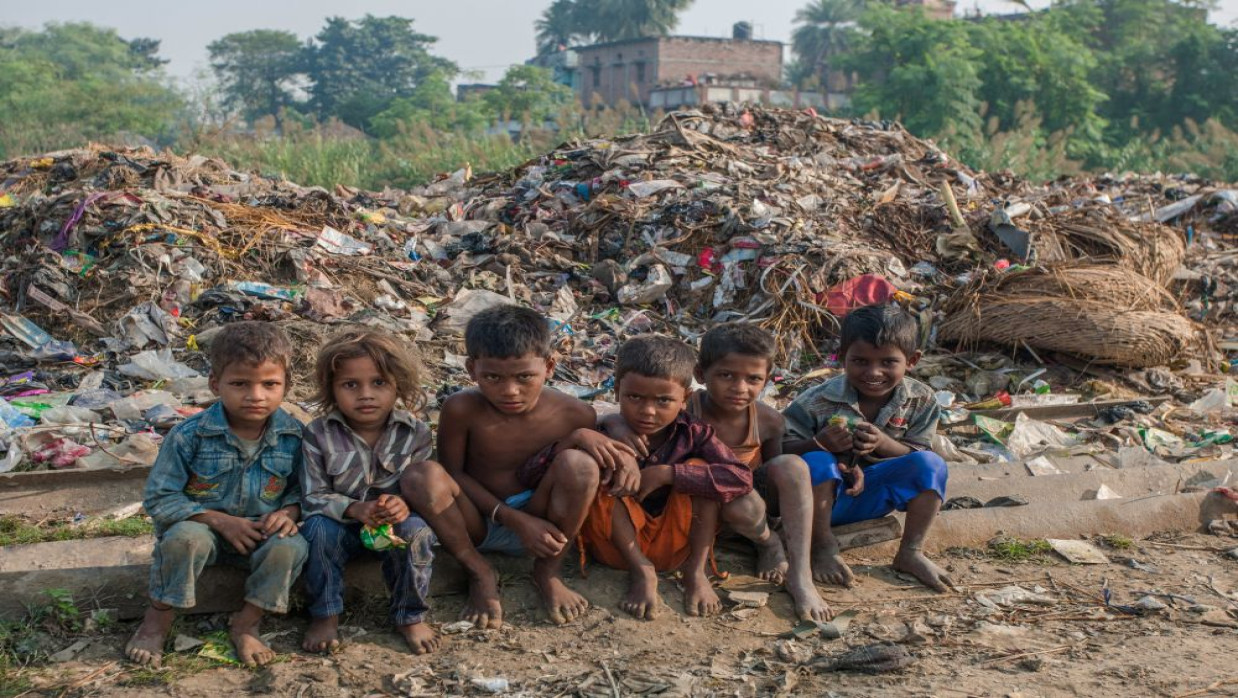
According to revised World Bank macroeconomic datasets—which adjust international poverty boundaries to the 2021 Purchasing Power Parity (PPP) baseline—India’s contemporary economic landscape presents a deeply complex dual reality. Under the updated global benchmarks, India’s extreme poverty rate ($2.15 per day) has declined dramatically to 2.6%, while lower-middle-income poverty ($3.00 per day, matching India’s current macroeconomic tier) stands at 16%. Concurrently, domestic projections utilizing the traditional Tendulkar Committee framework indicate that sustained post-pandemic growth and social safety expansions brought down the national monetary poverty incidence to an estimated 4% to 4.5% by the recent baseline.
However, capturing “true” poverty across diverse time horizons and regional topographies remains a fiercely contested debate. Between 2014 and the recent rollout of successive comprehensive surveys, independent estimates of India’s poor population fluctuated vastly—ranging from 34 million to 373 million people—highlighting how deeply poverty definitions depend on whether researchers look at baseline household consumption or volatile employment metrics.
As Nobel Laureate Professor Amartya Sen has long emphasized: “Poverty is not just a lack of money; it is not having the capability to realize one’s full potential as a human being.”
Methodological Contradictions
The consumption expenditure framework remains a vital gauge for measuring national economic health and evaluating how effectively state policy translates into improved standards of living for citizens. Historically, the formal baseline relied on the Tendulkar Committee’s threshold (Rs. 1,000 per month for urban areas and Rs. 816 for rural areas at 2011–12 prices), which grants access to critical social safety nets like subsidized rations under the National Food Security Act.
While the Rangarajan Committee proposed a higher, more realistic consumption threshold in 2014, its framework was never formally adopted by the state, leaving the modified Tendulkar baseline as the official monetary benchmark. Prominent economists like C. Rangarajan have recently pointed out that adjusting the older benchmarks for a decade of inflation shifts the actual survival line to roughly Rs. 1,632 in rural areas and Rs. 1,944 in urban centers. Keeping the lower official baseline artificially suppresses headcount ratios, creating a statistical floor that often excludes vulnerable millions from targeted social security benefits.
The Consumption Surge
The release of successive rounds of the Household Consumption Expenditure Survey (HCES)—culminating in the comprehensive data pipeline—has finally bridged the decade-long statistical vacuum that followed the 2011–12 census. To evaluate poverty elimination accurately, we must analyze two core dimensions: growth rates and structural inequality.
The latest HCES data confirms a steady rise in real Monthly Per Capita Consumption Expenditure (MPCE), with nominal monthly averages climbing to Rs. 4,122 in rural areas and Rs. 6,996 in urban centres. Crucially, rural consumption growth has consistently outpaced urban trends, narrowing the urban-rural consumption gap down to 70% from the 84% seen a decade prior. Commenting on this trend, former NITI Aayog Vice Chairman Arvind Panagariya noted that the data points to an unprecedented drop in absolute deprivation, declaring that extreme poverty has effectively been reduced to single digits when viewed purely through consumption floors.
The Distributional Illusion
Official findings document a visible compression in consumption inequality. At the all-India level, the Gini coefficient of consumption expenditure declined sharply to 0.237 for rural areas and 0.284 for urban centres, indicating an unprecedented smoothing of consumption distribution across both sectors. However, policy researchers must interpret this with caution.
As Development Economist Professor Himanshu has frequently warned: “Consumption surveys capture what people spend to survive, but they completely mask the deeper, widening chasm of wealth concentration and structural asset ownership.”
While state-sponsored food subsidies and the massive expansion of direct-benefit social protection systems artificially smooth out baseline consumption for lower deciles, they hide a stark wealth concentration. The structural fruits of GDP expansion remain heavily skewed, as the top 1% of the population continues to capture a massive share of total wealth generated over the last decade.
Asymmetric Human Capital
Absolute poverty cannot be decoupled from the infrastructural failures that lock marginalized demographics into cycles of low productivity. While the aggregate literacy rate stands at 74.04%, severe structural disparities remain.
The historical divergence between male literacy (82.14%) and female literacy (65.46%) underscores deep-seated gender imbalances. Furthermore, physical and digital infrastructure deficits leave quality schooling largely out of reach for marginalized groups in remote rural and hilly terrains, creating an “access illusion” where formal literacy does not translate into marketable, high-income skills.
Stagnating Labour Markets
Data from recent Periodic Labour Force Surveys (PLFS) reveals that the multi-year post-pandemic employment recovery has begun to plateau. The national unemployment rate hovers around 4.8% to 5.1%, with youth unemployment remaining highly volatile at 14.8%.
Structural gender gaps persist as well; female labor force participation remains critically low, leaving women disproportionately vulnerable to economic shocks. Economists at the World Bank have highlighted this structural bottleneck, noting that the vast majority of Indian employment remains concentrated in low-productivity, informal, and poor-quality jobs, with less than a quarter of the entire workforce holding regular salaried positions.
The Cost of Health
Public healthcare spending continues to hover around a restrictive 3% of GDP. This fiscal constraint directly affects rural areas, where the vast majority of the population resides but lacks access to advanced secondary and tertiary medical infrastructure.
Consequently, out-of-pocket health expenditure remains the leading cause of unexpected financial shocks, dragging vulnerable households back into poverty. Upward mobility is further restricted by deep-seated social caste, gender, and regional disparities, where industrializing southern and western states advance rapidly while resource-constrained northern and eastern regions experience persistent, multi-generational deprivation.
Commentary Conclusion:
The structural debate over India’s poverty trajectory remains deeply polarized. On one hand, NITI Aayog’s National Multidimensional Poverty Index (MPI) and the government’s latest voluntary reviews report a historic triumph, noting that massive public utility scales—such as reaching near-universal rural electrification and clean water connectivity—have successfully lifted over 250 million people out of severe deprivation.
On the other hand, non-monetary deprivations, acute labor market stagnation, and intense wealth concentration raise serious red flags regarding long-term upward mobility.
Ultimately, analyzing this trajectory requires looking past both uncritical optimism and absolute pessimism. India has masterfully engineered a baseline consumption floor that prevents catastrophic extreme hunger; this is a policy achievement of undeniable scale.
Yet, preventing absolute deprivation is not the same as enabling economic upward mobility. If the fruits of macroeconomic growth continue to stay concentrated within a narrow elite while the broader workforce remains locked in low-paying, informal employment, the crusade against poverty risks becoming a statistical illusion.
A shift toward equitable, localized wage-employment creation is no longer just a progressive ideal—it is a macroeconomic necessity to ensure shared national prosperity.

Ashraf Rehman
Ashraf Rehman is an energy policy researcher and columnist specializing in the clean energy transition, energy poverty, and sustainable development. He is a Fellow at The Green Institute. Based in Northeast India