Atiqul Kabir Tuhin
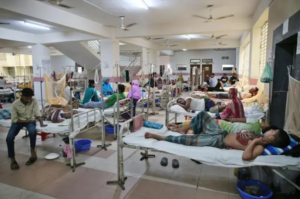
Corruption and mismanagement in government hospitals are financially ruining the poor patients. It is the poor patients who mostly seek treatment at government hospitals. Facilities in these hospitals like medical diagnostic equipment and free medicines are scarce and those that exist seldom come to the benefit of the poor due to the mechanisms of vested quarters. As a result, patients have often to buy medicines that they were supposed to get free of cost or turn to private clinics for diagnostic tests, where the costs are significantly higher. This sorry state of medical services at public health facilities is driving up out-of-pocket healthcare expenditure, pushing millions of families into poverty. In the circumstances, the government’s pledge of attaining the universal health coverage by 2032 has little hope of success.
As it is often reported in the media, costly medical equipment often lies idle in government hospitals due to a lack of timely repairs, reagent shortages or manpower shortages. A study conducted by the Power and Participation Research Centre (PPRC) on behalf of the Health Economics Unit of the Health Ministry only exposes the extent of this problem. It found that 52 per cent of diagnostic equipment at government hospitals lies unused, while some of the equipment that remains operational is used only occasionally. The gap between availability and accessibility is particularly alarming in diagnostic imaging services. Although X-ray and ultrasound machines are available at 85 per cent of district-level hospitals, the study found that these services were functional for only 33 per cent of the time last year. As essential diagnostic services remains unavailable, patients are often advised by physicians to get the tests done from private clinics. In the process, some doctors may earn some extra bucks as commissions from diagnostic centres, but the patients are to bear the exorbitant costs.
Although the survey covered 22 public health facilities at the primary, secondary and tertiary levels across all eight administrative divisions, its findings mirror the broader reality of public health services in the country.
One of the main reasons diagnostic equipment lies idle is the shortage of manpower. The study found that 40 per cent of approved posts for medical technologists are vacant, while reagent stock-outs disrupted 43 per cent of diagnostic services. Moreover, a centralised and complex bureaucratic procedure often delays the repair of faulty equipment, leaving vital machines non-functional disrupting medical services. The situation is no better when it comes to essential medicines. Availability of essential medicines stood at just 22.7 per cent at upazila health complexes, 23.9 per cent at district hospitals and a mere 11.5 per cent at tertiary hospitals during last year. Compounding the problem is the rampant pilferage of medicines by a section of dishonest hospital staff. The government must therefore address these systemic weaknesses by filling vacant posts, ensuring an uninterrupted supply of essential reagents and streamlining equipment repair procedures. There is little point investing in costly medical equipment if hospitals lack the manpower, supplies and maintenance systems needed to keep them operational.
For years, health experts have called for greater public spending on healthcare, noting that achieving universal health coverage will be impossible as long as the sector receives only around 1 per cent of GDP. But the findings of the PPRC study point to a deeper problem: the health sector does not merely suffer from inadequate funding; it also suffers from a serious failure to turn available resources into actual services. More money alone will not solve the problem if hospitals cannot ensure that equipment remains functional, medicines reach patients and diagnostic services are available. The government must therefore focus as much on strengthening institutional capacity, accountability and efficiency as on increasing the health budget. Ultimately, the success of public healthcare should not be measured by how much money is allocated, but by how effectively that money improves the services.
Source: https://thefinancialexpress.com.bd/opinions/govt-hospitals-must-serve-poor-patients