
Foreign loan disbursement declined by 26.2% in the first eight months (July–February) of the current fiscal year.
According to an updated report published today (30 March) by the Economic Relations Division (ERD), development partners disbursed $3.053 billion during this period, compared to $4.134 billion in the same period of the previous fiscal year.
ERD officials said the slowdown in project implementation due to elections led to the drop in disbursement. The administration remained focused on the election during the current fiscal year, which slowed the pace of development project implementation and affected foreign loan disbursement.
Officials also noted that, similar to the previous fiscal year, there was administrative instability at the beginning of the current fiscal year and during the interim government period. At the same time, there was a lack of confidence among development partners, which further slowed project implementation from the outset.
In addition, after the Awami League government lost power in 2024, many project directors and related officials left their positions. Appointing new project directors took time, and this situation persisted into the first half of the current fiscal year, disrupting both project implementation and fund disbursement.
Meanwhile, ERD data show that in the first eight months of the fiscal year, Bangladesh repaid nearly the same amount to development partners as it received in disbursements.
According to ERD, Bangladesh repaid $2.899 billion in principal and interest on past loans during July–February, while disbursement during the same period stood at $3.05 billion.
In the same period of the previous fiscal year, Bangladesh repaid $2.636 billion to development partners.
Officials said repayments have increased as grace periods for many previously taken loans have ended. However, on a full-year basis, repayments are still expected to remain lower than disbursements. For example, Bangladesh repaid $4.086 billion in the previous fiscal year, while disbursements were $8.56 billion. Similarly, although repayments may rise by the end of the current fiscal year, they are unlikely to exceed disbursements.
ERD data show that Bangladesh repaid $1.943 billion in principal during the first eight months, up from $1.692 billion in the same period last year.
Interest payments during this period amounted to $955.8 million, compared to $944.1 million in the same period of the previous fiscal year.
Meanwhile, Bangladesh secured $2.431 billion in foreign loan commitments during July–February, slightly higher than $2.353 billion in the same period last year.
ERD sources said that last fiscal year’s student-led uprising, change of government, administrative instability, and lack of confidence among development partners contributed to lower loan commitments. Although the situation has improved in the current fiscal year, the interim government remains cautious about foreign borrowing, which has limited the pace of new commitments. However, commitments are expected to increase under a newly elected government.
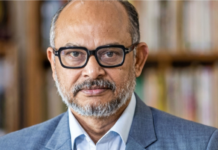
Mustafa K Mujeri, executive director at the Institute for Inclusive Finance and Development, said development partners generally feel more comfortable working with a stable and democratically elected government. As a result, during the interim government period, both major loan commitments and disbursements remained low except for urgent needs. This contributed to the decline in disbursement compared to the previous fiscal year. Although commitments have increased somewhat in the first eight months, the rise is not significant.
He added that repayment of foreign loans taken in previous years has now become a major pressure. As repayment periods for loans taken under the previous government begin, the amount of repayment is increasing. Currently, disbursement and repayment are nearly at the same level, which could increase pressure on foreign exchange reserves.
According to him, if new loan inflows do not increase, this pressure may intensify in the future. At the same time, global uncertainties, including the Middle East conflict, have increased costs of energy, transport, and insurance. Importing oil and LNG from alternative sources at higher prices is putting additional strain on reserves. The current reserve stands at around $30 billion, and increasing it to $40-45 billion could bring some relief. In this situation, the government is seeking budget support from the International Monetary Fund, World Bank, and Asian Development Bank to ease pressure on reserves.
Mujeri said coordinated efforts are essential to tackle the crisis. Strengthening foreign assistance, expanding exports, boosting reserves, and controlling expenditure will help Bangladesh address these challenges.
According to ERD data, Russia disbursed the highest amount – $755.15 million – during July-February, mainly for the Rooppur power project. The World Bank disbursed $636 million, the Asian Development Bank $566.19 million, China $257.72 million, Japan $189.36 million, and India $152.89 million.
In terms of commitments, the Asian Development Bank provided the highest at $1.269 billion during the first eight months. The World Bank committed $416.25 million, while European Union countries pledged $392.07 million.
Source: https://www.tbsnews.net/economy/foreign-loan-disbursement-falls-26-8-months-fy26-1397921