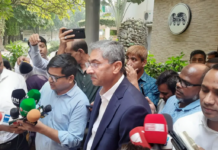
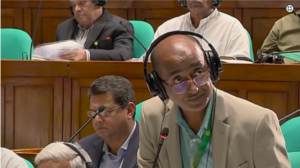
The government will place draft laws on preventing enforced disappearances and reforming the National Human Rights Commission before the next cabinet meeting, said Law Minister Md Asaduzzaman yesterday.
“If they get approved in the cabinet, we will take them to parliament,” he said at a consultation on “Human Rights Abuses and Access to Justice for Victims”, organised by Odhikar at the capital’s CIRDAP auditorium.
The minister said the draft laws were in the final stages after consultations with civil society, heads of the disciplined forces and other stakeholders. The government also invited written feedback by email, he added.
On judicial reforms, Asaduzzaman said draft laws aimed at ensuring judicial independence, prepared during the interim government’s tenure, had not been taken up by the current parliament.
He said the judiciary could become truly independent only when judicial appointments were made through a neutral process.
The minister also criticised judicial appointments made during the interim government’s tenure.
He alleged that around 1,400 judges were transferred between September and December 2025, including “prize postings” for judges who had supported the previous regime.
When the current government wanted to reverse those postings, the Supreme Court resisted in around 70 percent of the cases, he claimed.
Former Justice Moyeenul Islam Chowdhury, who headed the Commission of Inquiry on Enforced Disappearances, highlighted the severe psychological impact on survivors.
He said many victims continue to suffer from post-traumatic stress disorder and serious mental trauma, requiring urgent medical treatment and formal rehabilitation.
He also stressed the need for institutional reforms across state bodies, alongside mental health and social support for survivors.
Maroof Zaman, a former ambassador and survivor of enforced disappearance, expressed frustration over the pace of legal proceedings.
“The pace of seeking justice for victims of enforced disappearance has slowed down in recent times,” he said.
Tajul Islam, former chief prosecutor of the International Crimes Tribunal, said criminal prosecution must come first in ensuring justice.
“The first step of fundamental justice is criminal prosecution. We can talk about truth and reconciliation after we achieve that,” he said.
Source: https://www.thedailystar.net/news/bangladesh/news/disappearances-govt-place-draft-law-next-cabinet-meeting-4232521