The expanding conversation about the Global South is changing the vocabulary of international relations. Countries once treated mainly as objects of great-power competition increasingly want to become authors of regional and global policy. Yet the Global South is not a unified political camp. It contains democracies and authoritarian states, commodity exporters and import-dependent economies, rising powers and vulnerable nations, as well as countries with conflicting security interests. Its significance lies not in ideological uniformity but in the search for greater voice, development space and strategic autonomy.
This transition presents Bangladesh with both opportunity and danger. Dhaka will be forced to protect its national interests while managing its complex but inevitable relationship with India, its growing economic and security ties with China, and its traditional relationships with the US and Europe, while also improving relations with the Middle East and Southeast Asia. In this context, BIMSTEC offers Bangladesh an ideal forum to put geography into practice.
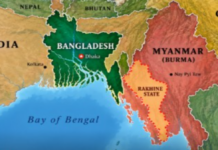
Bangladesh’s chairmanship of BIMSTEC places it in a particularly important position. The organization brings together Bangladesh, Bhutan, India, Myanmar, Nepal, Sri Lanka and Thailand, connecting South Asia with Southeast Asia around the Bay of Bengal. At a time when SAARC remains largely immobilized by political disputes and the expanded BRICS grouping is becoming more diverse and complicated, BIMSTEC can offer what larger forums often struggle to deliver: cooperation built around identifiable projects and shared regional needs.
A Bridge Across the Bay of Bengal
BIMSTEC’s biggest advantage is its geography. The Bay of Bengal region connects the Indian Ocean with Southeast Asia. It has vast economic and strategic significance. Countries around the bay confront shared challenges in transportation, trade, energy, climate resilience, disaster mitigation, fisheries, security, and public health. These aren’t lofty diplomatic issues. They affect jobs, food security, migration, investments, and the livelihoods of hundreds of millions.
Its project-oriented character lets members focus on areas where their interests overlap, even when they disagree elsewhere. Better transport and digital connectivity could shorten supply chains and open landlocked Nepal and Bhutan more fully to regional markets. Energy cooperation, joint disaster preparedness and maritime coordination could improve reliability, save lives and protect fisheries.
Bangladesh lies at the heart of many of these opportunities. Strategically positioned with ports, manufacturing capabilities, and a central location, Bangladesh could serve as a hub connecting India’s northeast with Nepal, Bhutan, and the broader Bay of Bengal region. Transit, logistics, energy sharing, and access to new markets could also benefit Bangladesh. But they must benefit all parties involved and do so visibly. Connectivity plans that seem to only favor the region’s biggest economy will struggle to earn lasting buy-in from the rest. For this reason, BIMSTEC should judge success by more than just kilometers of “connectivity” built. Small member states and citizens alike must see its benefits.
This is where “cooperative competition” becomes useful. BIMSTEC members will continue to compete for investment, markets, and influence. Cooperation does not require denying these rivalries; it requires institutions that can manage them while identifying complementarities.
Between BRICS Ambition and Global South Diversity
BIMSTEC’s engagement with BRICS reflects growing recognition that subregional organizations can contribute to global diplomacy. BRICS’ expansion has increased the grouping’s political visibility, but it has also made agreement more difficult. Its members have different relationships with the United States, China, Russia and Europe, different economic models, and sometimes sharply divergent regional priorities. The broader Global South is even more heterogeneous.
For Bangladesh, the sensible approach is neither automatic alignment nor reflexive distance. Dhaka has previously expressed interest in greater engagement with BRICS, and access to new development financing, markets, and diplomatic partnerships could support its growth. But any association with a large grouping should be judged by practical returns, institutional credibility, and Bangladesh’s freedom to maintain diverse relationships.
The search for a “lowest common denominator” may be the only workable basis for countries without a common ideology or security outlook. It could include international financial reform, climate finance, technology access, food and energy security, and respect for national development priorities without requiring identical positions on every global dispute.
Bangladesh’s vision of open regionalism fits well here. Indeed, BIMSTEC doesn’t have to reduce efforts in SAARC, BBIN, or any other forum. Platforms can overlap for different ends, so long as they don’t just repeat statements without action.
Strategic Autonomy Between India and China
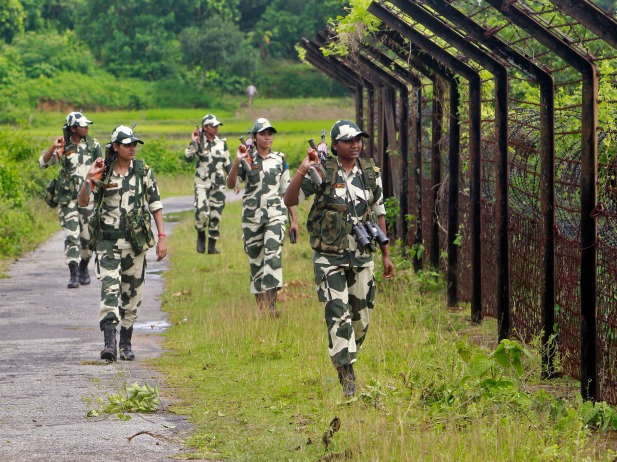
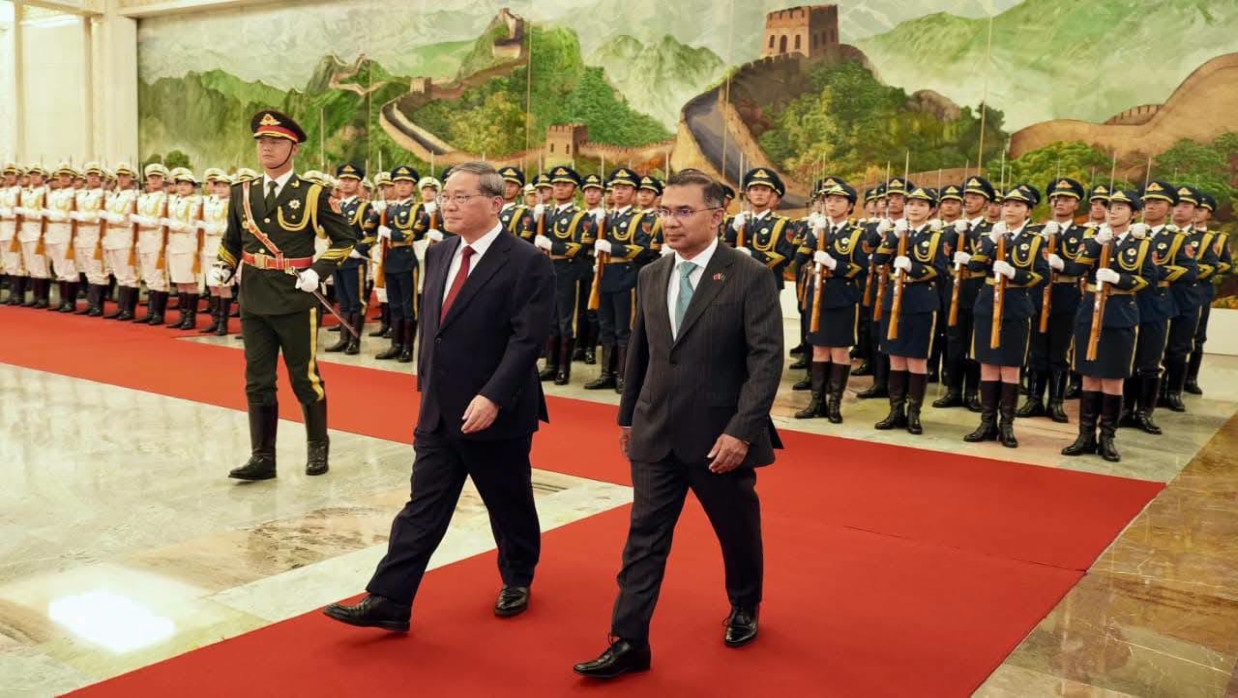
Bangladesh’s expanding ties with China inevitably shape perceptions of its regional diplomacy. Recent reporting has pointed to plans for a Bangladesh-China “2+2” dialogue involving foreign affairs and defense, along with growing cooperation in trade, infrastructure and military procurement. Reports have also described proposed Chinese investment and possible major defense acquisitions. New Delhi is watching these developments closely, as it often interprets Chinese activity in neighboring countries through the lens of strategic encirclement.
Yet Bangladesh’s engagement with China did not begin with the political upheaval of 2024. China has long been an important trading partner, infrastructure investor, and supplier of military equipment. What appears to be changing is Dhaka’s determination to present itself more explicitly as an independent strategic actor rather than as a state operating within another power’s presumed sphere of influence.
Strategic autonomy, however, shouldn’t be confused with equidistance. India is Bangladesh’s immediate neighbor with whom it shares rivers, borders, security interests, and trade routes, as well as deep historical and people-to-people ties. China can provide capital, manufacturing capacity, technology, and defense equipment without Bangladesh’s proximate entanglements. Bangladesh shouldn’t have to choose between the two powers, nor invite pressure by playing them against each other.
Rather, Bangladesh can adopt a “second-best” strategy of diversified partnerships that maximizes its choices while maintaining certain principles: sovereignty, reciprocity, transparency, economic worth, and nonalignment. Bangladesh can evaluate Chinese infrastructure projects by their financing terms, environmental impact, technology transfers, and capacity to create lasting value for Bangladesh. It can hold Indian projects to the same metric. Bangladesh can also maintain strong ties with the U.S., Europe, Japan, the Middle East, and Southeast Asia so “diversification” does not mean replacing dependence on Russia with dependence on China.
India, for its part, must become comfortable with a more self-confident Bangladesh. Its legitimate security concerns should be heard, but Bangladesh’s pursuit of multiple partnerships should not automatically be treated as hostility. Stable neighbors gain more from mutual respect than from contests over primacy.
Teesta, Trust and People-Centered Diplomacy
None of this vision will work if bilateral mistrust lingers unresolved. The Teesta water-sharing deal is rightly considered one of the biggest litmus tests of Bangladesh-India relations. Beyond the politics of pacts between governments, Teesta is about people in Bangladesh who rely on the river for their livelihoods, farms, environmental sustainability, and the pride of communities knowing their lives and livelihoods have a fighting chance if they can count on fair and predictable access to water.
Allowing the agreement to slip through our fingers would come at a political price well beyond the Teesta basin. It would feed public skepticism that warm bilateral relations do not automatically translate into equitable solutions on issues critical to Bangladesh’s interests. An equitable and durable solution, on the other hand, would show people that asymmetry does not have to stand in the way of equity and cooperation.
BIMSTEC too must be people-centric. Students should have greater mobility for study and travel. Businesses should not lose time at borders. Communities living along the Bay of Bengal should have more timely disaster alerts. Citizens should enjoy more reliable power and cheaper trade.
Bangladesh’s demographic energy makes this especially important. Its younger generations are connected, politically aware, and unwilling to accept relationships that appear to disregard their aspirations. Foreign policy must therefore be explained not only in terms of balance-of-power calculations but also in terms of jobs, rights, environmental security and national self-respect.
From Diplomatic Promise to Regional Delivery
Ideas are not the problem with BIMSTEC. Implementation is. A consensus-based decision-making model reassures the bloc’s smaller countries that their voices are heard. However, this model also gives a single dissenting member the power to veto group initiatives. Agreeing to use flexibilities that allow eager countries to move forward on agreed-upon topics while leaving the door open for others to join later could help the group organize better without abandoning consensus. Setting timelines for agreed-upon plans, publicly following up on financing commitments, and creating quantifiable targets can also move talk to action. Instead of packing its agenda with as many admirable goals as possible, Bangladesh should prioritize achievable initiatives and use its chairmanship to follow through. Focusing on trade facilitation, multimodal connectivity, energy cooperation, climate and disaster resilience, and institutional capacity building would be an excellent place to start.
Bangladesh’s ability to successfully complete a few meaningful projects will do more to raise the region’s profile than another grand declaration with aspirations in every sector imaginable. The key point is that Bangladesh does not have to choose between regionalism and its global ambitions. By using BIMSTEC as a stepping stone for regional cooperation, and strengthening ties with BRICS and the larger Global South, Bangladesh can have its cake and eat it too. Bangladesh can maintain its privileged relationship with India without becoming New Delhi’s client state, and rapprochement with China does not mean the two will be allies. What will allow Bangladesh to balance these relationships is competent diplomacy and leadership that is transparent and accountable to the people it claims to serve.
Bangladesh’s ability to sit between South and Southeast Asia, and between competing centers of power, provides the nation an opportunity to show what kind of statecraft can be achieved despite differences. The Global South’s future will not hinge on whether its countries act as one bloc, but on whether they can forge coalitions of convenience. If BIMSTEC can turn common geography into shared prosperity, it could become more than another regional acronym. It can be a blueprint for cooperation in an otherwise divided world.

Ghulam M. Suhrawardi
Ghulam M. Suhrawardi is the Publisher of South Asia Journal.
Source: https://southasiajournal.net/post/bangladesh/61727/beyond-the-politics-of-blocs-bimstec-bangladesh-and-the-new-architecture-of-the-global-south