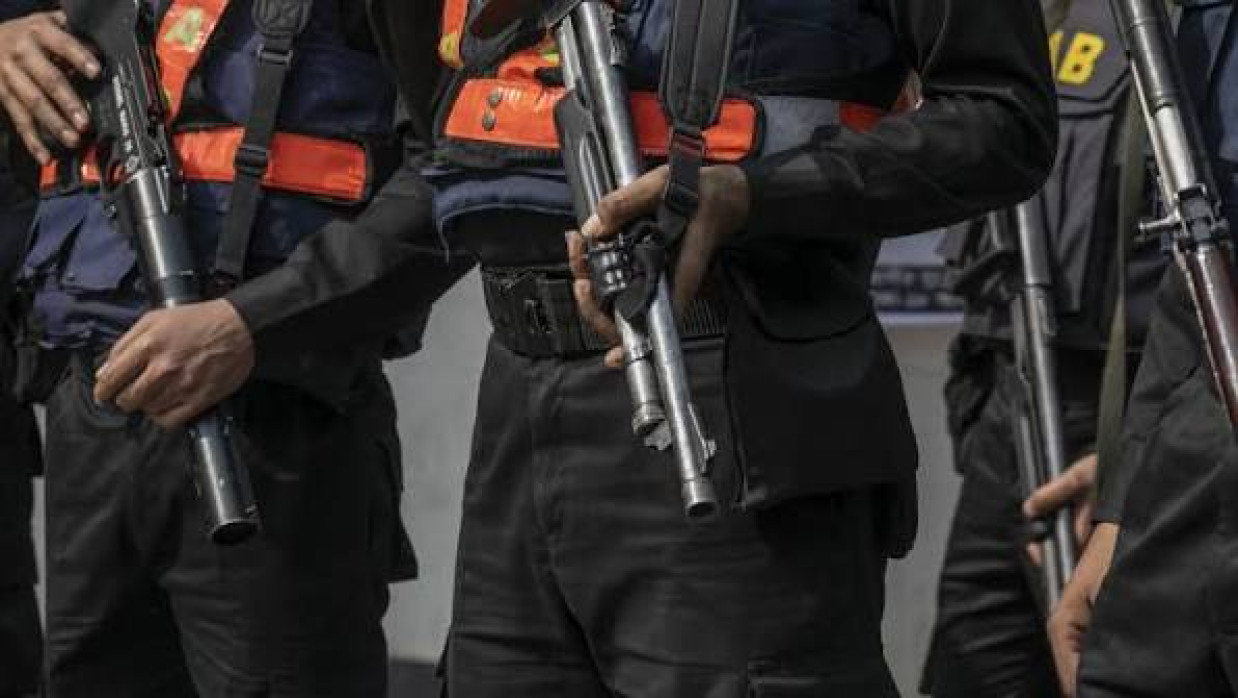
Bangladesh finds itself staring down the barrel of one of its bleakest periods in recent memory. While trials have begun against former Prime Minister Sheikh Hasina and numerous ex-civilian and military officials accused of enforced disappearances and other grave human rights abuses, much attention has turned towards Bangladesh’s notoriously opaque security and intelligence agencies. This week, that curtain of secrecy was pulled back just a crack when Sharmin Chowdhury interviewed retired Lieutenant Colonel Khairul Islam, a former Bangladesh Army officer who worked in the Directorate General of Forces Intelligence (DGFI) and later as Intelligence Chief for Rapid Action Battalion (RAB).
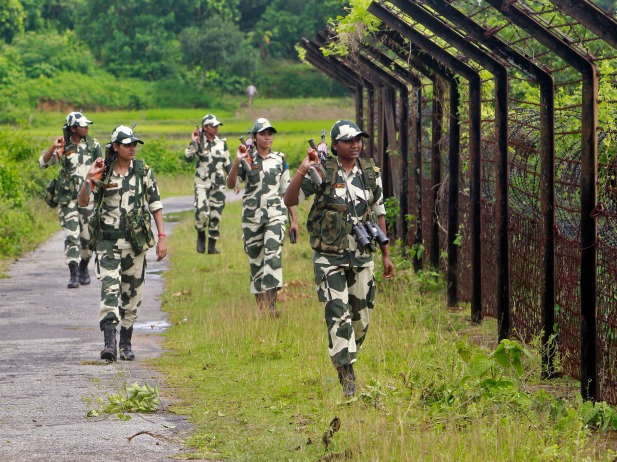
One may agree or disagree with each allegation. However, one thing is beyond doubt. The accusation revolves around politics, intelligence, national security, and democracy. For years, the intelligence agencies of Bangladesh were praised for bringing militant groups under control that once threatened the very existence of Bangladesh. Militant outfits grew stronger on home soil during the 2000s and staged deadly terrorist attacks, including the Dhaka Gulshan Holy Artisan Cafe attack in 2016. Rapid Action Battalion (RAB), Directorate General of Forces Intelligence (DGFI), Bangladesh Police, and other intelligence agencies started a crackdown against militants and disrupted militant networks.
But these counterterrorism drives were politically controversial too. The opposition and rights groups often claimed that incidents related to militant groups were staged/fabricated/exploited by then-Prime Minister Sheikh Hasina’s government to convince the nation that militants were still a threat and her government was taking stern actions to battle militancy. Well, those accusations have never been proven. But it’s a political allegation that can’t be established or proven beyond reasonable doubt in any criminal court. Notwithstanding, Bangladesh’s fight against militancy under the Hasina government has been internationally appreciated, as it has forged counterterrorism cooperation with India and other international allies.
These successes earned Bangladesh international recognition as a country that had largely contained violent extremism.
However, the same institutions have also been the subject of sustained criticism by international human rights organizations, which have documented allegations of enforced disappearances, arbitrary detention, torture, and extrajudicial killings. Families of missing persons have, for years, sought answers regarding relatives who allegedly disappeared after being taken into custody by state agencies. The government consistently denied the existence of secret detention facilities, while critics argued that such practices eroded public confidence in democratic governance.
Claims of secret jails and torture chambers, an alleged web of prisons known as “Aynaghar” (House of Mirrors) in which detainees were interrogated outside of court, have been among the most controversial. Ex-detainees released after being missing for months have recounted days of solitary confinement followed by torture in interrogations. How much of these claims can be upheld in a courtroom will likely remain for independent investigations and trials to decide, but they have come to define Bangladesh’s reckoning with its history.
The interview also revisits another sensitive issue, the alleged political use of Bangladesh’s counterterrorism apparatus. A leaked telephone conversation reportedly involving Sheikh Hasina and veteran politician Hasanul Haq Inu revived public debate after references were made to deploying the “militant card.” “It has also been construed that the extremist label was weaponized by detractors to brand dissenting voices and/or warrant extraordinary laws in some cases,” added Chowdhury, quoting remarks from an interview the former army officer granted earlier. Bangladesh was a legitimate target of terrorists, which needed intelligence inputs. “One question that Bangladesh will have to answer – institutionally – is: at what point does genuine national security need end and political convenience begin?” Chowdhury questioned.
Did Bangladesh necessarily militarize policing populism? Chowdhury touched upon the arrest of celebrity actress Pori Moni in 2021 and asked whether deploying scores of RAB operatives was needed if the allegations leveled later were unrelated to serious crimes but revolved around possession of alcohol. Did the size of the operation warrant the subsequent revelations? Concerns over pick-and-choose law enforcement, media trial, and abuse of state machinery come to mind.
Chowdhury also raised another point of interest highlighted in the interview: an alleged individual who goes by two different names (identifiable by the reporter) and was allegedly arrested by RAB in 2017, and was also linked to funding an extravagant Hindu temple in north Bangladesh last year. The suspicions of an international link and conspiracy theories about invisible hands and spies have been greatly entertained by many.
In times of highly polarized politics, only extraordinary claims should be met with substantive evidence. Another aspect of Bangladesh’s current conundrum is not about who did what and who is to blame. The reality is that going forward, Bangladesh needs a strong intelligence community to keep the country safe from terrorism, organized crimes, cyber crimes, espionage, etc. But at the same time, it has to be kept in check.
Countries in Latin America, Eastern Europe, and Southeast Asia have suffered severe democratic backsliding as their security institutions have become highly politicized, undermining not only the democratization process but also the credibility of those institutions. Bangladesh has the chance to change that precedent by empowering an independent judiciary, an effective parliamentary oversight committee, and other credible forms of checks and balances.
Former army officers’ confessions shouldn’t be the center of all debates on security and intelligence reforms. They are merely a part of a long historical narrative that needs to be uncovered. Their claims should be heard, but ultimately they should be substantiated by documents, corroborated by court verdicts, backed by victims’ testimonials, and supported by independent investigations.
A country is never more powerful when its intelligence community is above the law. A country is at its best when its intelligence community keeps it both secure and free.
Source: https://southasiajournal.net/post/bangladesh/61452/bangladeshs-security-state-under-scrutiny-revisiting-the-legacy-of-intelligence-counterterrorism-and-accountability