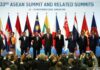

The 18th BRICS Leaders’ Summit opened in New Delhi on 12–13 September 2026, drawing China’s Xi Jinping, Russia’s Vladimir Putin, Iran’s Masoud Pezeshkian and UN Secretary-General António Guterres. Bangladesh, however, stayed away, citing the wording of the invitation and a trust deficit deepened by Sheikh Hasina’s 5 August appearance in the Indian capital, and declined to send any official representative. The empty chair has reignited debate over where Dhaka–Delhi ties now stand. The Business Standard has talked to prominent geopolitics and security experts to weigh what the absence means for Bangladesh, its room for maneuver, and its fraught relationship with New Delhi
‘They saw it through a plurilateral prism when we saw a bilateral slight’

M Humayun Kabir, former ambassador
BRICS is a plurilateral organisation. It is where a country such as Bangladesh has, in effect, been invited under a degree of pressure that this term comes into use — plurilateral. And my sense is that it is precisely in this bilateral-cum-plurilateral space that some of our difficulty lies. Take the fact that India invited our head of government as the chair of BIMSTEC.
The BIMSTEC chair, after all, may at any given time be Bangladesh, as it may be under SAARC. So our head of government was invited in that capacity, under the BIMSTEC-chair designation. From their side, technically, that is how they regarded our Prime Minister within the context of that conference or summit.
From our side, we took the view that they had invited the BIMSTEC chair, i.e. the office-holder, and not our Prime Minister as such. That is how we framed it where our Prime Minister was concerned. And it is because the framing on the two sides was somewhat different that, to my mind, this confusion arose and it is out of that confusion that things ended up as they did.
Now, had we gone, what might have come of it? There is something new taking shape there, though the final outcome I have not yet seen. What they are seeking is to deepen cooperation and, in that connection, to bring about a degree of digital-currency alignment, while increasing the use of each country’s own currency.
In other words, if you do business in India, you may do it in the Indian currency; in China, in the Chinese currency. So they are attempting to build an alternative economic, or financial, structure. For a country like ours—one that works with everyone and carries a certain exposure, with trade and commerce running to all 11 of these member states—this matters.
In that situation, were we able to plug into this financial network, or something of the kind, our leverage would rise somewhat. I would then no longer have to worry that, having taken a nuclear power plant from Russia, we might be hit with American sanctions, because if my trade with Russia is conducted in taka or in roubles, sanctions imposed through the dollar lose much of their bite.
Then there is the point that was made about resolving matters through dialogue and diplomacy. For Bangladesh this holds especially true, because as a relatively small country, we always carry this kind of security concern.
In that light, if a general principle takes hold that everyone wishes to settle disputes through dialogue and diplomacy, and accepts as much, then there is an advantage in it for us.
And the third point is that the heads of state and government of 11 countries were present there. Our presence, therefore, could have created the opportunity to interact, and to share our thoughts and priorities, and so on. That carries a diplomatic value of its own. But since we were not there, we did not get that opportunity.
So, in that respect, attending would have been the better course. Even so, we tried to send a message: that we now have a spine — that we will not simply go wherever, and however, you wish. The requisite level of dignity and honour must be extended to us; only then do we wish to engage. That is the message that went out from our side.
Yes, in terms of the message, ‘we are strong’, we did genuinely demonstrate that Bangladesh is no longer the docile, compliant Bangladesh of old. That message has been delivered. The question now is how much we gained in material terms, and that remains to be seen.
And it seems to me that the Indians viewed the matter through a multilateral, or plurilateral, prism, whereas we viewed it from a bilateral angle. That mismatch bred the confusion.
M Humayun Kabir is a former ambassador and President and CEO of the Bangladesh Enterprise Institute (BEI).
‘Not going now is temporary, joining BRICS ought to be our top priority’

Maj General (Rtd) Fazle Elahi Akbar, security expert
For Bangladesh, increasing cooperation and dialogue with the BRICS countries is very important, because for all these years our focus has been India-centric — we sat within a South Asia-centric frame. We were never especially serious about multilateralism; even with the OIC our engagement was minimal. Our day-to-day affairs — the economy, diplomacy, even national security, trade and transit — everything was South Asia-centric.
Because we remained South Asia-centric and India-centric for so long, India came to take us almost entirely for granted; and it reached the point where we were gradually losing our sovereign autonomy. From that perspective, we needed to break out of it. We are trying to do so now — but merely breaking out is not enough unless we open other windows. BRICS and the Shanghai Cooperation Organisation are exactly the windows we ought to jump into; and, if required, the OIC platform is very much a format to work through as well.
The more windows we have, the less the pressure from any one bloc or any one country. This, in fact, is how smaller countries survive — they keep their options open and stay in charge of their own course. They do not allow themselves to be sucked into a single black hole; and we were in that black hole for the last 16 years, under the previous fascist regime. So joining BRICS is now vitally important.
As to why we did not go to Delhi — why the invitation was not accepted — I think our state minister for foreign affairs has explained it amply. He was invited as the chair of BIMSTEC, not as Prime Minister, of course; and they also attached certain conditions. Those conditions we know: the return of the fascist leader who is in exile there, having been legally convicted, and likewise the killers of Hadi, who have also been in hiding. This has, in truth, been the pattern for a very long time — anyone wanted in Bangladesh takes shelter there. We have an extradition treaty, and even that has not been reciprocated, whereas in the past, even under the fascist regime, we complied on more than one occasion, several times over, to return their wanted persons into their custody.
Not going now is a temporary matter. But diplomatically, and for Bangladesh’s foreign policy, joining BRICS and the SCO ought to be our top priority. We know that even in Hasina’s day — in the time of fascism — the government of Bangladesh had applied; and despite our good relations with our neighbour, it was India that vetoed our entry. So we must now make the endeavour once again — to join BRICS, and the SCO as well. If not directly, then we must first become an observer and then, step by step, move into full membership, because this opens avenues to a new economic bloc and new opportunities for trade, for exchange, for technology, for everything.
Both these organisations are, in effect, Russia- and China-dominated; and in a changed, globalised world, this is what we should be looking towards — rather than remaining wholly India-centric, or centred on any single power.
Maj Gen (retd) Fazle Elahi Akbar is Chairman of the Foundation for Strategic and Development Studies (FSDS).
‘BRICS is a separate matter, Bangladesh should have gone’

Dr Dilara Choudhury, academic
BRICS is a multilateral organisation. It has many members — around 11 countries, I believe — and these countries cooperate on trade, investment and economic matters. There is no security-pact dimension to it at all.
So the strain over Hasina — set that aside; that is a bilateral problem with India. What is the reason for staying away on India’s account? This is not a bilateral issue; it is not a quarrel with India. Declining a bilateral visit to India because of the ongoing tension is one thing — but BRICS is an entirely separate matter. BRICS is a multilateral organisation, and I believe Bangladesh ought to have attended.
For Bangladesh, joining all these multilateral organisations is vital, because the country’s economic development depends on trade and investment, and multilateral forums are precisely where that is advanced. So why did we not go? I see no justification for staying away simply because of the strain with India.
In the world now taking shape — as the American-led order gradually declines — bodies of this kind are especially important for the Global South, for what we call the Global Development Initiative. We will need cooperation with these countries on a range of economic issues, so we ought to join the Shanghai Cooperation Organisation.
Why? Because Bangladesh has been making this mistake from the very start. We never joined ASEAN — and we certainly should have, from the beginning. Now we cannot get into ASEAN at all. Our foreign policy was so India-centric that we simply assumed India was our friend, that India would solve all our problems, that staying close to India would deliver us enormous development. That India-centric mindset led us into many mistakes in the past. Now an opportunity has come — so why on earth would we let it slip?
Dr Dilara Choudhury served as a Professor and Chair of the Department of Government and Politics at Jahangirnagar University.
‘It is just as well the PM did not go, but the road must stay open’

Parvez Karim Abbasi, academic
There is no point pretending, or telling ourselves, that everything in the Bangladesh-India relationship is sweet and harmonious. From day one after this new elected government took office, there have been push-ins across the West Bengal border, and that many Awami League leaders now in India, convicted absconders before our own courts, have been running all manner of propaganda. Most recently, around 5 August, there were Sheikh Hasina’s remarks and the publicity given to them at the Foreign Correspondents’ Club. Naturally, then, there is a trust deficit between the two governments. There is the issue of border killings, and a lingering question over the renewal of the water treaty.
So the question is whether the Prime Minister ought to have gone. The event has already taken place, so we can discuss it academically. My personal view is that, for a multilateral event convened at very short notice, and with so many outstanding problems, it is just as well that he did not go. It is not as though Bangladesh is saying we have broken off all contact with India. In future, once adequate diplomatic preparation and homework have been done, a visit between the two heads of government can certainly take place; that road must be kept open, because India is our neighbour and the two countries are, in many respects, interdependent.
But one question does remain. It is perfectly fine for the Prime Minister not to go — yet many countries sent their foreign ministers. Our own foreign minister is a seasoned diplomat; had he gone, there would have been a great deal of engagement to be had. Where else would you find so large a forum? BRICS has a concentrated focus on the Global South. In such a setting we might have met President Xi Jinping, or Vladimir Putin. Russia, after all, is our second-largest lender, for the Rooppur nuclear plant. There is Saudi Arabia, home to many Bangladeshi expatriates; Anwar Ibrahim, the Prime Minister of Malaysia; the UAE crown prince and others. There were opportunities for a great many side meetings.
And since we hold the BIMSTEC chair, the responsibility to raise our standing in global forums falls on Bangladesh. Many are asking what Bangladesh gained by not going. One gain could be the signal it sends to India: that, since we now speak of “Bangladesh First,” when we do engage, our self-respect must remain intact, and we should go only in a conducive, enabling and friendly environment, with the groundwork for our outstanding issues laid down in advance.
On the other hand, we are living through an unstable period. The United States — the sole superpower — is gradually facing challenges on many fronts: economically, in trade, in investment, in technology, even in military capability. No one is entirely certain which way the global trend will turn; for the next 10 to 20 years there will be a transition, a period of global instability. At such a time Bangladesh ought to hedge and pursue multiple engagements.
We talk of bilateral free-trade agreements and of entering regional ones, yet ASEAN has closed its door to us. LDC graduation will come in another two years, and we will then lose the duty-free, quota-free access we now enjoy. We must secure our energy supplies, move towards renewables — for which rare earths are needed — and seek out new export markets. At this summit, at least the groundwork for all this could have begun. So I support the Prime Minister not going: there has not yet been adequate time, there is a trust deficit, and there is unease among the public. But we could still have sent the foreign minister, or a capable state minister.
Parvez Karim Abbasi is an Assistant Professor of Economics at East West University, Dhaka, and Executive Director of the Centre for Governance Studies (CGS).
‘Little to gain, little to lose’

Md Tanvir Habib, academic
Bangladesh is not a current member of BRICS; it has been clear for some time that India is unwilling to admit other regional nations as equal members, because that would cut against its idea of control over South Asia.
Given that Bangladesh is not a prospective member, the visit would not have gained the Prime Minister, or the country, a great deal to begin with — beyond showing his face and mingling with a number of global leaders. So I do not think the decision carries major implications for Bangladesh. In bilateral terms, the Prime Minister has already made his maiden visits to Malaysia and to China; on the China front the relationship is strong, and he enjoys a good working relationship with the United States and others. Diplomacy is multi-pronged and multi-tiered, and that too will have factored into his calculation of whether joining, or not joining, BRICS carries any real consequence. Had some BRICS members been keen to see Bangladesh join, that might have made a difference — but Bangladesh already has good relations, on its own account, with the likes of Iran and Saudi Arabia.
BRICS has become interesting of late, in that it wants — with Russian assistance — to build a de-dollarised system. So the Prime Minister’s staying away is, in a sense, a signal: that Bangladesh is not, at this moment, eager to enter arrangements that are geopolitically contentious. It is the same caution we saw over the Mecca Pact discussions earlier; Bangladesh is following a similarly careful path.
Certainly, attending the summit would have given him the chance to speak to the Indian political leadership and to other global leaders, and it is the bilateral meetings on the sidelines of such events that tend to be the real avenues for a diplomatic breakthrough. With the Indians, it might well have produced one. But before any breakthrough, Bangladesh had to convey its own requirements to India — and those requirements not being met was, I think, a key reason the Prime Minister chose not to go in the first place.
As for the other countries, I do not foresee any significant degradation. We have very good bilateral relations right across the group. With Russia, ties are not at any low ebb — they remain structured and continue in a routine manner. With China, the relationship is moving to a much higher plane, in bilateral trust and in trade, with Xi Jinping speaking of a more cultural, more civilisational approach. With the United States we have a historically good relationship, and with Europe a strong working one. The government has recently signed trade and framework agreements with South Korea, Japan and Australia, and work with the European Union is ongoing. So with every actor, inside BRICS and beyond it, Bangladesh has robust bilateral relations; the summit will not significantly affect them.
And I think every one of these countries would understand why the Prime Minister did not go — because he cannot visit unless something is forthcoming for him. His diplomatic success required a measure of compromise from the Indians, and the absence of that is the major reason he stayed away.
Md Tanvir Habib is an Assistant Professor at the Department of International Relations at the University of Dhaka.
Source: https://www.tbsnews.net/features/panorama/bangladesh-not-joining-brics-summit-principled-stand-or-opportunity-lost-1541511