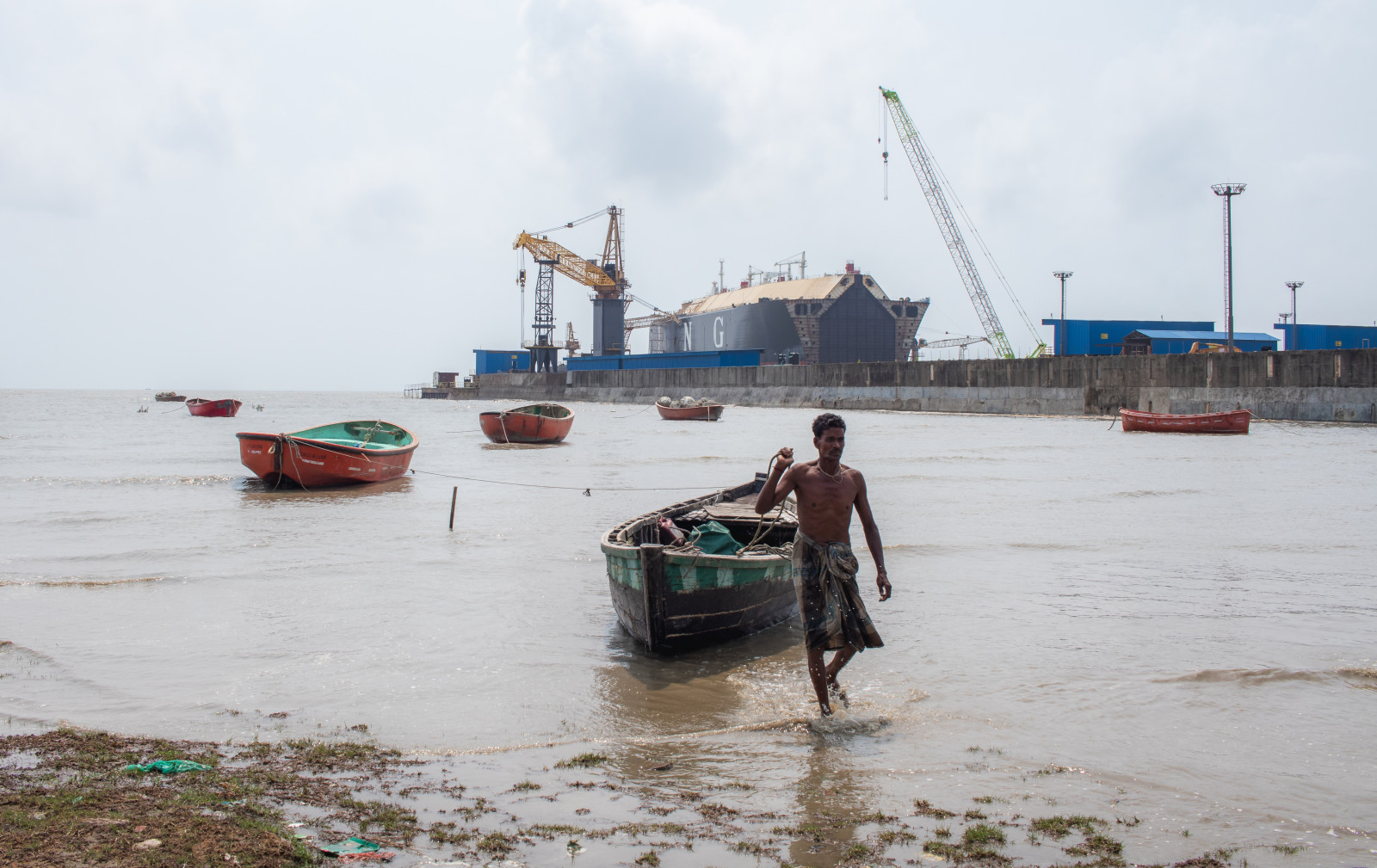
For Harikamal, the sea is more than a livelihood — it is woven into his identity itself. He is a Jaladas, which translates to “people of the water”. Salt water has flowed through his ancestors’ veins for centuries.
Like his father and most of his ancestors, he was a fisherman until 1991. That year, a cyclone struck the coastal regions. Located just 200 metres from the shore, Harikamal’s village was hit the hardest.
“Television wasn’t available back then, and radio signals were weak. There was no way of knowing about the approaching storm,” he said.
The cyclone claimed the lives of his mother and four of his children.
“I lost my family, my home — everything. I had to build everything from scratch,” Harikamal continued.
According to him, fish stocks declined year after year. The smell of grease and waste from the shipbreaking yards drove the fish away. Eventually, fishing ceased to be a viable livelihood. He had to change professions and start anew to rebuild his life.
Just like that, a tradition spanning hundreds of years came to an end, and he became a shipbreaker.
Disappearance of the Jaladas
Gradually, like Harikamal, the members of the community turned into shipbreakers one by one. The sea people destroyed the very sea around them. The same hands that once caught fish now dismantled massive ships. As the industry expanded, more people from the North joined it — most of them unskilled.

“Accidents used to happen a lot around here. I know someone who lost a leg and an eye in an accident while working in the shipyard,” said a worker requesting anonymity. “He was paid around Tk1 lakh in compensation. That is the cost of a leg here.”
Oil spills into the sea, gas explosions, and workers being crushed under metal were monthly occurrences. Massive ships were broken into pieces by thousands of hands — and in the process, many workers died, while many others lost limbs and received little to no compensation.
However, that reality has changed.
The return to the sea
The shoreline feels abandoned now. Grass has returned to parts of the coast once covered in grease and scrap metal. The air no longer smells of oil. It smells like the sea.
Sounds of drilling and scraping metal occasionally pierce the silence, but for the most part, it is quiet here — quieter than a working industrial zone has any right to be. A few dogs move slowly along the waterline. Birds cross the sky.
It is not healed. But something is returning.
Harikamal no longer works in the shipbreaking yards. Last year, he was laid off.
“They no longer employ people like me. You need to be educated to work there now. It’s different. There are engineers and supervisors who monitor the workers. I haven’t heard of any accidents in recent times,” he said.
“The workers get an hour-long lunch break, and they return home by dusk — we could not even imagine that in our time.”
But he does not regret losing the job. It brought him back to the sea, where he belongs.
“It will take time, and yes, it is hard to survive. But the fish are returning, slowly. For now, it’s enough to get by,” said Bashi Das, another fisherman from the village.
For now, the Jaladas have once again found their way back to the sea.
Marine scientists say the fishermen’s observations are not imaginary.

According to Dr Shafiqul Islam, a professor at the Institute of Marine Sciences, University of Chittagong, years of unchecked pollution from shipbreaking yards have severely disrupted the coastal ecosystem around Sitakunda.
“When pollution enters the environment continuously, only a limited number of species can tolerate those conditions,” he told TBS. “But when pollution decreases and a healthier environment begins to return, more species are able to survive again.”
For decades, oil spills, industrial discharge and heavy metal contamination altered the ecological balance of the coastline. With stricter environmental regulations now in place, direct waste disposal into the sea has been significantly reduced in many compliant yards.
Researchers believe this may be contributing to the gradual return of fish and coastal vegetation observed by local fishermen.
Still, Dr Islam cautioned against viewing the recovery as complete.
“Once an ecosystem is degraded, it cannot be restored overnight,” he said. “Recovery is possible, but it takes time.”
He said researchers are now considering comparative biodiversity surveys using data collected over nearly a decade to better understand how the coastline is changing.
The cost of recovery
At its peak, 150 yards lined the coastline of Sitakunda, Chattogram. It was home to the second-largest shipbreaking industry in the world. Thousands of workers were employed there — many of them from distant areas, particularly the poorer regions of northern Bangladesh.
Of those 150 yards, most have since shut down. Only 17 IMO-authorised shipbreaking yards remain in the Sitakunda belt. Most workers who previously worked there either returned home, switched professions, or became unemployed.
Based on a 2005 YPSA survey estimating more than 25,000 labourers working across 70 operational yards in Sitakunda, a proportional estimate suggests that roughly 6,000 workers remain employed across the 17 authorised facilities today. A major factor behind this decline has been the industry’s transition toward compliance with regulatory standards.
We spoke to a caretaker of one of the yards that was shut down. The yard where he worked now operates under another company that successfully adapted to IMO standards.
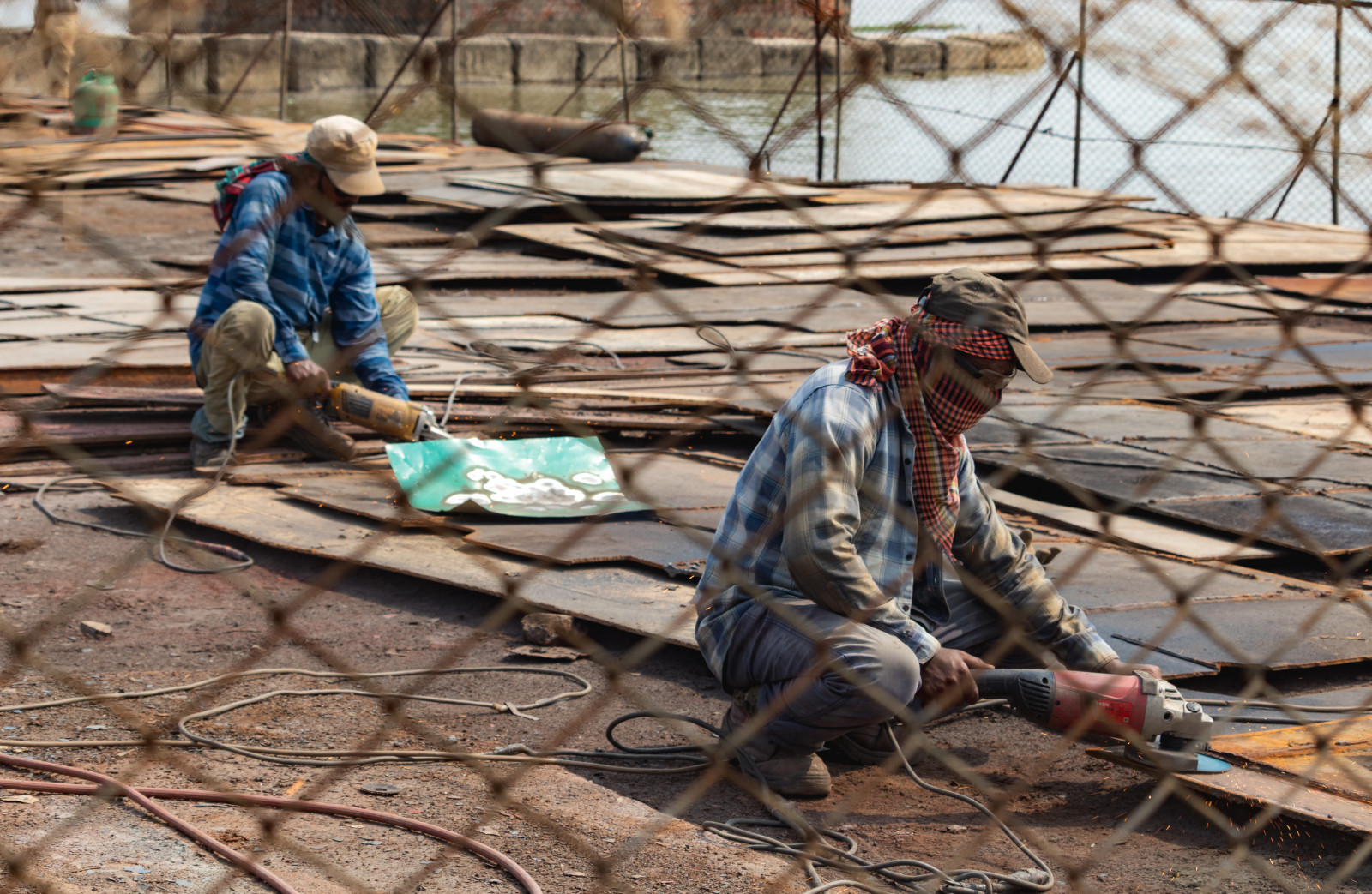
“It was necessary. Many people lost work, but the conditions they worked in previously were inhumane. No one has died in recent years, and workers who are injured now receive adequate compensation. A few people losing their jobs is a small price to pay for all this,” said the caretaker, who requested anonymity.
Around Tk2,000 crore was spent to adapt to IMO standards. Not all yards had the financial capacity to make that investment.
Previously, business in this area thrived because of low labour costs and the government’s lack of concern for the environmental toll. Developed countries sought convenient and inexpensive options for dismantling ships — now that advantage is gone.
Saiful Islam, a local businessman, used to sell recycled metal sourced from the yards before the pandemic, but with the shutdown of most facilities, that business has stalled. He now works as a watchman for one of the functioning shipyards.
“The ship our yard is currently working on has been here for a year. Before, it took only three to four months to dismantle a ship. They do it much more meticulously now, but the business has largely declined,” said Saiful.
Bangladesh is now the second most IMO-compliant ship recycling nation in the world. It holds the same ranking as before — but with a completely different meaning.
That compliance came at a cost. Ship imports have fallen sharply — only 84 ships arrived for recycling in 2025, one of the weakest performances in nearly two decades. The yards that survived are quieter than they once were. A ship that previously took three months to dismantle now takes a year.
The cheap labour that built this industry is no longer its selling point.
For Harikamal and others from the fishing community, however, the transition has brought something back. They have regained their land. Nature has reclaimed parts of the coast, and the Jaladas have been given a chance to return to the sea. Some shipyards still exist, but Harikamal understands the trade-offs.
“It is true that the yards still disrupt the natural environment to some extent, but thousands of people work here,” he says.
For now, that is answer enough.
Source: https://www.tbsnews.net/features/panorama/shipbreaking-reforms-sitakundas-jaladas-return-sea-1455756