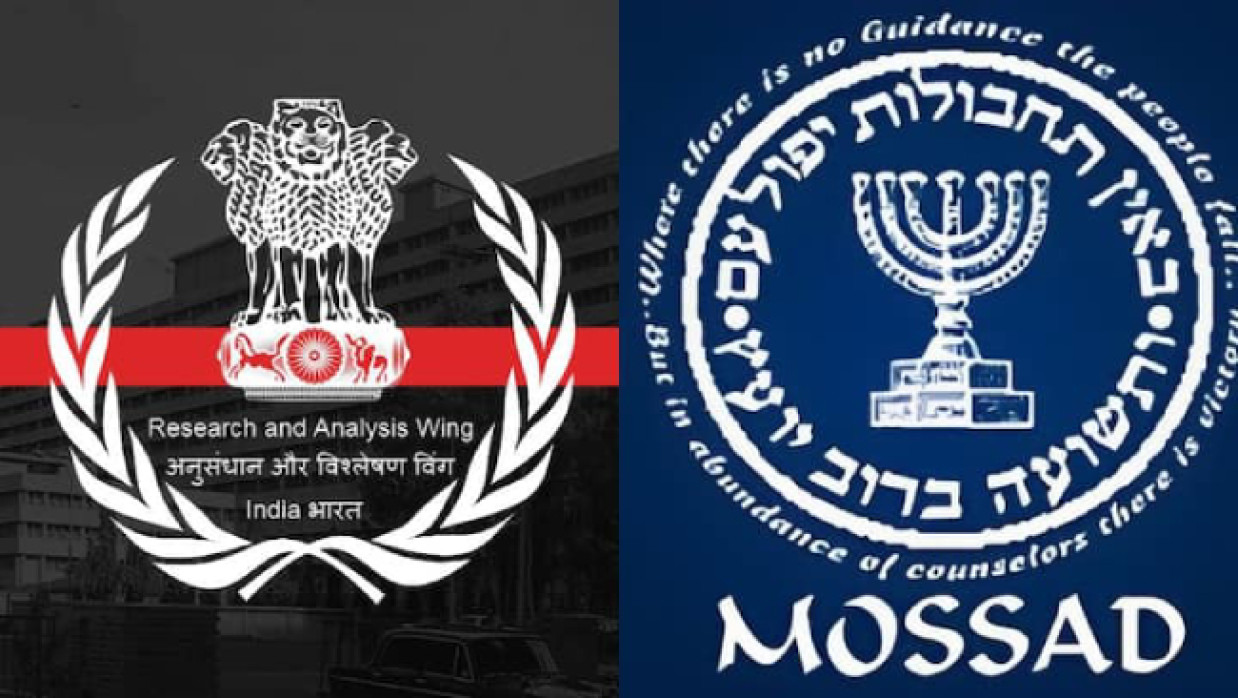
The growing strategic relationship between India and Israel is frequently described as one of the more consequential security partnerships to emerge from the transformation of Asian geopolitics. India’s R&AW and Israel’s Mossad are what sit at the heart of this relationship. Both have extensive expertise in covert operations and counterterrorism, as well as in threats within their respective regions. Supporters see this partnership as an appropriate step against terrorism and proliferation, which are becoming increasingly transnational. However, from India’s neighbors’ perspective, the question becomes: how can information sharing between two countries help one become more secure while endangering another?
This question deserves particular attention because intelligence operations are, by definition, difficult to document. Allegations involving R&AW have circulated for decades in Pakistan, Bangladesh, Nepal, Sri Lanka and elsewhere. Some are undoubtedly products of regional rivalry and political propaganda. Others, however, can no longer be dismissed automatically. Investigations and official proceedings in the United States and Canada have produced evidence serious enough to transform the debate over Indian intelligence operations abroad.
This was seen in the US. In October 2024, the US DOJ brought charges against Vikash Yadav, an Indian state employee, for allegedly plotting to hire someone to kill a US Citizen and Sikh Separatist in New York. These are allegations and must be proven in court. It’s hard to put into perspective how significant this is. A US prosecutor is claiming that an Indian state employee tried to hire someone to kill a person on US soil.
Canada made similar claims. In October 2024, they said they found ties between the Government of India and violent crime in Canada. They kicked out 6 Indian diplomats and consulates after learning that there were ties between Indian state employees and violent crimes committed against Canadians. India denied these claims, and later Canada clarified that it did not have evidence tying any of Modi, Jaishankar, or Doval to these crimes.
Which is important. We shouldn’t use intelligence issues to jump to conclusions. But what happened in the US and Canada raises questions about whether R&AW is just an intelligence agency fighting terrorism. Could more aggressive ideas exist within India’s intelligence community?
Journalism has also found links to Pakistan. In December 2024, The Washington Post found, after speaking with multiple officials from Pakistan, India, and Western countries and looking at police files, that R&AW has been assassinating targets in Pakistan since 2021. Using proxies, criminals, Afghan shooters, and money routes to carry out these attacks. Again, India has denied that assassination is a tactic they use. But these claims should be taken with a grain of salt.
Balochistan is especially sensitive in this argument. Pakistan has long accused India of supporting Baloch separatist organizations and using Afghanistan as a base for covert activities against Pakistan. India has rejected accusations that it sponsors terrorism in Balochistan. The arrest of Kulbhushan Jadhav in Pakistan in 2016 became the centerpiece of Islamabad’s case: Pakistan described him as an Indian intelligence operative engaged in espionage and sabotage, while India acknowledged that he was a retired Indian naval officer but disputed Pakistan’s account of his activities and circumstances of capture.
Consequently, claims that R&AW is responsible for Balochistan’s instability should not be stated as established fact. Balochistan has indigenous grievances stretching back decades, involving political representation, natural resources, disappearances, economic inequality and relations between the province and Pakistan’s federal authorities. Reducing the insurgency to an Indian conspiracy would obscure these internal causes. Yet it is equally simplistic to dismiss automatically every allegation of foreign intelligence involvement in a region where India and Pakistan have conducted covert competition for generations.
Afghanistan presents another complicated arena. During the former Afghan republic, India invested heavily in reconstruction, diplomacy, infrastructure and development. Pakistan simultaneously regarded India’s expanding diplomatic presence there with suspicion, repeatedly alleging that Indian intelligence used Afghan territory to cultivate networks hostile to Pakistan. India rejected those accusations. Since the Taliban returned to power, the strategic environment has changed considerably, while Afghanistan itself has become entangled in worsening confrontation with Pakistan over militant sanctuaries and cross-border attacks.
What we can learn is that nations will always compete to be smart about certain issues. When countries use failed states to advance their own national security interests, they only make things worse. Afghanistan has suffered greatly because of this. It doesn’t matter if it’s Pakistan, India, Iran, Russia, or America; they can all cause instability within a country.
Bangladesh raises a different set of concerns. India has legitimate and substantial interests there: a long border, trade, transit, water, migration, counterterrorism, and connectivity with India’s northeastern states. New Delhi also developed an exceptionally close relationship with Sheikh Hasina’s government. After the upheaval that ended Hasina’s rule in August 2024, she fled to India, while Bangladesh entered a period of political transformation.
Bangladeshis have consequently debated the extent of Indian influence over their country’s domestic politics. Suspicion of R&AW is widespread in some political circles, but suspicion is not evidence. Publicly available information does not establish that R&AW engineered Bangladesh’s political system or that Mossad and R&AW jointly conduct destabilization operations there. Those assertions should therefore not be presented as facts.
Still, there is something to be learned here. We, as large countries, should not assume our neighboring country shares our security interests. Bangladesh has its own political system and elections and will continue to act in its best interest. Too much influence can backfire if India, China, Pakistan, or the US tries to play too big a role.
This is where the R&AW-Mossad partnership deserves closer scrutiny. Israel has accumulated extraordinary experience in intelligence collection, surveillance, cyber capabilities, infiltration and covert action. India can understandably see advantages in accessing such expertise. Cooperation on preventing terrorist attacks, tracking weapons proliferation, and protecting citizens is legitimate when conducted within domestic and international law.
When they evolve to take on their own life, this becomes problematic. What we use to fight Terrorist groups can begin to creep into opposition groups or separatists within other countries. Surveillance turns into threats. Fighting Terrorism turns into oppression beyond our borders. Black ops can overtake diplomacy and the courts.
The developments in North America illustrate precisely why these distinctions matter. Canadian intelligence has characterized transnational repression as an important dimension of Indian activity in Canada, while the U.S. Justice Department has taken the extraordinary step of indicting an Indian government employee in connection with an alleged assassination conspiracy.
For South Asia’s smaller states, this raises a fundamental sovereignty issue. India’s rise gives it enormous influence throughout the region, but durable regional leadership cannot rest on intelligence penetration or coercive leverage. India ultimately benefits from neighbors that are stable, prosperous, and confident in their independence. A neighborhood that suspects New Delhi of manipulating political parties, cultivating proxies, or conducting covert operations will eventually seek counterweights, often from China or other outside powers.
Israel too has this issue with its neighbors. You can have all the tactical victories you want, but they don’t always translate into political gains. Maybe your intel agency can infiltrate everyone or blow up their infrastructure or whatever, but at the end of the day you haven’t solved the political issues.
That is why I feel this is missing when people talk about the R&AW and Mossad relationship. What rules will they operate under? And what does that mean for the nations in between?
South Asia already suffers from profound mistrust, contested borders, insurgencies, religious extremism and nuclear rivalry. It does not need another layer of clandestine competition in which assassination, political manipulation and proxy warfare gradually become normalized instruments of statecraft.
India has legitimate security concerns, as does Israel. Both have experienced devastating terrorist attacks and have a right to protect their citizens. But powerful states cannot buy security indefinitely at the expense of weaker states’ sovereignty. Pakistan, Bangladesh, Afghanistan, Nepal, Sri Lanka and other countries in the region have the same right to political independence and territorial integrity that India claims for itself.
What we need to see from this R&AW-Mossad relationship is if they can both stay within their limits. Not how many countries they can infiltrate or gather intelligence from. But if 2 powerful intelligence agencies can work with each other and understand where the line is between spying and meddling. Or fighting terrorism and imposing on another country. Recent events in North America have shown us that this issue is more apparent than we know.
If India wants to become a world superpower, it will have to learn restraint at some point. All great powers can project their influence beyond their borders. But can they do it without getting involved in other countries’ affairs? That will play a big role in intelligence sharing in South Asia.

Ghulam M. Suhrawardi
Ghulam M. Suhrawardi is the Publisher of South Asia Journal.
Source: https://southasiajournal.net/post/india/61778/the-shadow-partnership-raw-mossad-and-the-politics-of-regional-security