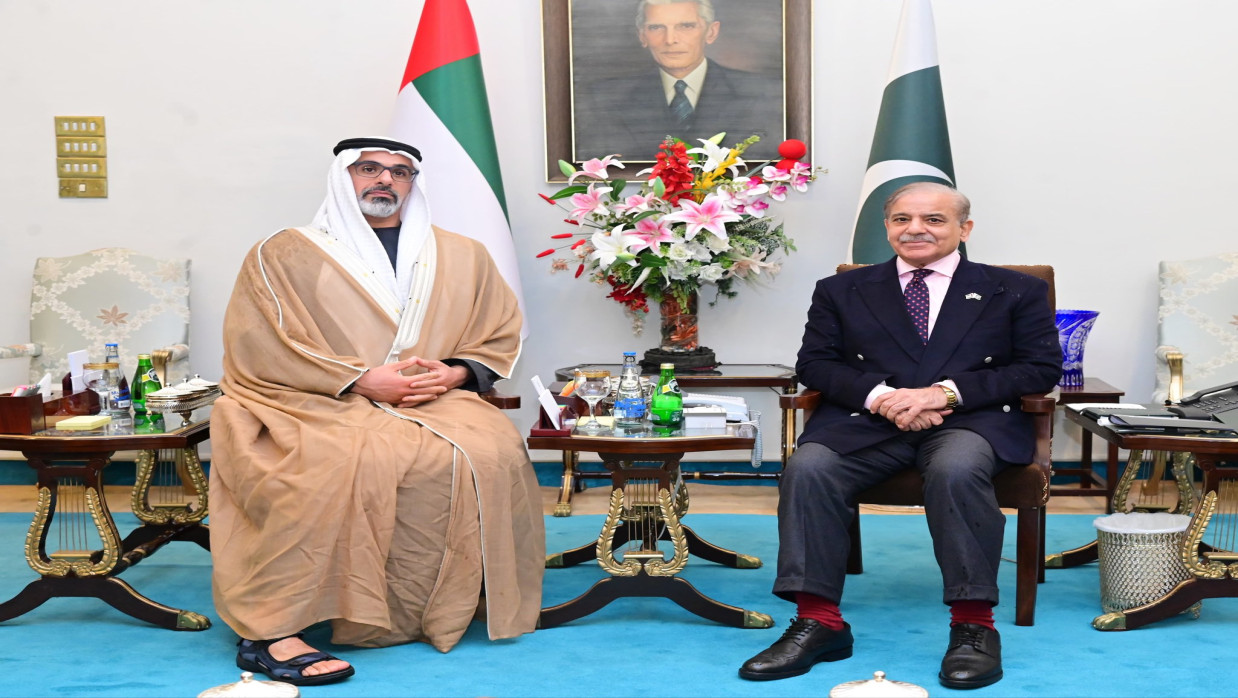
Few relationships in the modern Muslim world carry the depth and warmth of the bond between Pakistan and the United Arab Emirates. Rooted in shared faith, cultural closeness and decades of mutual trust, this partnership has grown far beyond diplomatic courtesy. Pakistan was among the very first countries to recognize the UAE after its founding in 1971, and that early gesture of solidarity set the tone for more than five decades of cooperation across political, economic, defence, security, cultural and social fields.
A Foundation Built on Shared History
The UAE’s early development owes a quiet but significant debt to Pakistani contributions. In the country’s formative years, Pakistani military officers, engineers, teachers and skilled professionals helped build institutions that the UAE relies on to this day. By April 1974, as many as 115 Pakistani officers were serving in the Abu Dhabi Defence Force. Remarkably, the first five Chiefs of Air Staff of the UAE Air Force were all Pakistan Air Force officers. Pakistan also trained UAE pilots and military personnel and helped establish the Armour Training School in the UAE. This early partnership in defence, aviation, education and administration created a reservoir of professional trust that still shapes the relationship today.
That trust continues to express itself through defence cooperation, which remains one of the strongest pillars of the relationship. Joint training, military exercises and specialized courses keep the armed forces of both countries closely connected. Pakistan’s indigenous defence industry also opens the door to co-production, technology partnerships and export opportunities, with room to expand into newer domains such as artificial intelligence, cyber defence, space and electronic warfare.
People as the Living Bridge
Perhaps the most powerful element of the relationship is not found in government agreements but in the everyday lives of ordinary people. Around 2.2 million Pakistanis now live and work in the UAE, treating it as a second home. They contribute across construction, transport, aviation, healthcare, engineering, education, finance, IT, logistics, hospitality and business. This community sends home close to US$8 billion in remittances every year, forming a human bridge that is naturally resistant to any outside attempt to sow mistrust between the two nations.
From Trade to Investment-Led Growth
Economically, the relationship is shifting from simple trade towards deeper investment partnership. The UAE is now Pakistan’s third-largest trading partner, with bilateral merchandise trade crossing US$10.5 billion in FY2025-26 and Pakistani exports exceeding US$2.1 billion. Over the past two decades, the UAE has invested more than US$10 billion in Pakistan, and platforms such as the 12th Pakistan-UAE Joint Ministerial Commission are increasingly focused on investment, logistics, technology, agriculture and food security.
A major milestone on the horizon is the Pakistan-UAE Comprehensive Economic Partnership Agreement (CEPA). Once finalized, it is expected to remove trade barriers and could double bilateral trade to somewhere between $16 billion and $20 billion. For Pakistan, this would help stabilize the economy by attracting Emirati investment into critical infrastructure while easing its persistent trade deficit.
New Frontiers
Pakistan’s economic potential extends well beyond traditional trade. With a consumer market of 240 million people, a young and tech-savvy workforce, more than 2.3 million freelancers and 26,000 registered IT and IT-enabled services companies, Pakistan offers fertile ground for digital growth. UAE investment in Pakistan’s IT parks, fintech, e-commerce, artificial intelligence, cybersecurity and digital infrastructure could open the door to joint ventures, technology transfer and skilled employment on both sides.
Agriculture and food security present another area of strong convergence. Pakistan’s vast cultivable land and diverse climate support strong output in wheat, rice, horticulture, livestock and halal food. In FY2025-26, Pakistan produced 29.61 million tonnes of wheat and 9.99 million tonnes of rice, while agriculture grew by 2.89 percent, livestock by 3.75 percent, fruits by 2.8 percent and vegetables by 12.6 percent. With UAE capital, technology and logistics support, this sector could expand into cold chains, storage, packaging, agri-tech and modern irrigation, moving the relationship from simple commodity trade toward integrated food value chains. Cooperation explored in the dates sector in October 2025 offers an early example of this direction.
Minerals represent a third major opportunity. Pakistan is estimated to hold around US$6.1 trillion in mineral wealth, including the world’s second-largest coal reserves and seventh-largest copper reserves. Projects like Reko Diq highlight the scale of this potential, and UAE participation in exploration, mining technology, heavy machinery and processing could help unlock long-term resource partnerships that generate investment and employment.
Standing Together Against Terrorism
Security cooperation is a shared strategic priority. Pakistan has endured sustained terrorist attacks, particularly from networks operating out of Afghanistan, a threat that has intensified since the Taliban took power in August 2021. Because terrorism increasingly moves through financial networks, digital platforms and international travel routes, this is not a challenge confined to one country. As a global hub for finance, commerce and aviation, the UAE has its own stake in countering these threats.
Pakistan’s frontline experience in counter-terrorism and intelligence can be combined with the UAE’s strengths in financial monitoring, border and aviation security, and cyber security to build stronger early-warning systems. Continued intelligence-sharing, cooperation against illicit financing, and joint efforts to counter online radicalization are key to addressing the full ecosystem that sustains extremism, not just individual attacks.
A Stabilizing Force for the Region
Pakistan positions itself as a champion of Muslim unity and balanced engagement, avoiding involvement in intra-Muslim rivalries. Initiatives such as the Makkah Defence Alliance reflect a broader effort among Muslim countries to strengthen collective security without targeting any particular state. At the same time, growing cooperation between India and Israel in defence and technology has reinforced the importance of unity among Muslim nations.
In April 2026, Pakistan’s Foreign Office cautioned against outside attempts to create divisions between Pakistan and the UAE, emphasizing that differences between brotherly nations should be resolved through dialogue rather than exploited by external actors.
The Pakistan-UAE relationship has evolved from a story of early solidarity into a genuine strategic partnership spanning defence, economy, technology, agriculture and security. By building on decades of trust, the two countries are well placed to deepen this cooperation further, contributing not only to their own prosperity but to stability and unity across the wider Muslim world.

Muhammad Wasama Khalid
Muhammad Wasama Khalid is a Correspondent and Researcher at Global Affairs. He is pursuing his Bachelors in International Relations at National Defense University (NDU).
Source: https://southasiajournal.net/post/pakistan/61720/pakistan-uae-strategic-partnership