Kargil was one of the most significant developments in South Asia’s recent strategic history. Occurring just three months after Indian Prime Minister Atal Bihari Vajpayee and Pakistani Prime Minister Nawaz Sharif signed the Lahore Declaration in February 1999, Kargil changed a hopeful chapter in bilateral ties into an armed conflict between two nations that had recently become overt nuclear weapons states. Far more serious than another India-Pakistan border skirmish, Kargil revealed inherent flaws in civil-military relations, underscored the limitations of the Nuclear Doctrine as a deterrent against conflict, and damaged Pakistan’s global standing.
From Nuclear Rivalry to Diplomatic Hope
The genesis of Kargil can be traced back to decades of hostility between the nations since the partition of British India in 1947. Following inconclusive wars of 1947–48, 1965, and 1971 over the Kashmir issue and a bilateral commitment to resolve all issues through peaceful dialogue in the Shimla Agreement of 1972, the stage was set for decades of mutual suspicion and distrust.
The equations altered drastically in 1998 when both countries conducted nuclear tests against each other. Although it was expected that bilateral relations would stabilize following mutual nuclear capabilities (resulting in a nuclear deterrent due to mutually assured destruction), quite the opposite happened. Political and military leaders on both sides believed that full-scale war could now be averted at all costs, but there was greater scope for limited military conflicts short of nuclear war.
It was in this atmosphere that Vajpayee undertook his peace initiative in February 1999, when he made a bus journey to Lahore. Although both countries pledged to restore peace through the Lahore Declaration by undertaking CBMs and increasing dialogue, there are claims that preparations for Kargil were already beginning.
The Kargil Operation
Most accounts of the conflict, including those of military experts and historians, claim Pakistani troops moved across the LoC in winter and took up positions on the hills overlooking the Srinagar-Leh highway at Kargil sector, manned mainly by soldiers of Northern Light Infantry and under the command of General Pervez Musharraf and a coterie of the Pakistan Army’s top generals. Pakistan later claimed that it had sent mujahideen to Kashmir to fight against India, but they were later proven to be Pakistani army regulars.
Understandably, the operation depended on a longstanding withdrawal of Indian and Pakistani troops from certain very high-altitude posts during the winter months, which they would return to in the spring. The expectation was that the Pakistani intruders would take up dominant positions before Indian troops arrived and thereby be able to command India’s route to the Siachen Glacier.
India launched an operation to evict the infiltrators with infantry, artillery, and air support. Indian Army artillery units equipped with Bofors guns successfully flushed out the entrenched intruders from the positions on ridges above 17,000 feet. Intense fighting took place, after which both sides suffered heavy losses.
Civil-Military Tensions and Strategic Miscalculation
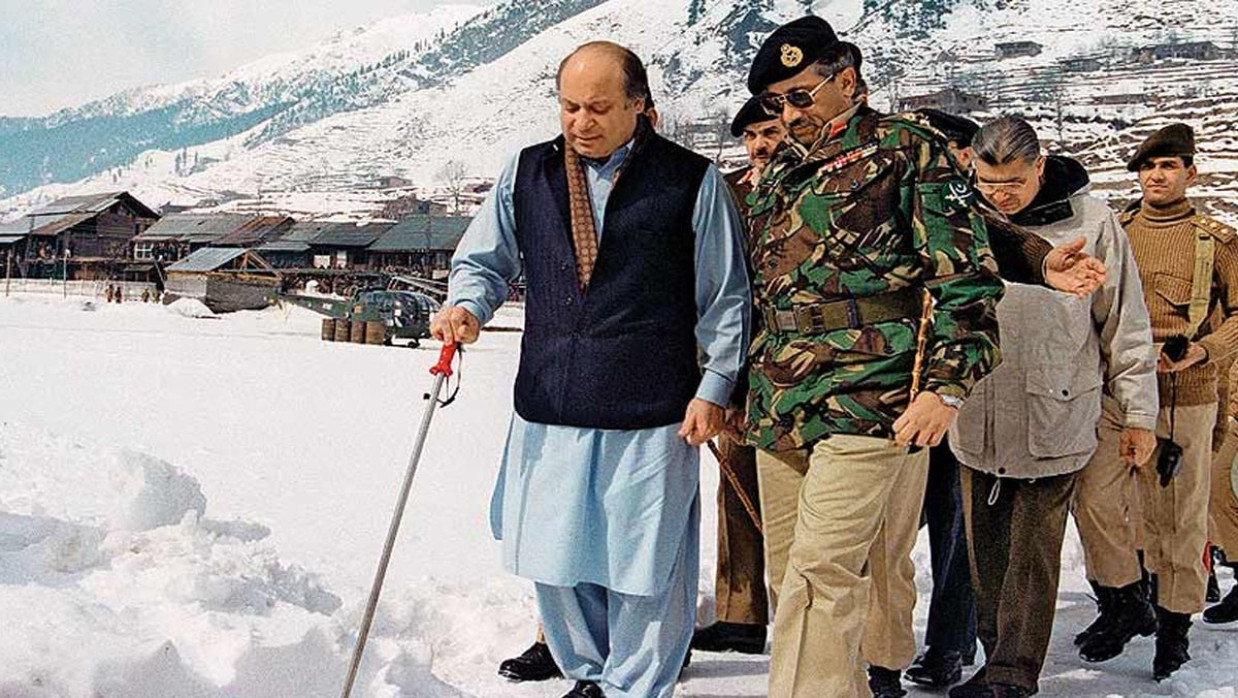
Hotly contested is how much of Kargil was known to Pakistan’s civilians. Nawaz Sharif would later claim he had no idea such an operation was occurring. The Generals denied this. Even today, historians argue over who approved the operation and how much was actually known at the civilian level before combat began. Regardless of who is ultimately at fault. Kargil displayed serious strain in Pakistan’s civil-military relationship. Some accounts indicate that key military stakeholders, such as segments of the air force and navy, were not consulted. The operation has been criticized as militarily ambitious yet lacking strategic and diplomatic forethought or an evaluation of international ramifications.
Nuclear Weapons Did Not Prevent Conflict
Kargil taught another valuable lesson. While nuclear weapons may have prevented full scale war, they did not prevent limited war fighting with conventional forces. On the contrary, both states sought to keep their militancy below their own assumptions about what would trigger a nuclear retaliation.
Expectations that nuclear weapons would usher in peace also proved false. Rather than provide security to either country, the nuclear arms competition led to heightened defense spending, greater strategic distrust, and diversion of funds that could have gone into development, education, health care, and infrastructure. In Pakistan’s case, decades of militarization exacted an economic cost: some analysts argue that the prolonged security dilemma prevented long-term economic modernization at a time when many East Asian economies were focusing on export-led industrialization.
International Diplomacy and American Pressure
International concern was quickly mounting as the fighting escalated. Diplomatically, the United States had taken center stage in de-escalating the situation. It was claimed during Nawaz Sharif’s July 4, 1999, meeting with U.S. President Bill Clinton in Washington that U.S. pressure had convinced Pakistan to withdraw across the Line of Control.
Whether or not various assertions of monetary inducements or other offers are true, most scholars agree that U.S. diplomatic pressure helped defuse the situation before it expanded into full-scale war between two nuclear powers.
Even Pakistan’s closest friend, China, stopped short of endorsing the Kargil incursion, highlighting Pakistan’s international isolation.
Long-Term Consequences
The Kargil conflict has had long-term effects that continue to reverberate throughout South Asia to the present day. Pakistan’s credibility was damaged internationally as many had viewed the covert operation as incompatible with the Lahore Declaration peace process it had agreed to only months earlier. Since then, India has consolidated many ties with the United States and the Western world in general, whereas Pakistan now faces criticism over its ability to control its military and sustain peace in the region. Kargil highlighted the need for civilian control, clarity of political direction, and diplomatic synchronization in matters of national security. Tactical victories cannot make up for strategic failures, according to many analysts. India and Pakistan continue to distrust each other even though they have communicated on diplomatic levels. Trade between India and Pakistan is still not at its full potential, which could help the economies of both states and the region as a whole prosper. Old disagreements continue to emerge and drain funds that could be used for developmental causes.
Lessons for South Asia
We are still analyzing the lessons learned from the Kargil conflict, fought more than two-and-a-half decades ago. There is no denying that combat effectiveness cannot be judged purely by traditional military victories. Diplomacy, economics, world opinion, and the domestic political compulsions of the democratically elected government are factors that must be carefully considered.
The biggest takeaway from Kargil could well be that nuclear weapons have not made war illegal, but have prevented full-scale conflict. The only way forward is through the opening of channels on contentious issues, transparency, political will, economic integration, and building trust with each other. Else, even a promising initiative can backfire, bringing irreparable damage to the region’s future.