South Asia Journal
The West Bengal state government machinery is undergoing massive transitions. The Mamata Banerjee-led Trinamool Congress (TMC) governed the state of Bengal for more than 10 years. It seems as though core structural issues have come back to haunt her and her party, paving the way for the BJP to seize power on moral grounds.
Election results have become a controversial topic of analysis among political observers, journalists, and pundits. Debates have gone beyond winning-and-losing margins, now discussing the centrality of identity politics, porous borders, illegal immigration, regional powerplay, and geopolitical rivalry, etc. I find it significant that West Bengal might have seen a new sunrise in a political era in which voters’ behavioral patterns would be dominated by concerns about national security and demographics.
In this article, we will discuss Bengal after elections; the end of TMC dominance, Mamata Banerjee’s political last hurrah, immigration politics, and India-Bangladesh relations.
The Changing Political Mood in Bengal
The BJP had been considered out of favor by a section of Bengal’s intelligentsia for decades. It was portrayed as the antithesis of what Bengal considers political culture: secular nationalism, left politics, and regional pride. But opinion polls show a shift in voter attitudes this time around. There’s growing fear among voters about issues that cut across ideologies. Illegal immigration from Bangladesh was one of the most polarizing topics during the election. BJP had cleverly connected questions about the porous border, Illegal taking away citizenship and jobs, and Bengal’s demographic character.
Opponents have criticized the BJP’s campaigning on the topic, claiming it’ll only polarize the communities living in the state. BJP supporters, however, argue that previous governments were complicit in allowing illegal immigration, which affected national security and also failed to curb illegal immigration within Bengal. BJP now seems to have successfully united Hindus into a formidable voting bloc, especially in districts bordering Bangladesh and urban centers where immigration has been a hot topic for debate.
Mamata Banerjee’s Controversial Allegations
One action that Mamata Banerjee took after coming out of defeat was talking about a political murder that took place in Bangladesh. She said without naming any party, “Someone was killed in politics”. This statement came under scrutiny by many.
This statement was reportedly linked with the murder of Islamist political leader and anti-India activist Osman Hadi. Mamata Banerjee alleged that Amit Shah had earlier asked her not to speak on the issue.
Why now? Mamata had every opportunity before the polls, if that was her concern. To point fingers at the BJP before the polls, she had Ministries that could have gone there and looked into the matter. Suddenly highlighting a humanitarian crisis now for populist opinion points to political games.
Fans of Banerjee feel she tried to blow the cover on some intel information. Skeptics see it as a desperate attempt by Mamata to stay relevant after her party’s defeat.
Politics of Brinkmanship
In politics, Mamata Banerjee has always positioned herself as someone taking on the establishment. Mamata Banerjee has been described as a practitioner of political “brinkmanship,” wielding street fights and populist mandates to win battles.
Leaving Congress to form TMC and the subsequent victory over three decades of Left rule were results of just that. Banerjee has been characterized by political analysts as someone who generates political drama and stirs public emotions to gain political advantage.
The big question now is whether the same strategy will work now. The sentiment on the streets may have shifted over time, and issues that once mobilized people may no longer resonate.
Internal Crisis Within the Trinamool Congress
Perhaps the most serious challenge facing TMC today is internal fragmentation. One of the biggest obstacles confronting TMC today may be intra-party division. Reports are surfacing that indicate that dissatisfaction with the party is mounting among party legislators and grassroots-level workers. The party, which has historically been known for its united front, is now being described by observers as a site of a “hostile takeover,” with different factions battling for control following poor Election Results.
The truth is that TMC flopped badly in areas of strong Muslim concentration. This reality proves beyond doubt that TMC’s earlier assumption of an automatic, safe minority vote bank to bail it out was utterly misplaced. Muslims now seem to be splitting their votes across Congress, Left candidates, and even the BJP in many places.
Leadership Succession Questions
The undisputed leader of TMC is Mamata Banerjee, 71. However, it is not clear who will succeed her in the long run. TMC has failed to institutionalize leadership, unlike the national parties other than Banerjee’s.
Immigration Politics and Hindu Consolidation
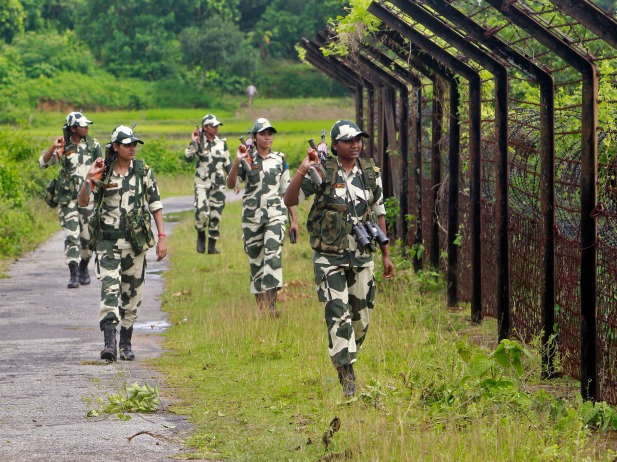
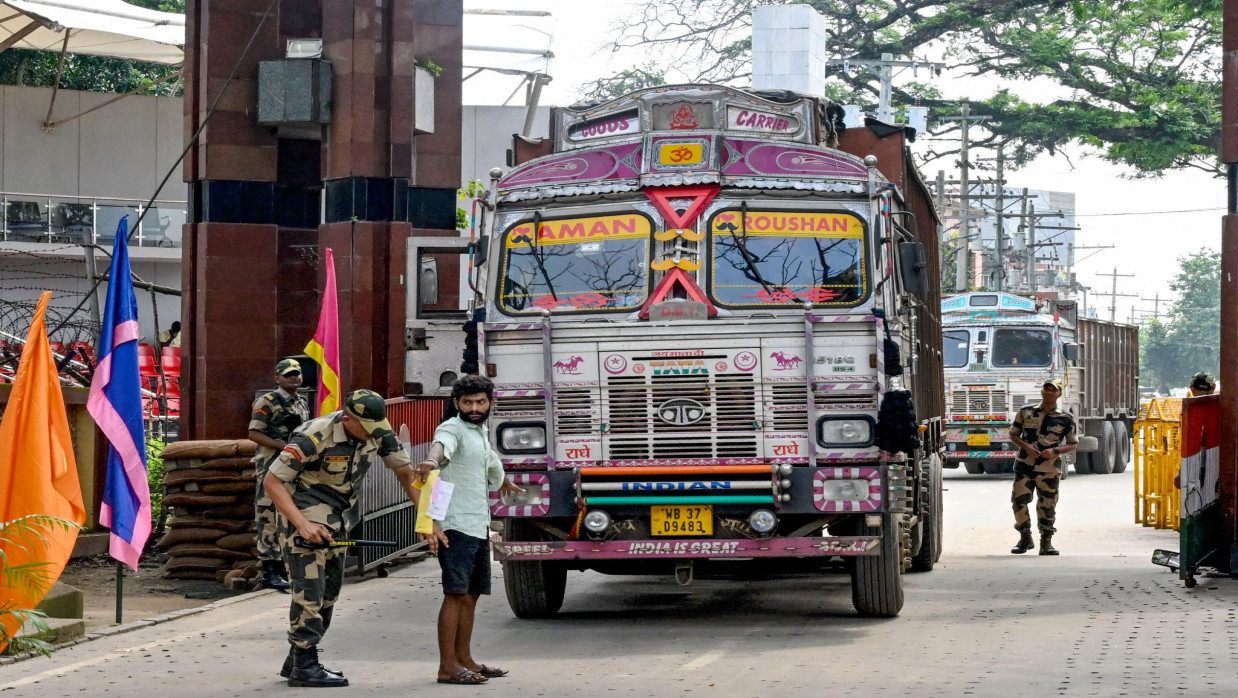
Illegal immigration has emerged as the dominant theme of Bengal politics. Questions of migration from Bangladesh into India over the heavily disputed India-Bangladesh border have been debated for years. Measuring nearly 4,000 kilometers long, the border snakes through rivers, forests, villages, and overpopulated settlements, making patrolling extremely difficult.
The BJP has claimed that open-border migration has led to demographic change in some regions, overpopulation and pressure on civic infrastructure, and national security risks. This found favor among many voters during the campaign. One effect of this discourse has been that Hindu voters have largely rallied behind the BJP.
In neighboring states such as Assam and Tripura, voters also began hotly contesting citizenship and immigration. However, many fear an aggressive crackdown could end up targeting Indian citizens who may happen to be Bengali-speaking Muslims with incomplete or contested paperwork.
India-Bangladesh Relations: Friendship and Friction
India–Bangladesh relations are widely regarded as among the best bilateral relations in South Asia. Since the beginning of the 21st century, relations have improved with increased bilateralism regarding trade and transit connectivity, counterterrorism efforts, and the sharing of energy resources. Bilateral relations are often publicly described by the respective countries’ Prime Ministers as ones of friendship and strategic partnership. However, behind the warm public statements lie multiple irritants. Illegal immigration from Bangladesh, transborder smuggling, human trafficking, disagreements over water-sharing, border security drives, and statelessness verification drives have often strained bilateral relations. Bangladesh generally denies Indian allegations of millions of illegal Bangladeshis living in India. As such, forced mass deportations/”push-backs” would be diplomatically difficult.
The Strategic Importance of West Bengal
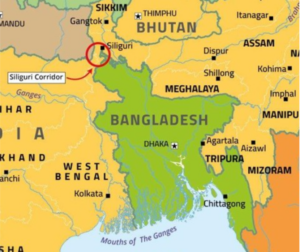
Geographically, West Bengal is one of the most strategically important States of India. It shares its borders with Bangladesh on the north, east, and west; with Nepal on the northwest; and Bhutan on the northeast. Moreover, it also neighbors the Siliguri Corridor – the “Chicken’s Neck” through which all the boundary lines of the North-Eastern states meet the rest of India. Given this, issues such as national security assume great importance in political considerations. Border management, population stabilization, and developmental concerns are viewed through an overarching lens of strategic interests. Thus, West Bengal sees far more central attention from our national agencies and political parties than what might be considered strictly “proportionate”.
Economic Development Versus Identity Politics
While immigration and security have taken center stage, Bengal also faces economic development concerns.
Industrial investment, infrastructure growth, logistics development, and modernization have been touted by the BJP as central components of its economic plan for Bengal. Proponents of this development plan say that years of political violence and government mismanagement have left the state unable to realize its growth potential.
West Bengal was once home to a booming industrial sector. Many economists argue that the state suffered from stagnation following deindustrialization and the flight of private capital that set in during the late 20th century.
If the BJP can balance economic development with its muscular security policies, it will be a key question going forward.
The Weakness of the Opposition
Elsewhere, however, the opposition remains divided. Indian National Congress and Communist Party of India (Marxist) continue to enjoy some support but have failed to reclaim their past footholds. Left Front, once the ruling party of West Bengal for three decades, now mostly subsists on an organizational base and online presence rather than on-the-ground mobilization of support. Congress, too, continues to lack organizational strength and also lacks a prominent face who leads the party at the state level. Consequently, many political observers view Bengal’s main competition as the BJP versus the TMC.
Conclusion: A State at a Turning Point
Mamata Banerjee remains one of India’s most formidable regional satraps. But rarely has her political fortune looked as precarious as it has since she assumed office in 2011. Recent weeks have shown her lashing out in ways that suggest a leader fighting for ground shifting beneath her feet.
Likewise, the BJP has done enough to position itself as both a stakeholder in national security and an alternative development actor. Whether it will crack the vote-bank calculus to satisfy governance expectations is another matter altogether.
The politics of Bengal tomorrow will be decided on three fronts: growth, borders, and demography. Bengal raises the stakes for the national interest above mere parochial state politics. Bordering Bangladesh and serving as the Northeast hub, Bengal’s shape-up will impact regional security, New Delhi’s ties with Dhaka, and the geopolitical equations in South Asia.

Ghulam M. Suhrawardi
Ghulam M. Suhrawardi is the Publisher of South Asia Journal.